Zhang Zhuo, Preston Dale L, Sokolnikov Mikhail, Napier Bruce A, Degteva Marina, Moroz Brian, Vostrotin Vadim, Shiskina Elena, Birchall Alan, Stram Daniel O
Keck School of Medicine, University of Southern California, Los Angeles, CA, United States of America.
Hirosoft International Corporation, Eureka, CA, United States of America.
PLoS One. 2017 Apr 3;12(4):e0174641. doi: 10.1371/journal.pone.0174641. eCollection 2017.
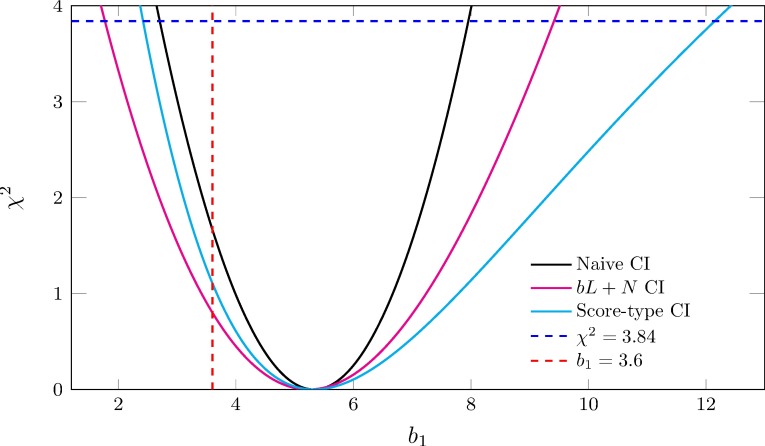
In epidemiological studies, exposures of interest are often measured with uncertainties, which may be independent or correlated. Independent errors can often be characterized relatively easily while correlated measurement errors have shared and hierarchical components that complicate the description of their structure. For some important studies, Monte Carlo dosimetry systems that provide multiple realizations of exposure estimates have been used to represent such complex error structures. While the effects of independent measurement errors on parameter estimation and methods to correct these effects have been studied comprehensively in the epidemiological literature, the literature on the effects of correlated errors, and associated correction methods is much more sparse. In this paper, we implement a novel method that calculates corrected confidence intervals based on the approximate asymptotic distribution of parameter estimates in linear excess relative risk (ERR) models. These models are widely used in survival analysis, particularly in radiation epidemiology. Specifically, for the dose effect estimate of interest (increase in relative risk per unit dose), a mixture distribution consisting of a normal and a lognormal component is applied. This choice of asymptotic approximation guarantees that corrected confidence intervals will always be bounded, a result which does not hold under a normal approximation. A simulation study was conducted to evaluate the proposed method in survival analysis using a realistic ERR model. We used both simulated Monte Carlo dosimetry systems (MCDS) and actual dose histories from the Mayak Worker Dosimetry System 2013, a MCDS for plutonium exposures in the Mayak Worker Cohort. Results show our proposed methods provide much improved coverage probabilities for the dose effect parameter, and noticeable improvements for other model parameters.
在流行病学研究中,感兴趣的暴露因素通常是在存在不确定性的情况下进行测量的,这些不确定性可能是独立的,也可能是相关的。独立误差通常相对容易描述,而相关测量误差具有共享和分层的成分,这使得对其结构的描述变得复杂。对于一些重要的研究,已经使用提供暴露估计多个实现的蒙特卡罗剂量测定系统来表示这种复杂的误差结构。虽然独立测量误差对参数估计的影响以及校正这些影响的方法在流行病学文献中已经得到了全面研究,但关于相关误差影响及其相关校正方法的文献则要少得多。在本文中,我们实现了一种新方法,该方法基于线性超额相对风险(ERR)模型中参数估计的近似渐近分布来计算校正后的置信区间。这些模型在生存分析中广泛使用,特别是在辐射流行病学中。具体而言,对于感兴趣的剂量效应估计(每单位剂量相对风险的增加),应用了一种由正态和对数正态成分组成的混合分布。这种渐近近似的选择保证了校正后的置信区间将始终有界,而在正态近似下这一结果并不成立。我们进行了一项模拟研究,以使用一个现实的ERR模型评估生存分析中提出的方法。我们使用了模拟的蒙特卡罗剂量测定系统(MCDS)以及2013年玛雅克工人剂量测定系统的实际剂量历史记录,该系统是玛雅克工人队列中钚暴露的MCDS。结果表明,我们提出的方法为剂量效应参数提供了显著提高的覆盖概率,并且对其他模型参数也有明显改善。