Donoghoe Mark W, Gebski Val
University of Sydney, NHMRC Clinical Trials Centre, Sydney, 2006, NSW, Australia.
BMC Med Res Methodol. 2017 Apr 4;17(1):52. doi: 10.1186/s12874-017-0327-3.
The analysis of time-to-event data can be complicated by competing risks, which are events that alter the probability of, or completely preclude the occurrence of an event of interest. This is distinct from censoring, which merely prevents us from observing the time at which the event of interest occurs. However, the censoring distribution plays a vital role in the proportional subdistribution hazards model, a commonly used method for regression analysis of time-to-event data in the presence of competing risks.
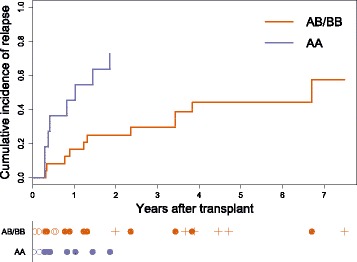
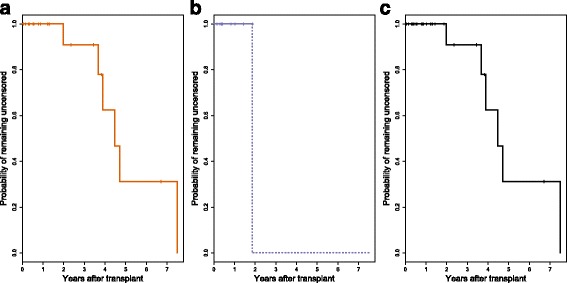
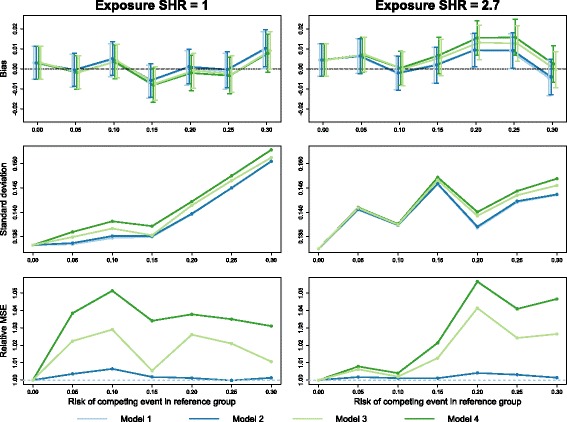
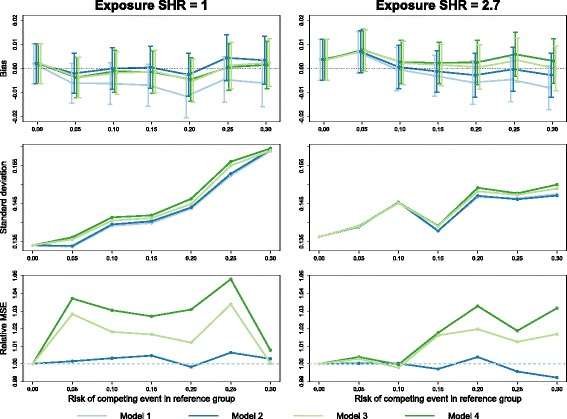
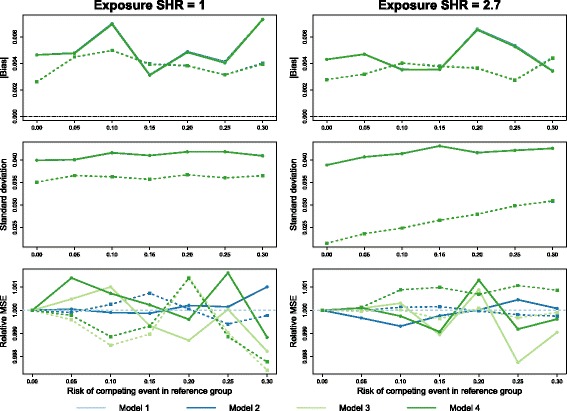
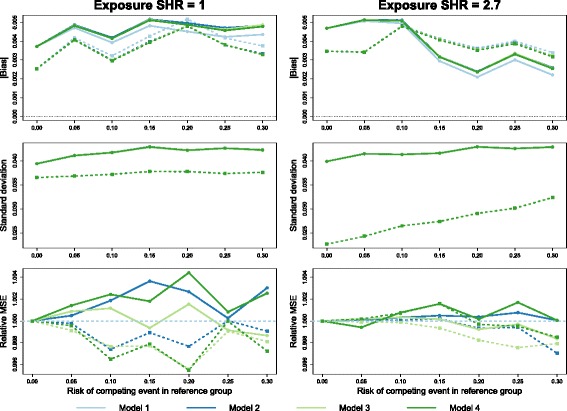
We present the equations that underlie the proportional subdistribution hazards model to highlight the way in which the censoring distribution is included in its estimation via risk set weights. By simulating competing risk data under a proportional subdistribution hazards model with different patterns of censoring, we examine the properties of the estimates from such a model when the censoring distribution is misspecified. We use an example from stem cell transplantation in multiple myeloma to illustrate the issue in real data.
Models that correctly specified the censoring distribution performed better than those that did not, giving lower bias and variance in the estimate of the subdistribution hazard ratio. In particular, when the covariate of interest does not affect the censoring distribution but is used in calculating risk set weights, estimates from the model based on these weights may not reflect the correct likelihood structure and therefore may have suboptimal performance.
The estimation of the censoring distribution can affect the accuracy and conclusions of a competing risks analysis, so it is important that this issue is considered carefully when analysing time-to-event data in the presence of competing risks.
事件发生时间数据的分析可能会因竞争风险而变得复杂,竞争风险是指那些改变感兴趣事件发生概率或完全排除其发生可能性的事件。这与删失不同,删失仅仅使我们无法观察到感兴趣事件发生的时间。然而,删失分布在比例子分布风险模型中起着至关重要的作用,该模型是在存在竞争风险的情况下对事件发生时间数据进行回归分析的常用方法。
我们给出了比例子分布风险模型所基于的方程,以突出通过风险集权重将删失分布纳入其估计的方式。通过在具有不同删失模式的比例子分布风险模型下模拟竞争风险数据,我们研究了删失分布指定错误时该模型估计量的性质。我们用多发性骨髓瘤干细胞移植的一个例子来说明实际数据中的这个问题。
正确指定删失分布的模型比未正确指定的模型表现更好,在子分布风险比的估计中偏差和方差更低。特别是,当感兴趣的协变量不影响删失分布但用于计算风险集权重时,基于这些权重的模型估计可能无法反映正确的似然结构,因此可能具有次优性能。
删失分布的估计会影响竞争风险分析的准确性和结论,所以在存在竞争风险的情况下分析事件发生时间数据时,仔细考虑这个问题很重要。