Kos Spela, Blagus Tanja, Cemazar Maja, Filipic Gregor, Sersa Gregor, Cvelbar Uros
Department of Experimental Oncology, Institute of Oncology Ljubljana, Ljubljana, Slovenia.
Faculty of Health Sciences, University of Primorska, Izola, Slovenia.
PLoS One. 2017 Apr 5;12(4):e0174966. doi: 10.1371/journal.pone.0174966. eCollection 2017.
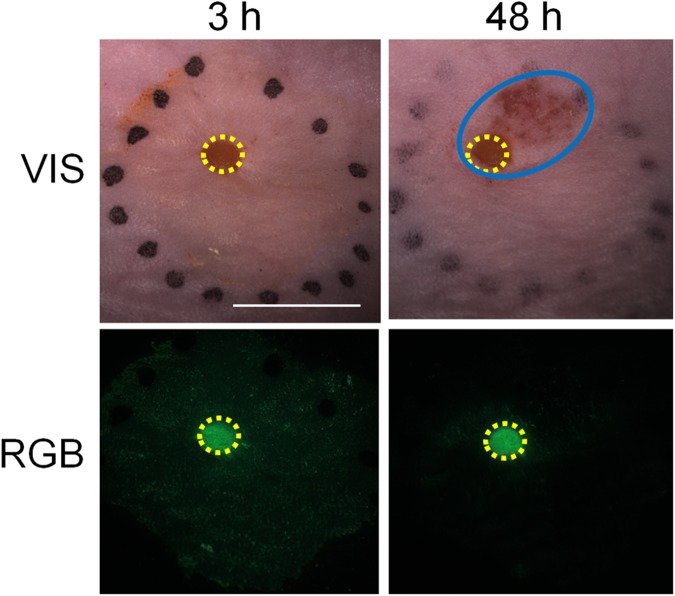
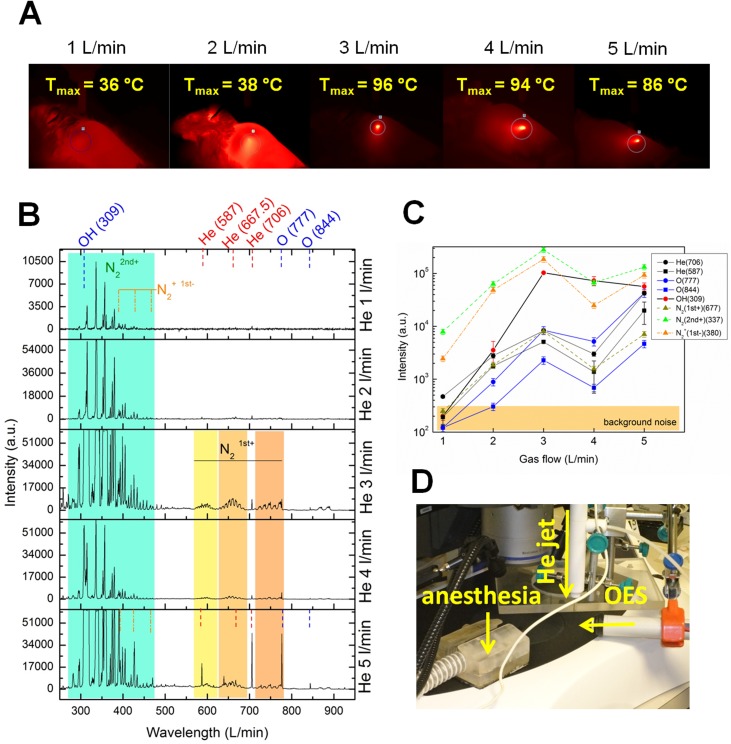
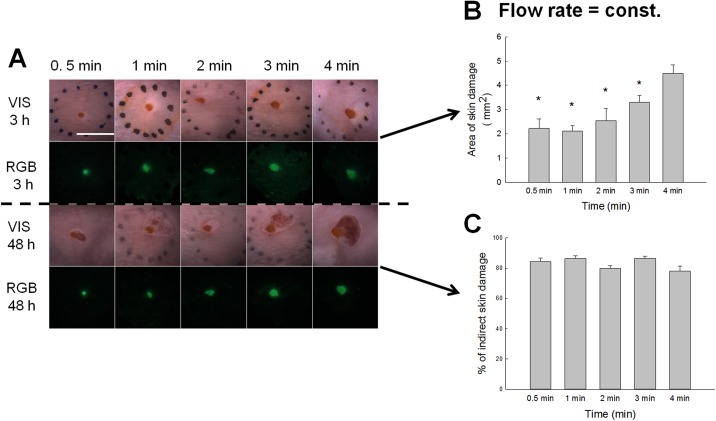
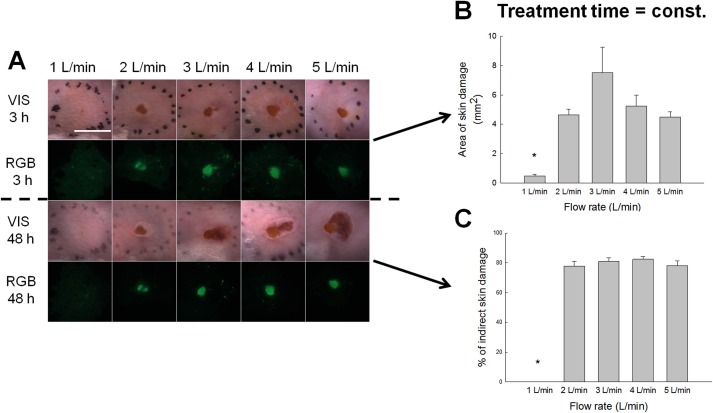
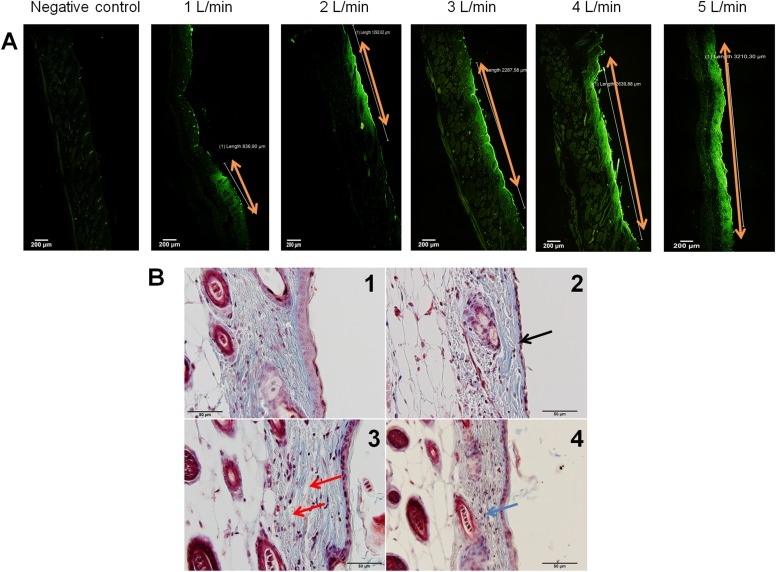
Biomedical applications of plasma require its efficacy for specific purposes and equally importantly its safety. Herein the safety aspects of cold plasma created with simple atmospheric pressure plasma jet produced with helium gas and electrode discharge are evaluated in skin damage on mouse, at different duration of exposure and gas flow rates. The extent of skin damage and treatments are systematically evaluated using stereomicroscope, labelling with fluorescent dyes, histology, infrared imaging and optical emission spectroscopy. The analyses reveal early and late skin damages as a consequence of plasma treatment, and are attributed to direct and indirect effects of plasma. The results indicate that direct skin damage progresses with longer treatment time and increasing gas flow rates which reflect changes in plasma properties. With increasing flow rates, the temperature on treated skin grows and the RONS formation rises. The direct effects were plasma treatment dependent, whereas the disclosed late-secondary effects were more independent on discharge parameters and related to diffusion of RONS species. Thermal effects and skin heating are related to plasma-coupling properties and are separated from the effects of other RONS. It is demonstrated that cumulative topical treatment with helium plasma jet could lead to skin damage. How these damages can be mitigated is discussed in order to provide guidance, when using atmospheric pressure plasma jets for skin treatments.
等离子体的生物医学应用需要其针对特定目的的有效性,同样重要的是其安全性。在此,我们评估了用氦气和电极放电产生的简单大气压等离子体射流产生的冷等离子体在不同暴露持续时间和气体流速下对小鼠皮肤损伤的安全性。使用立体显微镜、荧光染料标记、组织学、红外成像和光发射光谱对皮肤损伤程度和治疗效果进行系统评估。分析揭示了等离子体处理导致的早期和晚期皮肤损伤,并归因于等离子体的直接和间接作用。结果表明,直接皮肤损伤随着处理时间的延长和气体流速的增加而加剧,这反映了等离子体性质的变化。随着流速增加,处理后皮肤的温度升高,活性氧氮物种(RONS)的形成增加。直接作用取决于等离子体处理,而所揭示的晚期继发作用对放电参数的依赖性较小,与RONS物种的扩散有关。热效应和皮肤加热与等离子体耦合特性有关,与其他RONS的作用相分离。结果表明,氦等离子体射流的累积局部处理可能导致皮肤损伤。为了在使用大气压等离子体射流进行皮肤治疗时提供指导,我们讨论了如何减轻这些损伤。