von Seck Peter, Sander F Martin, Lanzendorf Leon, von Seck Sabine, Schmidt-Lucke André, Zielonka Mirja, Schmidt-Lucke Caroline
Medical Practice, Wiesbaden, Germany.
Dental Clinic, Frankfurt, Germany.
PLoS One. 2017 Apr 12;12(4):e0174528. doi: 10.1371/journal.pone.0174528. eCollection 2017.
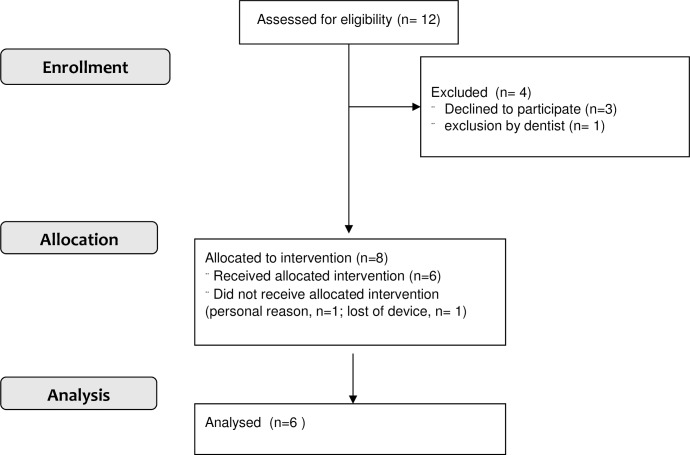
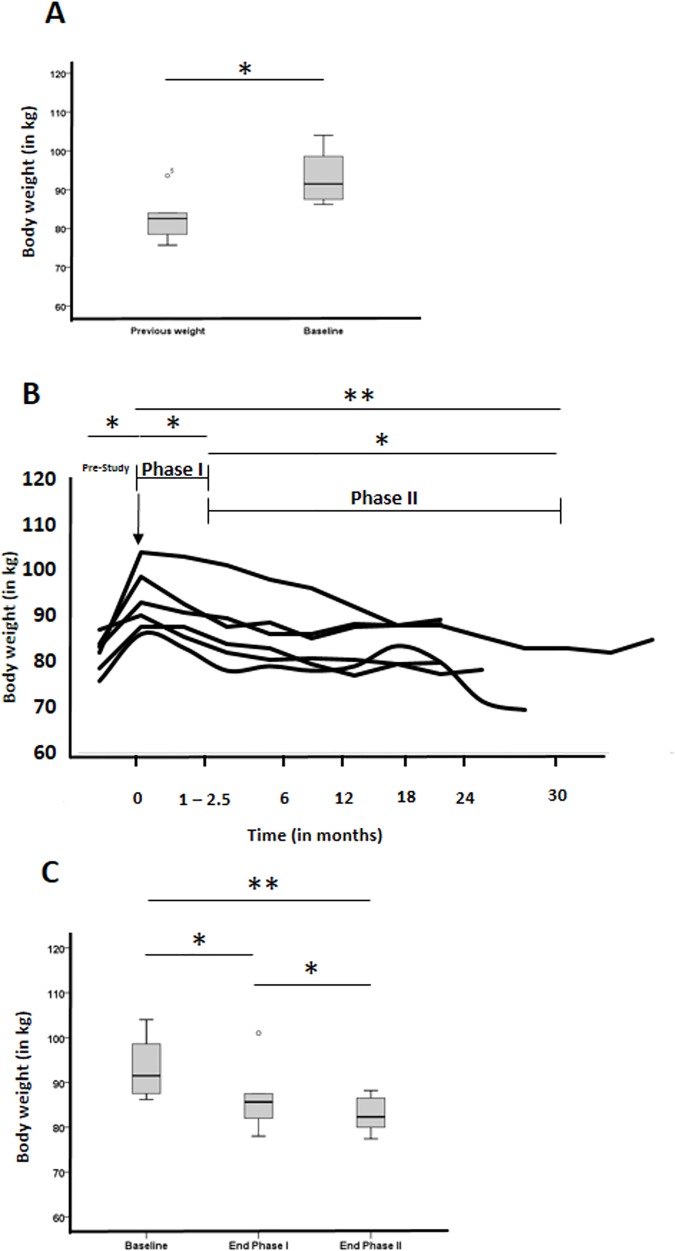
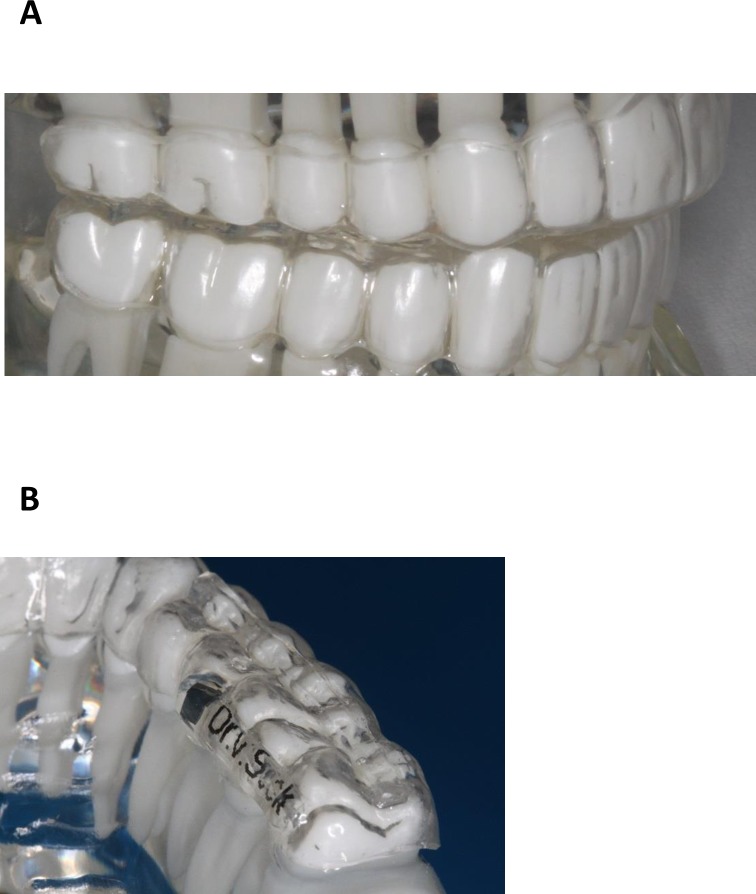
In evidence-based weight-loss programs weight regain is common after an initial weight reduction. Eating slowly significantly lowers meal energy intake and hunger ratings. Despite this knowledge, obese individuals do not implement this behaviour. We, thus tested the hypothesis of changing eating behaviour with an intra-oral medical device leading to constant weight reduction in overweight and obesity. Six obese patients (6 men, age 56 ± 14, BMI 29 ± 2 kg / m2) with increased CVRF profile were included in this prospective study. All patients had been treated for obesity during the last 10 years in a single centre and had at least 3 frustrate evidence-based diets. Patients received a novel non-invasive intra-oral medical device to slow eating time. Further advice included not to count calories, to avoid any other form of diet, to take their time with their meals, and to eat whatever they liked. This device was used only during meals for the first 4 to 8 weeks for a total of 88 [20-160] hours. Follow-up period was 23 [15-38] months. During this period, patients lost 11% [5-20%] (p<0.001) of their initial weight. At 12 months, all patients had lost >5%, and 67% (4/6) achieved a >10% bodyweight loss. In the course of the study, altered eating patterns were observed. There were no complications with the medical device. Of note, all patients continued to lose weight after the initial intervention period (p<0.001) and none of them had weight regain. With this medical device, overweight and obese patients with a history of previously frustrating attempts to lose weight achieved a significant and sustained weight loss over two years. These results warrant the ongoing prospective randomised controlled trial to prove concept and mechanism of action.
German Clinical Trials Register DRKS00011357.
在循证减肥项目中,初始体重减轻后体重反弹很常见。细嚼慢咽能显著降低进餐时的能量摄入和饥饿感评分。尽管有此认知,但肥胖个体并未践行这一行为。因此,我们测试了使用口腔内医疗器械改变进食行为从而使超重和肥胖患者持续减重的假设。本前瞻性研究纳入了6名肥胖患者(6名男性,年龄56±14岁,体重指数29±2kg/m²),其心血管危险因素概况增加。所有患者在过去10年里都在单一中心接受过肥胖治疗,且至少经历过3次失败的循证饮食。患者接受了一种新型非侵入性口腔内医疗器械以延长进食时间。进一步的建议包括不计算卡路里、避免任何其他形式的节食、用餐时慢慢来以及想吃什么就吃什么。该器械仅在最初4至8周的用餐期间使用,总计88[20 - 160]小时。随访期为23[15 - 38]个月。在此期间,患者体重减轻了初始体重的11%[5 - 20%](p<0.001)。在12个月时,所有患者体重减轻均超过5%,67%(4/6)的患者体重减轻超过10%。在研究过程中,观察到进食模式发生了改变。该医疗器械没有出现并发症。值得注意的是,所有患者在初始干预期后继续减重(p<0.001),且无一人体重反弹。使用这种医疗器械,有过先前减肥失败经历的超重和肥胖患者在两年内实现了显著且持续的体重减轻。这些结果为正在进行的前瞻性随机对照试验提供了依据,以证明其概念和作用机制。
德国临床试验注册中心DRKS00011357 。