Kaholokula Joseph Keawe'aimoku, Look Mele A, Wills Thomas A, de Silva Māpuana, Mabellos Tricia, Seto Todd B, Ahn Hyeong Jun, Sinclair Ka'imi A, Buchwald Dedra
Department of Native Hawaiian Health, John A. Burns School of Medicine, University of Hawai'i at Mānoa, Honolulu, USA.
Hālau Mōhala 'Ilima, Kailua, USA.
BMC Public Health. 2017 Apr 17;17(1):321. doi: 10.1186/s12889-017-4246-3.
As a major risk factor for cardiovascular and cerebrovascular disease (CVD), hypertension affects 33% of U.S. adults. Relative to other US races and ethnicities, Native Hawaiians have a high prevalence of hypertension and are 3 to 4 times more likely to have CVD. Effective, culturally-relevant interventions are needed to address CVD risk in this population. Investigators of the Kā-HOLO Project developed a study design to test the efficacy of an intervention that uses hula, a traditional Hawaiian dance, to increase physical activity and reduce CVD risk.
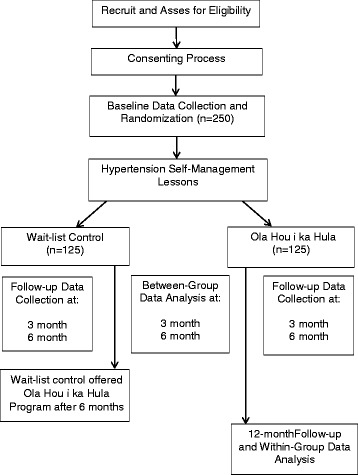
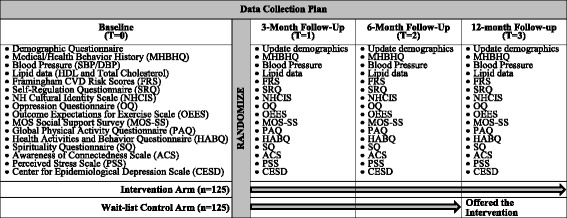
A 2-arm randomized controlled trial with a wait-list control design will be implemented to test a 6-month intervention based on hula to manage blood pressure and reduce CVD risk in 250 adult Native Hawaiians with diagnosed hypertension. Half of the sample will be randomized to each arm, stratified across multiple study sites. Primary outcomes are reduction in systolic blood pressure and improvement in CVD risk as measured by the Framingham Risk Score. Other psychosocial and sociocultural measures will be included to determine mediators of intervention effects on primary outcomes. Assessments will be conducted at baseline, 3 months, and 6 months for all participants, and at 12 months for intervention participants only.
This trial will elucidate the efficacy of a novel hypertension management program designed to reduce CVD risk in an indigenous population by using a cultural dance form as its physical activity component. The results of this culturally-based intervention will have implications for other indigenous populations globally and will offer a sustainable, culturally-relevant means of addressing CVD disparities.
ClinicalTrials.gov: NCT02620709 , registration date November 23, 2015.
作为心血管疾病(CVD)的主要风险因素,高血压影响着33%的美国成年人。相对于其他美国种族和族裔,夏威夷原住民的高血压患病率较高,患心血管疾病的可能性是其他人群的3至4倍。需要有效的、与文化相关的干预措施来解决该人群的心血管疾病风险问题。“卡霍洛项目”的研究人员设计了一项研究,以测试一种干预措施的效果,该措施利用夏威夷传统舞蹈草裙舞来增加身体活动并降低心血管疾病风险。
将实施一项双臂随机对照试验,采用等待名单对照设计,以测试一项基于草裙舞的为期6个月的干预措施,该措施旨在管理250名被诊断患有高血压的成年夏威夷原住民的血压并降低心血管疾病风险。样本的一半将随机分配到每个组,在多个研究地点进行分层。主要结局指标是收缩压的降低以及通过弗明汉风险评分衡量的心血管疾病风险的改善。还将纳入其他心理社会和社会文化指标,以确定干预措施对主要结局指标影响的调节因素。所有参与者将在基线、3个月和6个月时进行评估,干预组参与者仅在12个月时进行评估。
该试验将阐明一项新型高血压管理项目的效果,该项目旨在通过使用一种文化舞蹈形式作为身体活动组成部分来降低原住民人群的心血管疾病风险。这项基于文化的干预措施的结果将对全球其他原住民人群产生影响,并将提供一种可持续的、与文化相关的方式来解决心血管疾病差异问题。
ClinicalTrials.gov:NCT02620709,注册日期为2015年11月23日。