Larussa Tiziana, Oliverio Manuela, Suraci Evelina, Greco Marta, Placida Roberta, Gervasi Serena, Marasco Raffaella, Imeneo Maria, Paolino Donatella, Tucci Luigi, Gulletta Elio, Fresta Massimo, Procopio Antonio, Luzza Francesco
Department of Health Sciences, University of Catanzaro "Magna Graecia", 88100 Catanzaro, Italy.
Pathology Unit, Pugliese-Ciaccio Hospital, 88100 Catanzaro, Italy.
Nutrients. 2017 Apr 15;9(4):391. doi: 10.3390/nu9040391.
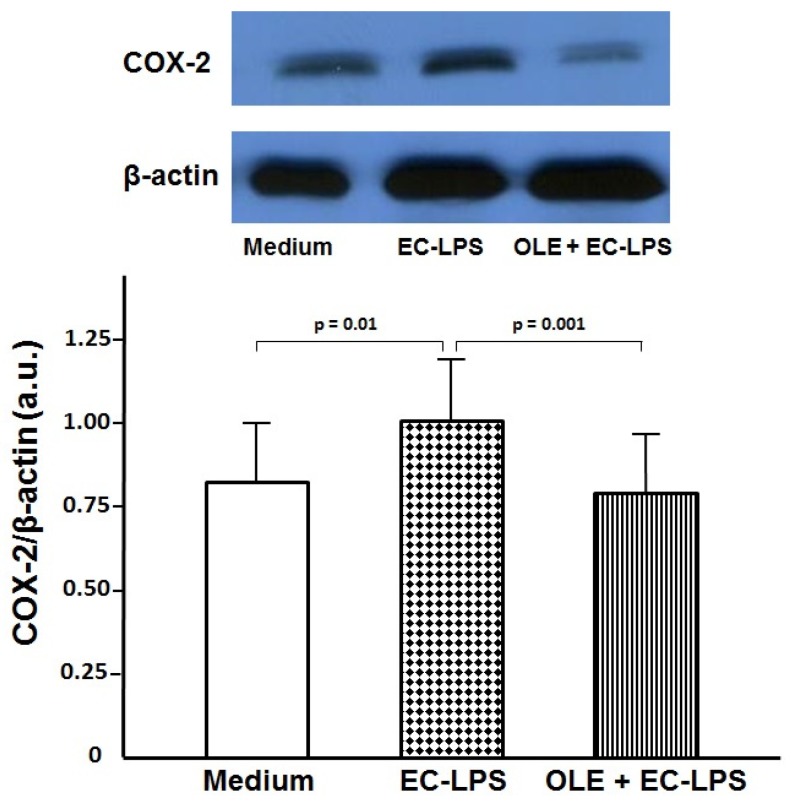
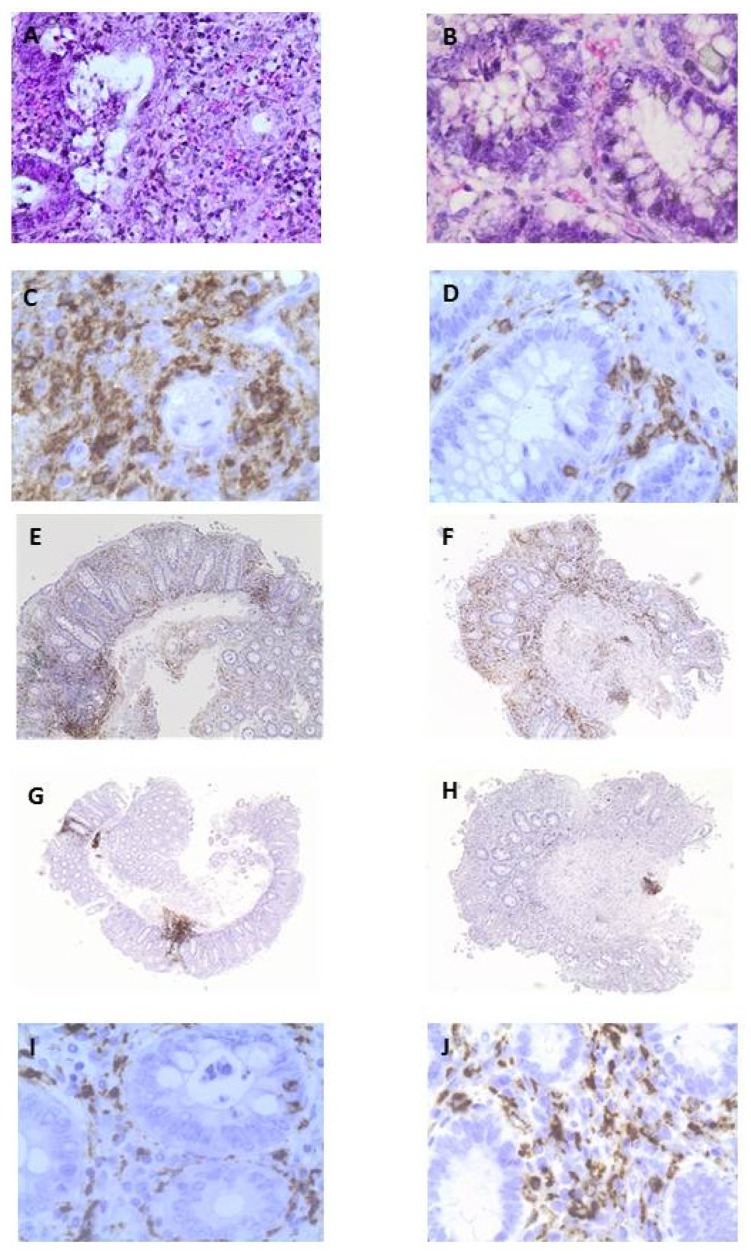
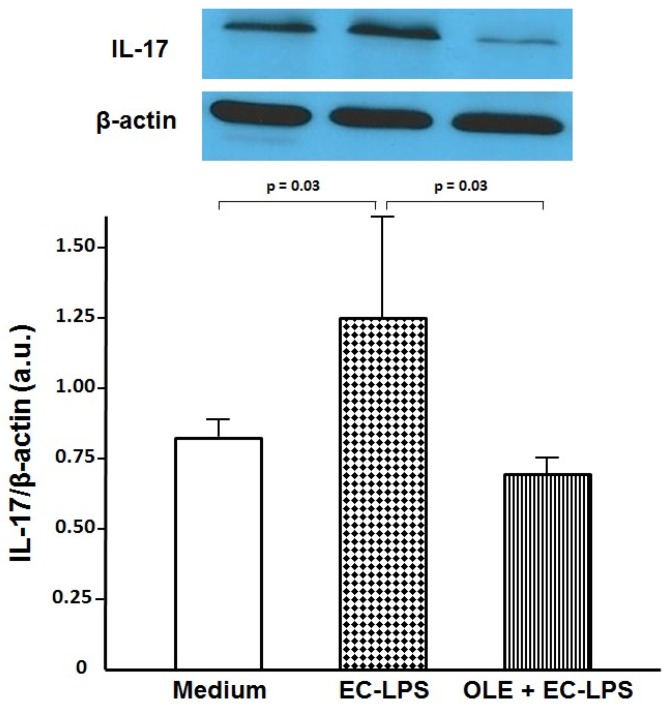
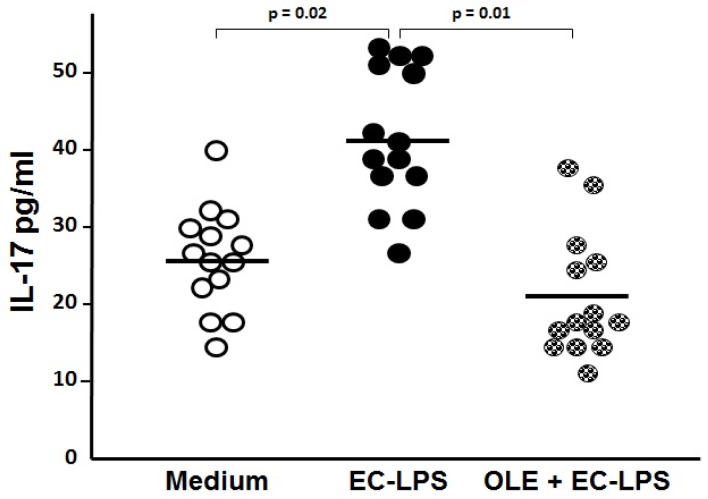
Oleuropein (OLE) is the major phenolic secoiridoid of olive tree leaves, and its antioxidant and anti-inflammatory activities have been demonstrated in in vitro and in vivo animal models. The aim of this study was to investigate the activity of OLE in the colonic mucosa from patients with ulcerative colitis (UC). Biopsies obtained during colonoscopy from 14 patients with active UC were immediately placed in an organ culture chamber and challenged with lipopolysaccharide from (EC-LPS) at 1 μg/mL in the presence or absence of 3 mM OLE. The expression of cyclooxygenase (COX)-2 and interleukin (IL)-17 was assessed in total protein extracts from treated colonic biopsies by Western blotting. Levels of IL-17 were also measured in culture supernatant by ELISA. A microscopic evaluation of the cultured biopsies was performed by conventional histology and immunohistochemistry. The expression of COX-2 and IL-17 were significantly lower in samples treated with OLE + EC-LPS compared with those treated with EC-LPS alone (0.80 ± 0.15 arbitrary units (a.u.) vs. 1.06 ± 0.19 a.u., = 0.003, and 0.71 ± 0.08 a.u. vs. 1.26 ± 0.42 a.u., = 0.03, respectively) as were the levels of IL-17 in culture supernatants of OLE + EC-LPS treated colonic samples (21.16 ± 8.64 pg/mL vs. 40.67 ± 9.24 pg/mL, = 0.01). Histologically, OLE-treated colonic samples showed an amelioration of inflammatory damage with reduced infiltration of CD3, CD4, and CD20 cells, while CD68 numbers increased. The anti-inflammatory activity of OLE was demonstrated in colonic biopsies from UC patients. These new data support a potential role of OLE in the treatment of UC.
橄榄苦苷(OLE)是橄榄树叶中的主要酚类裂环环烯醚萜,其抗氧化和抗炎活性已在体外和体内动物模型中得到证实。本研究的目的是调查OLE在溃疡性结肠炎(UC)患者结肠黏膜中的活性。在结肠镜检查期间从14例活动期UC患者获取的活检组织立即置于器官培养室中,并在存在或不存在3 mM OLE的情况下,用1 μg/mL的大肠杆菌脂多糖(EC-LPS)进行刺激。通过蛋白质免疫印迹法评估经处理的结肠活检组织总蛋白提取物中环氧合酶(COX)-2和白细胞介素(IL)-17的表达。还通过酶联免疫吸附测定法测量培养上清液中IL-17的水平。通过传统组织学和免疫组织化学对培养的活检组织进行显微镜评估。与仅用EC-LPS处理的样品相比,用OLE + EC-LPS处理的样品中COX-2和IL-17的表达显著降低(分别为0.80±0.15任意单位(a.u.)对1.06±0.19 a.u.,P = 0.003,以及0.71±0.08 a.u.对1.26±0.42 a.u.,P = 0.03),OLE + EC-LPS处理的结肠样品培养上清液中IL-17的水平也是如此(21.16±8.64 pg/mL对40.67±9.24 pg/mL,P = 0.01)。组织学上,OLE处理的结肠样品显示炎症损伤有所改善,CD3、CD4和CD20细胞的浸润减少,而CD68细胞数量增加。OLE的抗炎活性在UC患者的结肠活检组织中得到证实。这些新数据支持OLE在UC治疗中的潜在作用。