Verbeke Frederick, De Craemer Severine, Debunne Nathan, Janssens Yorick, Wynendaele Evelien, Van de Wiele Christophe, De Spiegeleer Bart
Drug Quality and Registration Group, Faculty of Pharmaceutical Sciences, Ghent UniversityGhent, Belgium.
Department of Nuclear Medicine, AZ GroeningeKortrijk, Belgium.
Front Neurosci. 2017 Apr 12;11:183. doi: 10.3389/fnins.2017.00183. eCollection 2017.
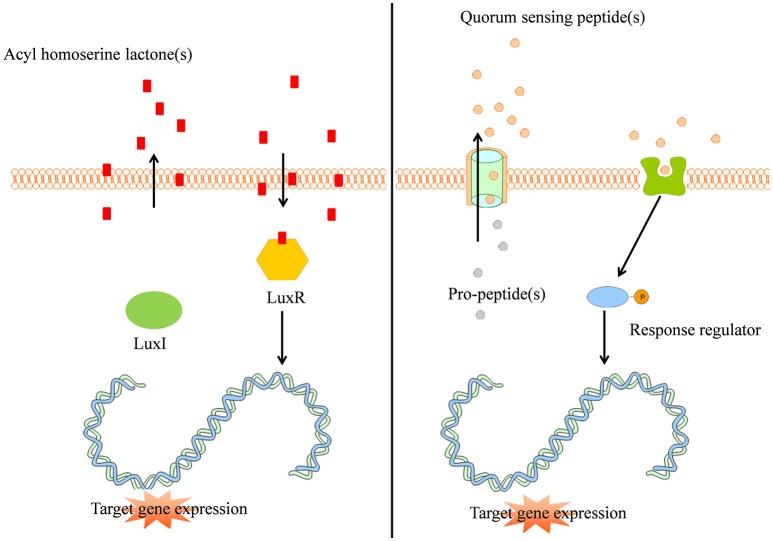
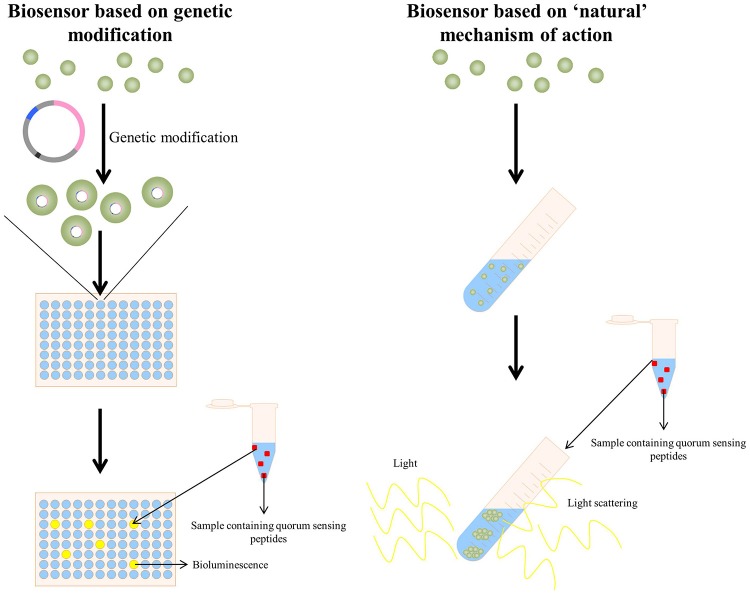
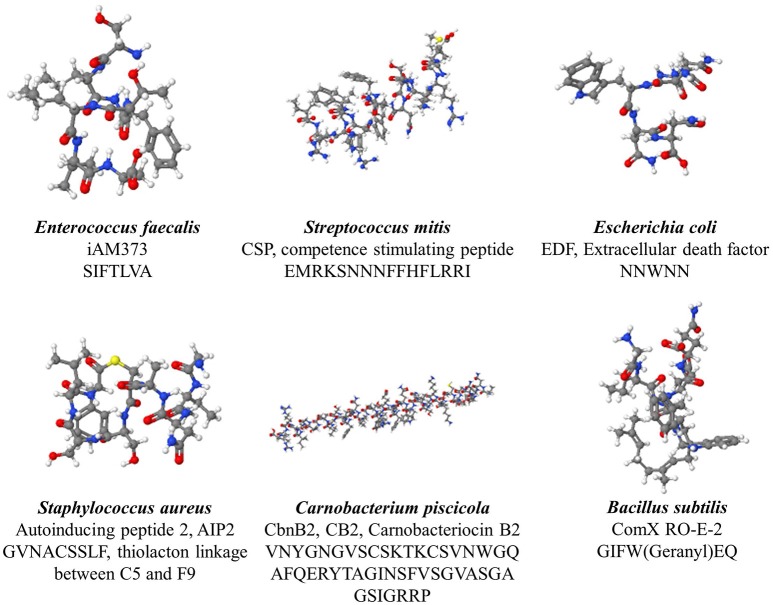
The expression of certain bacterial genes is regulated in a cell-density dependent way, a phenomenon called quorum sensing. Both Gram-negative and Gram-positive bacteria use this type of communication, though the signal molecules (auto-inducers) used by them differ between both groups: Gram-negative bacteria use predominantly -acyl homoserine lacton (AHL) molecules (autoinducer-1, AI-1) while Gram-positive bacteria use mainly peptides (autoinducer peptides, AIP or quorum sensing peptides). These quorum sensing molecules are not only involved in the inter-microbial communication, but can also possibly cross-talk directly or indirectly with their host. This review summarizes the currently applied analytical approaches for quorum sensing identification and quantification with additionally summarizing the experimentally found concentrations of these molecules in humans.
某些细菌基因的表达以细胞密度依赖性方式受到调控,这一现象称为群体感应。革兰氏阴性菌和革兰氏阳性菌都利用这种通讯方式,不过两组细菌所使用的信号分子(自诱导物)有所不同:革兰氏阴性菌主要使用N-酰基高丝氨酸内酯(AHL)分子(自诱导物-1,AI-1),而革兰氏阳性菌主要使用肽类(自诱导肽,AIP或群体感应肽)。这些群体感应分子不仅参与微生物间的通讯,还可能直接或间接与它们的宿主发生相互作用。本综述总结了目前用于群体感应识别和定量的分析方法,并额外总结了在人体中通过实验发现的这些分子的浓度。