Meng Yifei, Zuo Jian-Min
Department of Materials Science and Engineering, University of Illinois at Urbana-Champaign, 1304 W. Green Street, Urbana, IL 61801, USA.
Fredrick Seitz Materials Research Laboratory, University of Illinois at Urbana-Champaign, 104 S. Goodwin Avenue, Urbana, IL 61801, USA.
IUCrJ. 2016 Jul 4;3(Pt 5):300-308. doi: 10.1107/S205225251600943X. eCollection 2016 Sep 1.
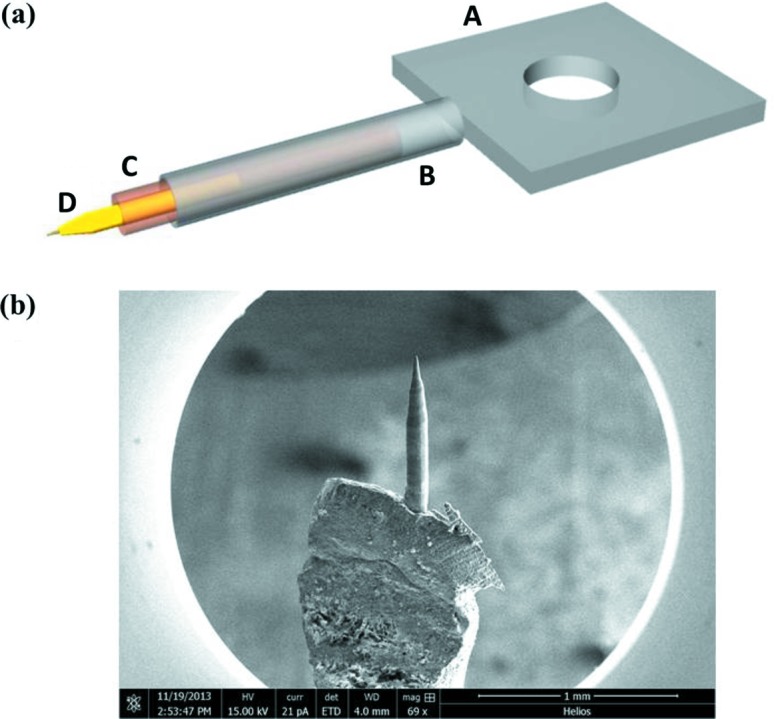
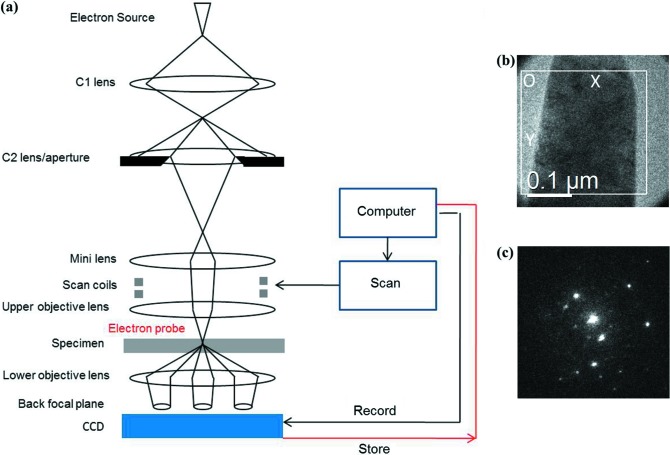
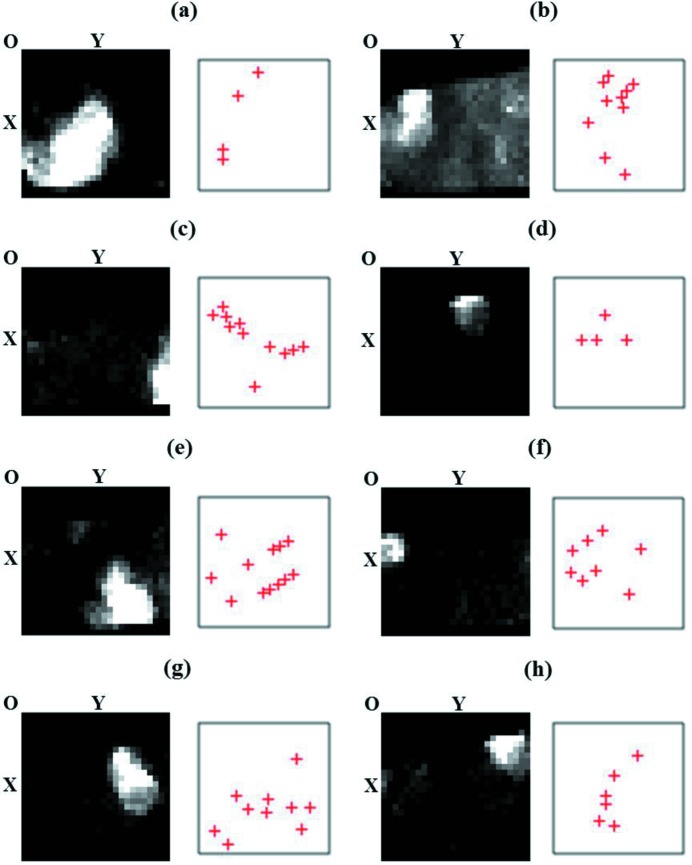
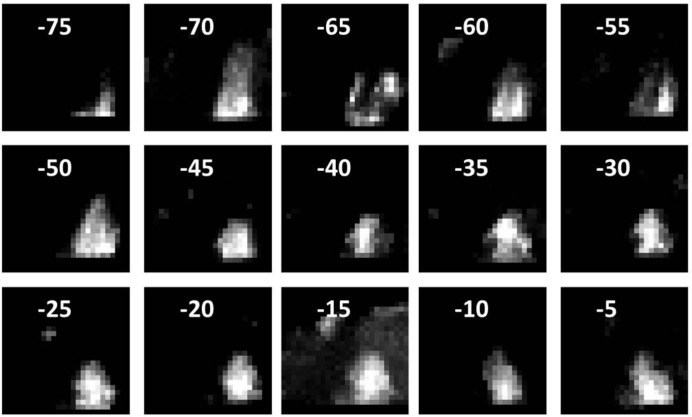
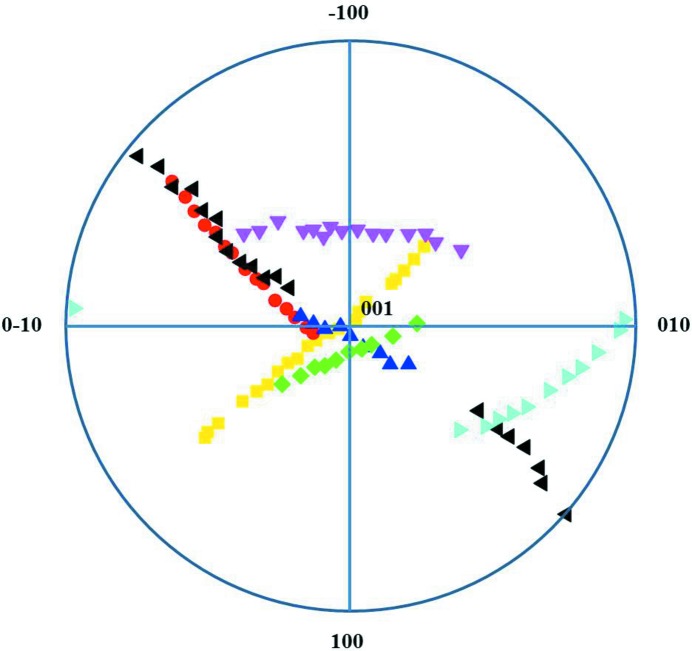
A diffraction-based technique is developed for the determination of three-dimensional nanostructures. The technique employs high-resolution and low-dose scanning electron nanodiffraction (SEND) to acquire three-dimensional diffraction patterns, with the help of a special sample holder for large-angle rotation. Grains are identified in three-dimensional space based on crystal orientation and on reconstructed dark-field images from the recorded diffraction patterns. Application to a nanocrystalline TiN thin film shows that the three-dimensional morphology of columnar TiN grains of tens of nanometres in diameter can be reconstructed using an algebraic iterative algorithm under specified prior conditions, together with their crystallographic orientations. The principles can be extended to multiphase nanocrystalline materials as well. Thus, the tomographic SEND technique provides an effective and adaptive way of determining three-dimensional nanostructures.
一种基于衍射的技术被开发用于确定三维纳米结构。该技术采用高分辨率和低剂量扫描电子纳米衍射(SEND)来获取三维衍射图案,借助一个用于大角度旋转的特殊样品架。基于晶体取向以及从记录的衍射图案重建的暗场图像,在三维空间中识别晶粒。应用于纳米晶TiN薄膜表明,在特定的先验条件下,使用代数迭代算法可以重建直径为数十纳米的柱状TiN晶粒的三维形态及其晶体学取向。这些原理也可以扩展到多相纳米晶材料。因此,断层扫描SEND技术为确定三维纳米结构提供了一种有效且自适应的方法。