Tasiame W, Emikpe B O, Folitse R D, Fofie C O, Burimuah V, Johnson S, Awuni J A, Afari E, Yebuah N, Wurapa F
School of Veterinary Medicine, College of Health Sciences, Kwame Nkrumah University of Science and Technology, Kumasi.
Ghana Health Service, Upper West Regional Hospital, Wa Veterinary Services Department, Accra.
Afr J Infect Dis. 2016 May 1;10(2):111-117. doi: 10.21010/ajid.v10i2.6. eCollection 2016.
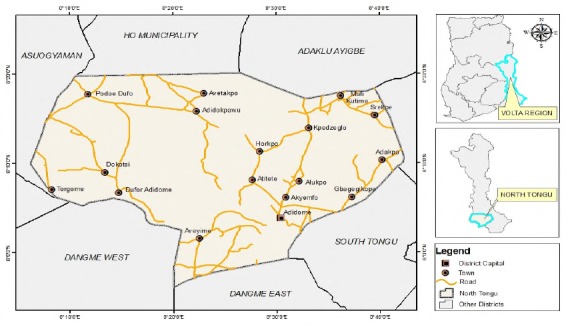
Brucellosis is a zoonotic pathogen responsible for great economic losses in most sub-Saharan nations. Although Ghana has successfully implemented the "One Health" initiative for the control of some emerging infectious zoonotic diseases with pandemic potential like Avian Influenza, there is very limited data available on brucellosis especially human brucellosis prevalence. He objective of his study is to determine the seroprevalence of human and bovine brucellosis as well as the predisposing factors at the community level in the North Tongu District of Ghana.
Rose Bengal Plate test (RBPT) was used to analyze blood samples from 178 cattle farmers, and 315 cattle. The positive samples were further confirmed with cELISA. Predisposing factors were determined by questionnaires administered to cattle farmers. All sample sites were geo-referenced.
Human and bovine brucellosis seroprevalence using RBPT were 10.1% and 22.9% respectively. Eighty six percent (62/72) of bovine cases were confirmed with ELISA. Delivery assistants were more likely to be infected (p=0.043) with odds ratio of 2.7. Out of the human cases (18), males constituted 88.9%. Ages 11-20 years recorded 77.7% seropositivity whilst cattle drovers represented 44.5% (8/18) of positives. Significant risk factors in cattle were herd size (p=0.037), history of retained placenta (0.000) and abortion (0.005).
Bovine and human brucellosis is prevalent in North Tongu district, Ghana. Close contact with parturient cows was a major predisposing factor for human infection. Early referral of positive persons to the Hospital for confirmation and treatment is required to comply with the "One Health" initiative on brucellosis and other zoonoses.
布鲁氏菌病是一种人畜共患病原体,在撒哈拉以南的大多数国家造成了巨大的经济损失。尽管加纳已成功实施“同一健康”倡议,以控制一些具有大流行潜力的新兴人畜共患传染病,如禽流感,但关于布鲁氏菌病的数据,尤其是人类布鲁氏菌病的患病率,非常有限。本研究的目的是确定加纳北通古区社区层面人类和牛布鲁氏菌病的血清阳性率以及易感因素。
采用玫瑰红平板试验(RBPT)分析178名养牛户和315头牛的血样。阳性样本进一步用竞争ELISA法进行确认。通过向养牛户发放问卷来确定易感因素。所有样本采集地点均进行了地理定位。
采用RBPT检测,人类和牛布鲁氏菌病的血清阳性率分别为10.1%和22.9%。86%(62/72)的牛病例经ELISA法确认。助产人员感染的可能性更大(p = 0.043),优势比为2.7。在人类病例(18例)中,男性占88.9%。11至20岁年龄组的血清阳性率为77.7%,而赶牛人占阳性病例的44.5%(8/18)。牛的显著风险因素为畜群规模(p = 0.037)、胎盘滞留史(0.000)和流产史(0.005)。
加纳北通古区牛和人类布鲁氏菌病流行。与分娩母牛密切接触是人类感染的主要易感因素。需要将阳性人员尽早转诊至医院进行确诊和治疗,以符合关于布鲁氏菌病和其他人畜共患病的“同一健康”倡议。