Erdenebayar Urtnasan, Park Jong Uk, Jeong Pilsoo, Lee Kyoung Joung
Department of Biomedical Engineering, School of Health Science, Yonsei University, Wonju, Korea.
J Korean Med Sci. 2017 Jun;32(6):893-899. doi: 10.3346/jkms.2017.32.6.893.
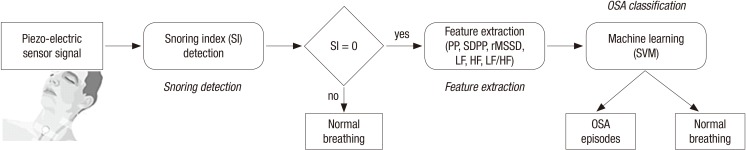
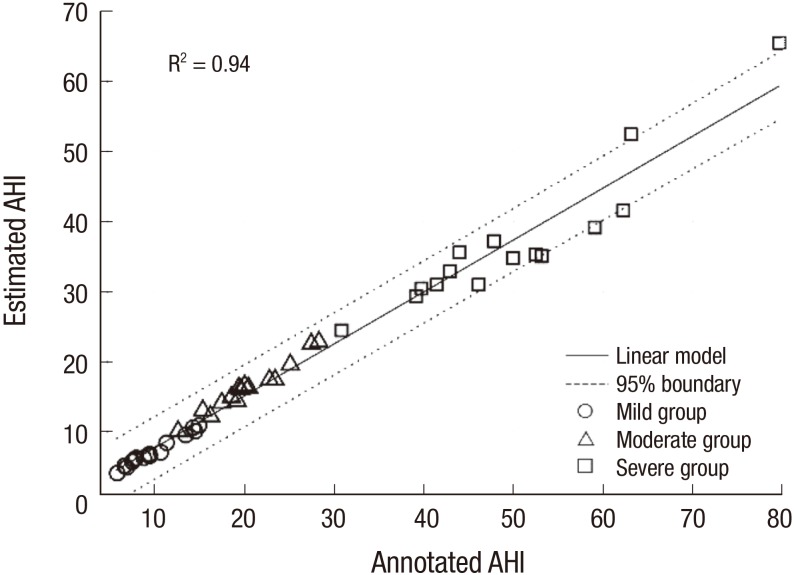
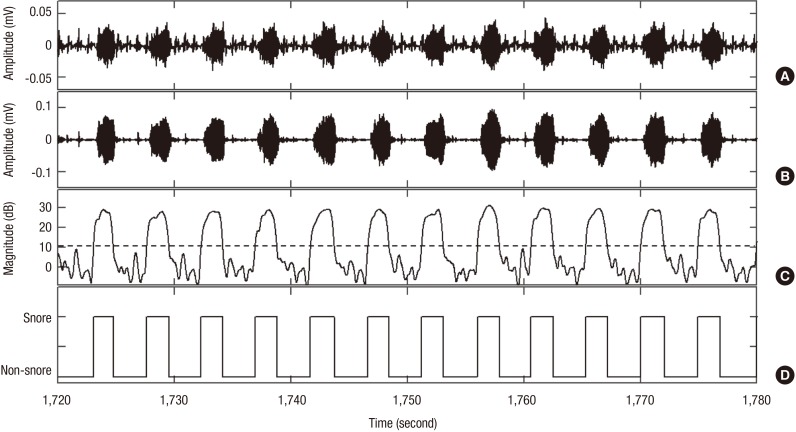
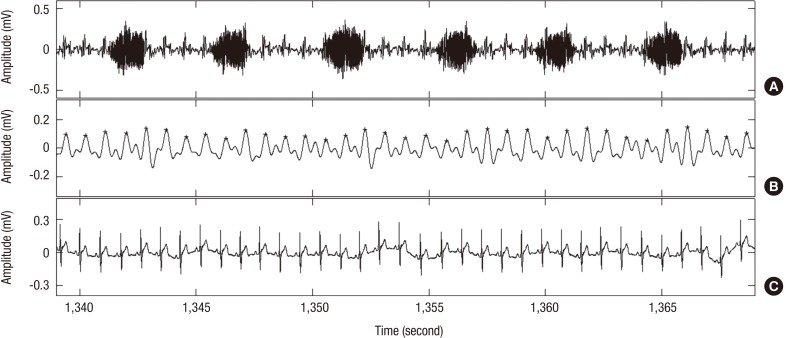
In this study, we propose a novel method for obstructive sleep apnea (OSA) detection using a piezo-electric sensor. OSA is a relatively common sleep disorder. However, more than 80% of OSA patients remain undiagnosed. We investigated the feasibility of OSA assessment using a single-channel physiological signal to simplify the OSA screening. We detected both snoring and heartbeat information by using a piezo-electric sensor, and snoring index (SI) and features based on pulse rate variability (PRV) analysis were extracted from the filtered piezo-electric sensor signal. A support vector machine (SVM) was used as a classifier to detect OSA events. The performance of the proposed method was evaluated on 45 patients from mild, moderate, and severe OSA groups. The method achieved a mean sensitivity, specificity, and accuracy of 72.5%, 74.2%, and 71.5%; 85.8%, 80.5%, and 80.0%; and 70.3%, 77.1%, and 71.9% for the mild, moderate, and severe groups, respectively. Finally, these results not only show the feasibility of OSA detection using a piezo-electric sensor, but also illustrate its usefulness for monitoring sleep and diagnosing OSA.
在本研究中,我们提出了一种使用压电传感器检测阻塞性睡眠呼吸暂停(OSA)的新方法。OSA是一种相对常见的睡眠障碍。然而,超过80%的OSA患者仍未被诊断出来。我们研究了使用单通道生理信号进行OSA评估以简化OSA筛查的可行性。我们通过使用压电传感器检测打鼾和心跳信息,并从滤波后的压电传感器信号中提取打鼾指数(SI)和基于脉率变异性(PRV)分析的特征。使用支持向量机(SVM)作为分类器来检测OSA事件。在所提出的方法在45名轻度、中度和重度OSA组患者身上进行了评估。该方法在轻度、中度和重度组中的平均灵敏度、特异性和准确率分别为72.5%、74.2%和71.5%;85.8%、80.5%和80.0%;以及70.3%、77.1%和71.9%。最后,这些结果不仅表明了使用压电传感器检测OSA的可行性,还说明了其在监测睡眠和诊断OSA方面的有用性。