Vedachalam Sridhar, MacDonald Luke H, Shiferaw Solomon, Seme Assefa, Schwab Kellogg J
Johns Hopkins Water Institute, Johns Hopkins Bloomberg School of Public Health, Baltimore, MD 21205 United States of America.
School of Public Health, Addis Abbaba University, Addis Abbaba, Ethiopia.
PLoS One. 2017 May 10;12(5):e0176272. doi: 10.1371/journal.pone.0176272. eCollection 2017.
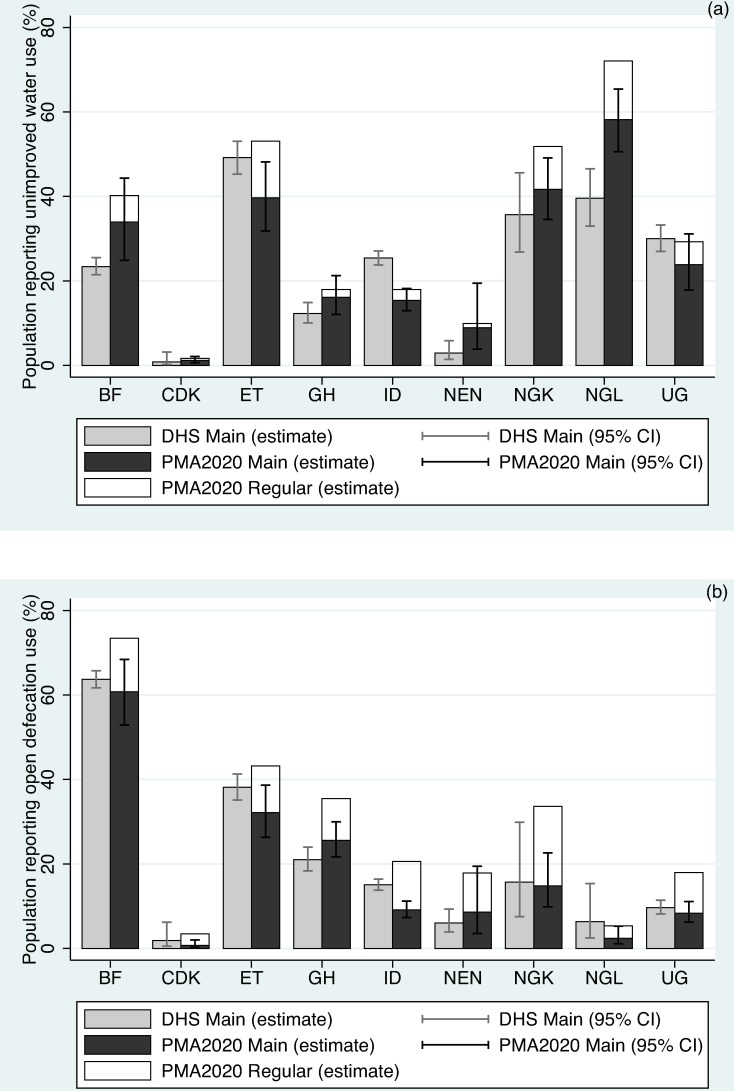
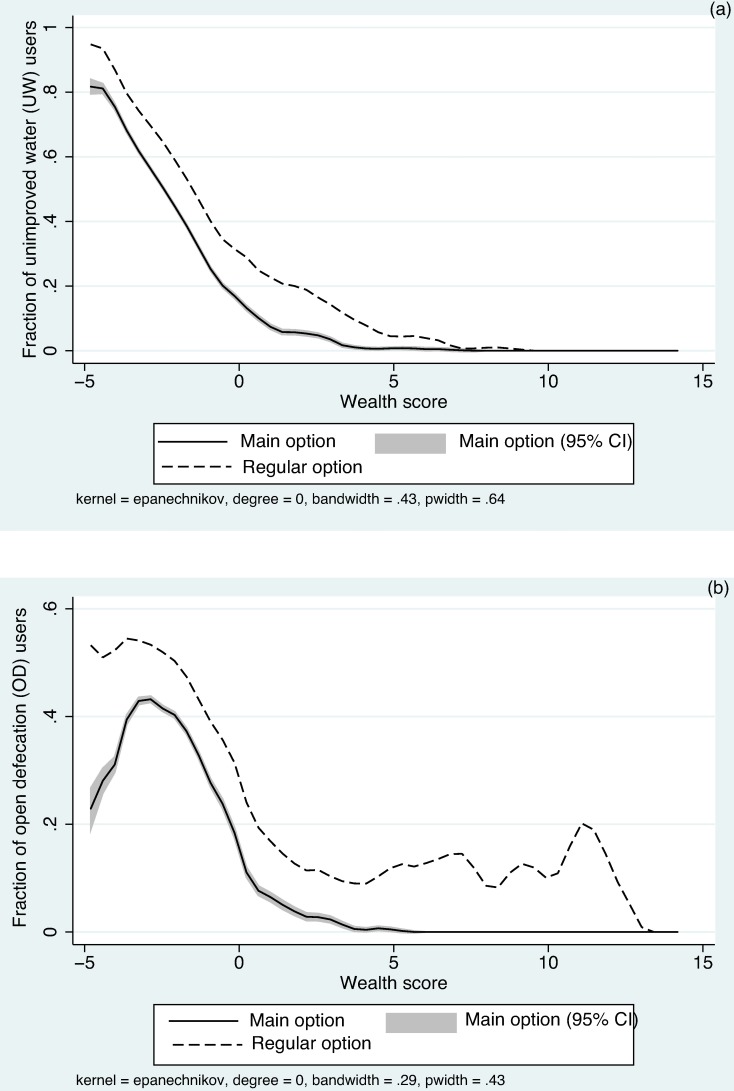
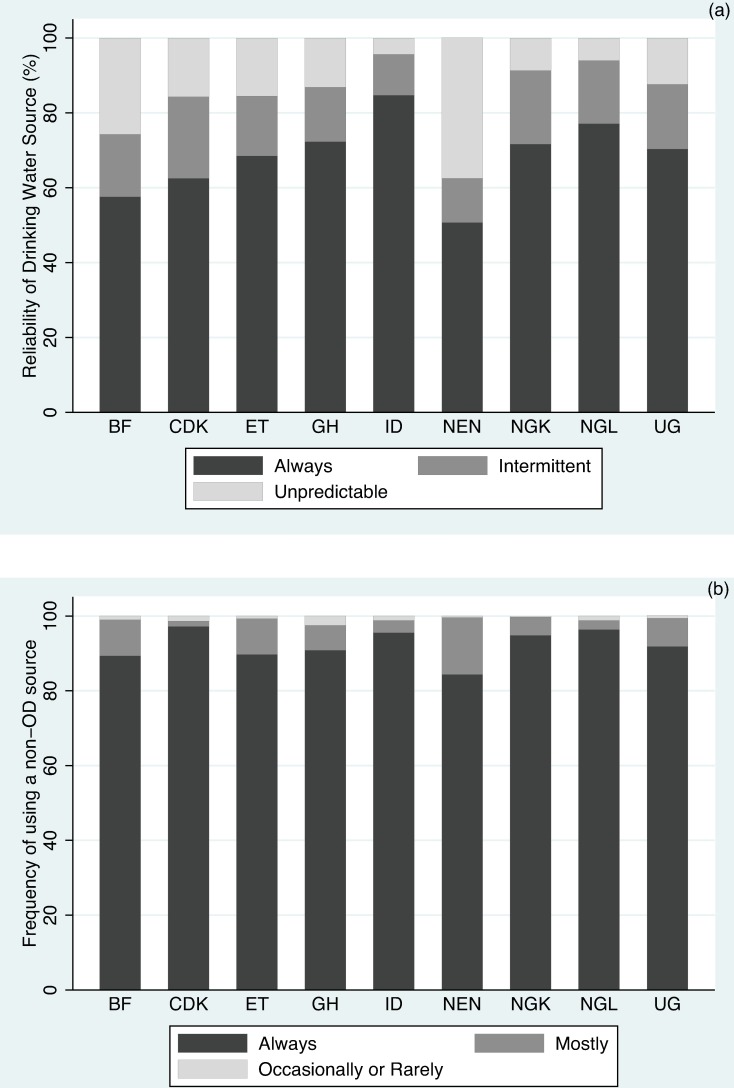
Water and sanitation indicators under the Millennium Development Goals failed to capture high-risk practices undertaken on a regular basis. In conjunction with local partners, fourteen rounds of household surveys using mobile phones with a customized open-source application were conducted across nine study geographies in Asia and Africa. In addition to the main water and sanitation facilities, interviewees (n = 245,054) identified all water and sanitation options regularly used for at least one season of the year. Unimproved water consumption and open defecation were targeted as high-risk practices. We defined underreporting as the difference between the regular and main use of high-risk practices. Our estimates of high-risk practices as the main option matched the widely accepted Demographic and Health Surveys (DHS) estimates within the 95% confidence interval. However, estimates of these practices as a regular option was far higher than the DHS estimates. Across the nine geographies, median underreporting of unimproved water use was 5.5%, with a range of 0.5% to 13.9%. Median underreporting of open defecation was much higher at 9.9%, with a range of 2.7% to 11.5%. This resulted in an underreported population of 25 million regularly consuming unimproved water and 50 million regularly practicing open defecation. Further examination of data from Ethiopia suggested that location and socio-economic factors were significant drivers of underreporting. Current global monitoring relies on a framework that considers the availability and use of a single option to meet drinking water and sanitation needs. Our analysis demonstrates the use of multiple options and widespread underreporting of high-risk practices. Policies based on current monitoring data, therefore, fail to consider the range of challenges and solutions to meeting water and sanitation needs, and result in an inflated sense of progress. Mobile surveys offer a cost-effective and innovative platform to rapidly and repeatedly monitor critical development metrics.
千年发展目标下的水和卫生指标未能涵盖人们日常进行的高风险行为。我们与当地合作伙伴一道,在亚洲和非洲的九个研究地区开展了十四轮家庭调查,使用配备定制开源应用程序的手机。除了主要的水和卫生设施外,受访者(n = 245,054)还指出了一年中至少有一个季节经常使用的所有水和卫生设施选项。不安全饮用水的消费和露天排便被视为高风险行为。我们将漏报定义为高风险行为的常规使用与主要使用之间的差异。我们对作为主要选项的高风险行为的估计在95%置信区间内与广泛接受的人口与健康调查(DHS)估计值相符。然而,将这些行为作为常规选项的估计值远高于DHS的估计值。在这九个地区中,不安全饮用水使用的漏报中位数为5.5%,范围在0.5%至13.9%之间。露天排便的漏报中位数则高得多,为9.9%,范围在2.7%至11.5%之间。这导致有2500万人经常饮用不安全水以及5000万人经常露天排便的情况未被报告。对来自埃塞俄比亚的数据进行的进一步分析表明,地理位置和社会经济因素是漏报的重要驱动因素。当前的全球监测依赖于一个考虑单一选项来满足饮用水和卫生需求的可用性和使用情况的框架。我们的分析表明人们使用多种选项以及高风险行为普遍存在漏报情况。因此,基于当前监测数据制定的政策未能考虑到满足水和卫生需求所面临的一系列挑战及解决方案,从而导致对进展的认知出现夸大。移动调查提供了一个具有成本效益的创新平台,可快速且反复地监测关键发展指标。