Liu Yanli, Yang Hongxu, Wen Yi, Li Bingyi, Zhao Yinhua, Xing Jing, Zhang Min, Chen Yongjin
State Key Laboratory of Military Stomatology and National Clinical Research Center for Oral Diseases and Shaanxi International Joint Research Center for Oral Diseases, Department of General Dentistry and Emergency, School of Stomatology, the Fourth Military Medical University, 145 Changle West Road, Xi'an 710032, China.
State Key Laboratory of Military Stomatology and National Clinical Research Center for Oral Diseases and Shaanxi International Joint Research Center for Oral Diseases, Department of Oral Anatomy and Physiology and TMD, School of Stomatology, the Fourth Military Medical University, 145 Changle West Road, Xi'an 710032, China.
Int J Mol Sci. 2017 May 17;18(5):1076. doi: 10.3390/ijms18051076.
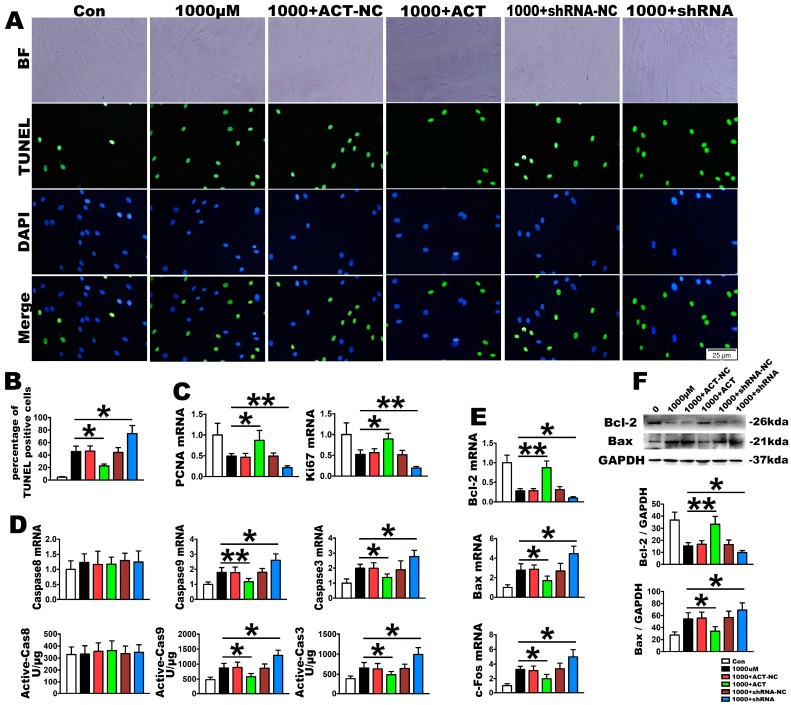
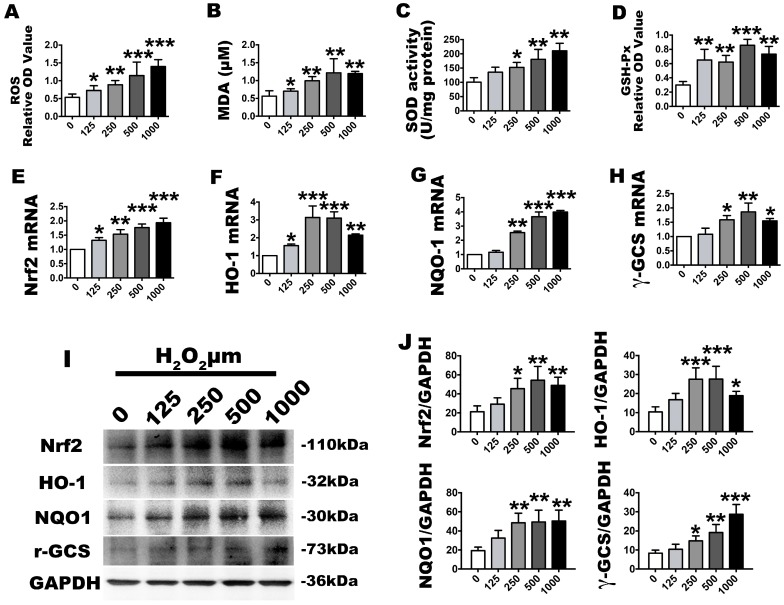
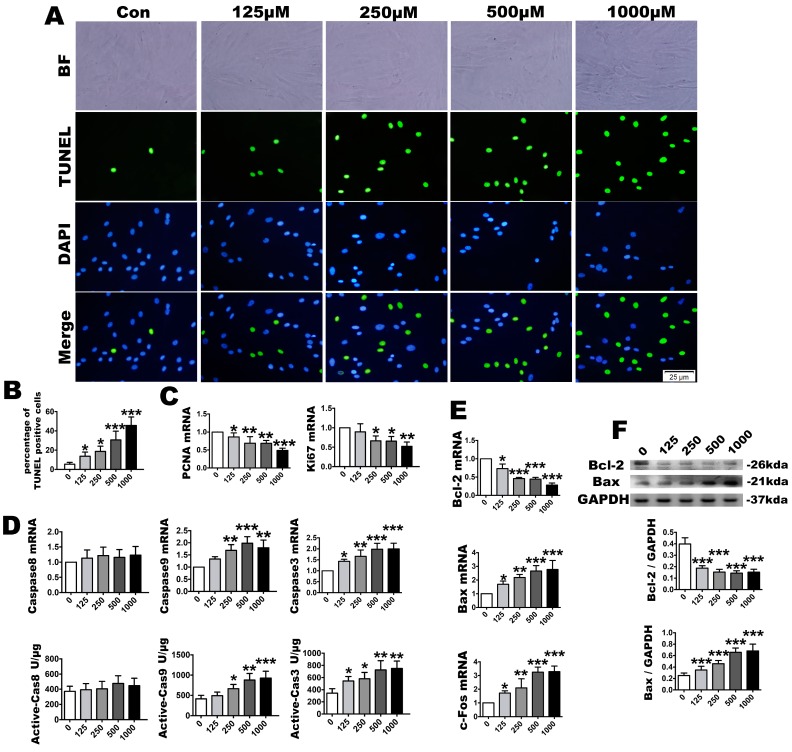
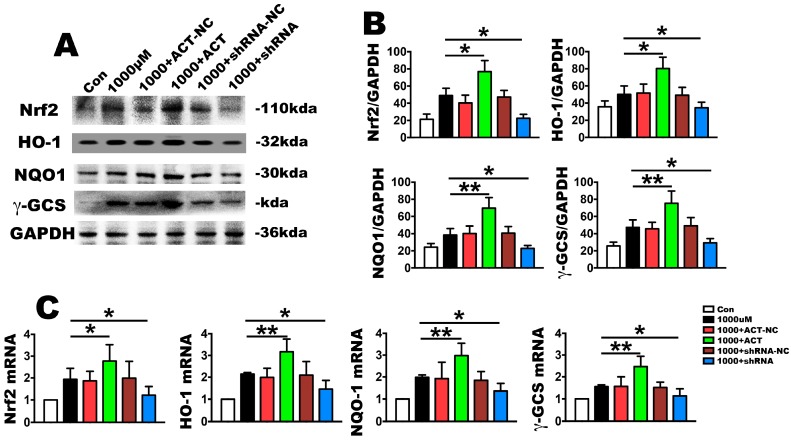
The present study aimed to analyze novel mechanisms underlying Nrf2-mediated anti-apoptosis in periodontal ligament stem cells (PDLSCs) in the periodontitis oxidative microenvironment. We created an oxidative stress model with H₂O₂-treated PDLSCs. We used real-time PCR, Western blotting, TUNEL staining, fluorogenic assay and transfer genetics to confirm the degree of oxidative stress and apoptosis as well as the function of nuclear factor-erythroid 2-related factor 2 (Nrf2). We demonstrated that with upregulated levels of reactive oxygen species (ROS) and malondialdehyde (MDA), the effect of oxidative stress was obvious under H₂O₂ treatment. Oxidative molecules were altered after the H₂O₂ exposure, whereby the signaling of Nrf2 was activated with an increase in its downstream effectors, heme oxygenase-1 (HO-1), NAD(P)H:quinone oxidoreductase 1 (NQO1) and γ-glutamyl cysteine synthetase (γ-GCS). Additionally, the apoptosis levels gradually increased with oxidative stress by the upregulation of caspase-9, caspase-3, Bax and c-Fos levels in addition to the downregulation of Bcl-2. However, there was no alterations in levels of caspase-8. The enhanced antioxidant effect could not mitigate the occurrence of apoptosis. Furthermore, Nrf2 overexpression effectively improved the anti-oxidative levels and increased cell proliferation. At the same time, overexpression effectively restrained TUNEL staining and decreased the molecular levels of caspase-9, caspase-3, Bax and c-Fos, but not that of caspase-8. In contrast, silencing the expression of Nrf2 levels had the opposite effect. Collectively, Nrf2 alleviates PDLSCs via its effects on regulating oxidative stress and anti-intrinsic apoptosis by the activation of oxidative enzymes.
本研究旨在分析在牙周炎氧化微环境中,核因子E2相关因子2(Nrf2)介导的牙周膜干细胞(PDLSCs)抗凋亡的新机制。我们用H₂O₂处理PDLSCs建立了氧化应激模型。我们使用实时聚合酶链反应、蛋白质免疫印迹法、脱氧核糖核苷酸末端转移酶介导的缺口末端标记法、荧光测定法和转基因技术来确认氧化应激和凋亡的程度以及Nrf2的功能。我们证明,随着活性氧(ROS)和丙二醛(MDA)水平上调,H₂O₂处理下氧化应激效应明显。H₂O₂暴露后氧化分子发生改变,从而激活Nrf2信号,其下游效应分子血红素加氧酶-1(HO-1)、烟酰胺腺嘌呤二核苷酸磷酸:醌氧化还原酶1(NQO1)和γ-谷氨酰半胱氨酸合成酶(γ-GCS)增加。此外,随着氧化应激,半胱天冬酶-9、半胱天冬酶-3、Bax和c-Fos水平上调,Bcl-2水平下调,凋亡水平逐渐增加。然而,半胱天冬酶-8水平没有变化。增强的抗氧化作用不能减轻凋亡的发生。此外,Nrf2过表达有效提高抗氧化水平并增加细胞增殖。同时,过表达有效抑制脱氧核糖核苷酸末端转移酶介导的缺口末端标记法染色,并降低半胱天冬酶-9、半胱天冬酶-3、Bax和c-Fos的分子水平,但不影响半胱天冬酶-8。相反,沉默Nrf2水平的表达则产生相反的效果。总体而言,Nrf2通过激活氧化酶调节氧化应激和抗内源性凋亡来减轻PDLSCs损伤。