Miranda Júlia B, Borges Iara A, Campos Samantha P S, Vieira Flávia N, de Ázara Tatiana M F, Marques Fernanda A, Costa Galileu B, Luis Ana Paula M F, de Oliveira Jaqueline S, Ferreira Paulo César P, Bonjardim Cláudio Antônio, da Silva Silvio L M, Eiras Álvaro E, Abrahão Jônatas S, Kroon Erna G, Drumond Betânia P, Paglia Adriano P, Trindade Giliane de S
Emerg Infect Dis. 2017 Jun;23(6):931-938. doi: 10.3201/eid2306.161643.
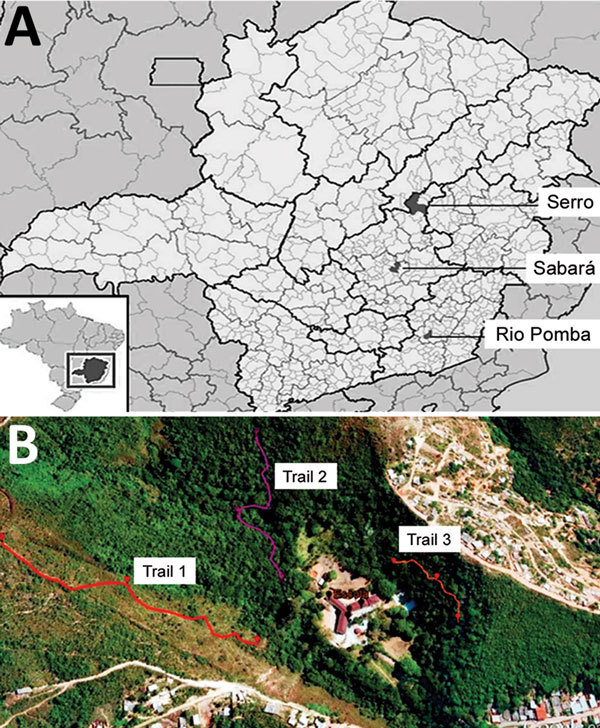
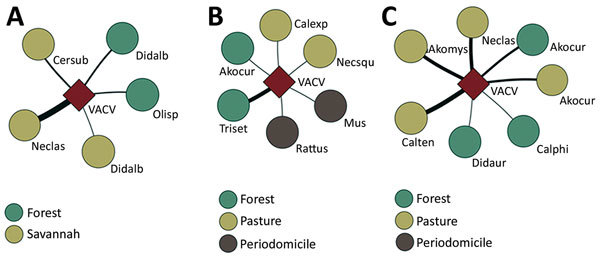
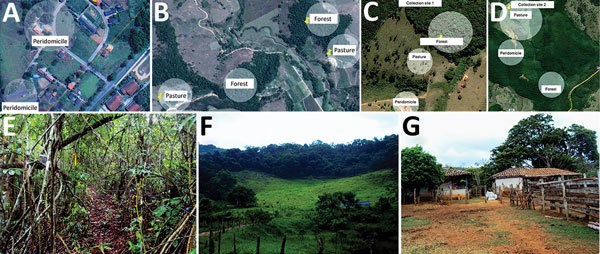
Vaccinia virus (VACV) is a zoonotic agent that causes a disease called bovine vaccinia, which is detected mainly in milking cattle and humans in close contact with these animals. Even though many aspects of VACV infection have been described, much is still unknown about its circulation in the environment and its natural hosts/reservoirs. To investigate the presence of Orthopoxvirus antibodies or VACV DNA, we captured small rodents and marsupials in 3 areas of Minas Gerais state, Brazil, and tested their samples in a laboratory. A total of 336 animals were tested; positivity ranged from 18.1% to 25.5% in the 3 studied regions located in different biomes, including the Atlantic Forest and the Cerrado. Analysis of nucleotide sequences indicated co-circulation of VACV groups I and II. Our findings reinforce the possible role played by rodents and marsupials in VACV maintenance and its transmission chain.
痘苗病毒(VACV)是一种人畜共患病原体,可引发一种名为牛痘的疾病,主要在挤奶的奶牛以及与这些动物密切接触的人类中被检测到。尽管已经对痘苗病毒感染的许多方面进行了描述,但关于其在环境中的传播以及天然宿主/储存宿主,仍有许多未知之处。为了调查正痘病毒抗体或痘苗病毒DNA的存在情况,我们在巴西米纳斯吉拉斯州的3个地区捕获了小型啮齿动物和有袋动物,并在实验室对它们的样本进行了检测。总共检测了336只动物;在位于不同生物群落(包括大西洋森林和塞拉多)的3个研究区域中,阳性率在18.1%至25.5%之间。核苷酸序列分析表明,痘苗病毒I组和II组共同传播。我们的研究结果强化了啮齿动物和有袋动物在痘苗病毒维持及其传播链中可能发挥的作用。