Mota Natália B, Copelli Mauro, Ribeiro Sidarta
Brain Institute, Federal University of Rio Grande do Norte, UFRN, Natal, RN Brazil.
Physics Department, Federal University of Pernambuco, UFPE, Recife, PE Brazil.
NPJ Schizophr. 2017 Apr 13;3:18. doi: 10.1038/s41537-017-0019-3. eCollection 2017.
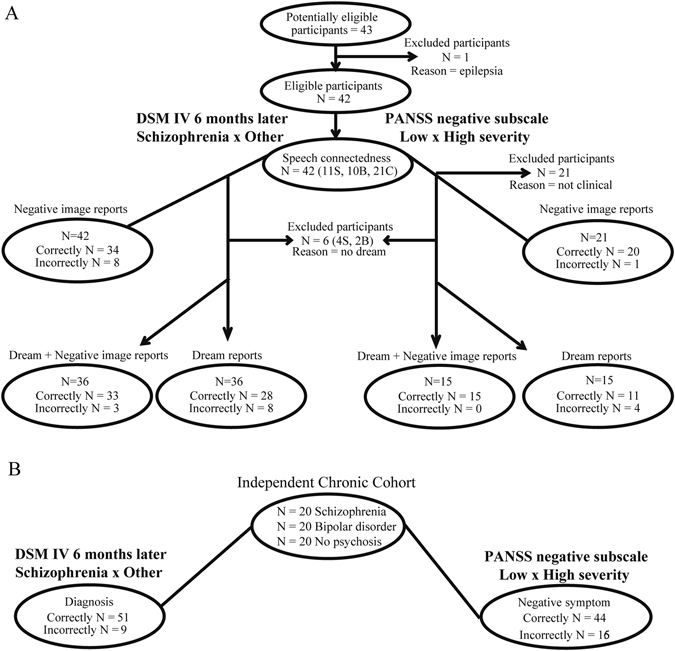
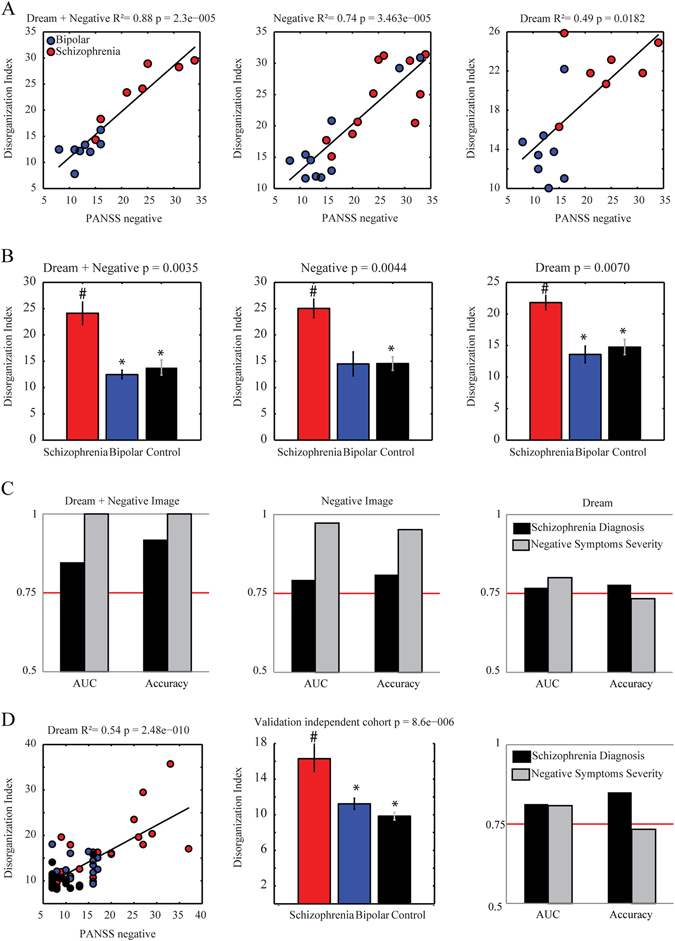
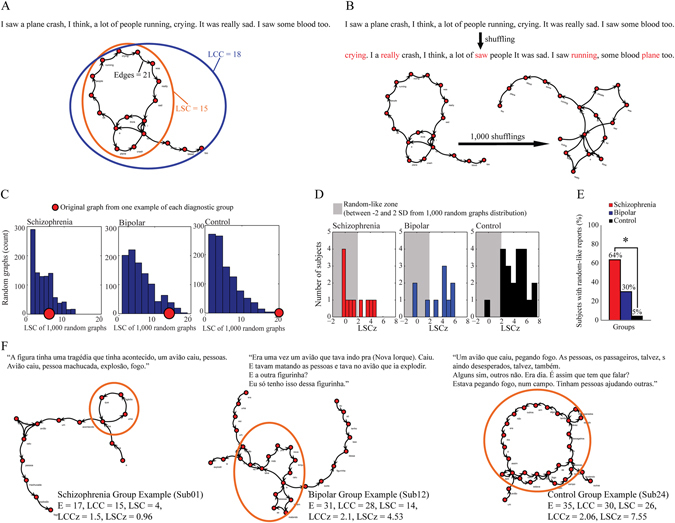
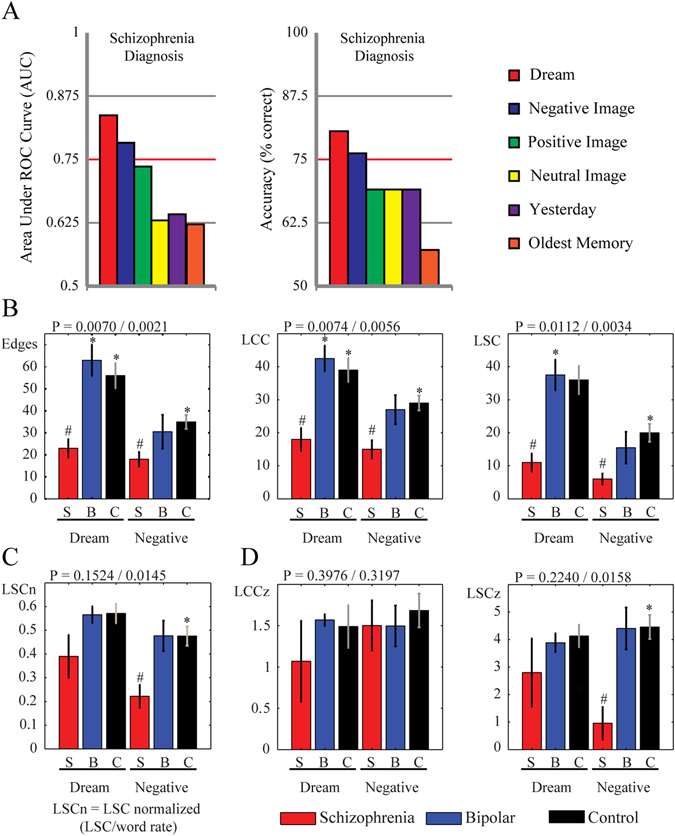
In chronic psychotic patients, word graph analysis shows potential as complementary psychiatric assessment. This analysis relies mostly on connectedness, a structural feature of speech that is anti-correlated with negative symptoms. Here we aimed to verify whether speech disorganization during the first clinical contact, as measured by graph connectedness, can correctly classify negative symptoms and the schizophrenia diagnosis 6 months in advance. Positive and negative syndrome scale scores and memory reports were collected from 21 patients undergoing first clinical contact for recent-onset psychosis, followed for 6 months to establish diagnosis, and compared to 21 well-matched healthy subjects. Each report was represented as a word-trajectory graph. Connectedness was measured by number of edges, number of nodes in the largest connected component and number of nodes in the largest strongly connected component. Similarities to random graphs were estimated. All connectedness attributes were combined into a single Disorganization Index weighted by the correlation with the positive and negative syndrome scale negative subscale, and used for classifications. Random-like connectedness was more prevalent among schizophrenia patients (64 × 5% in Control group, = 0.0002). Connectedness from two kinds of memory reports (dream and negative image) explained 88% of negative symptoms variance ( < 0.0001). The Disorganization Index classified low vs. high severity of negative symptoms with 100% accuracy (area under the receiver operating characteristic curve = 1), and schizophrenia diagnosis with 91.67% accuracy (area under the receiver operating characteristic curve = 0.85). The index was validated in an independent cohort of chronic psychotic patients and controls ( = 60) (85% accuracy). Thus, speech disorganization during the first clinical contact correlates tightly with negative symptoms, and is quite discriminative of the schizophrenia diagnosis.
在慢性精神病患者中,词图分析显示出作为补充性精神科评估手段的潜力。这种分析主要依赖于连通性,这是一种言语的结构特征,与阴性症状呈负相关。在此,我们旨在验证首次临床接触期间通过图连通性测量的言语紊乱是否能够提前6个月正确分类阴性症状和精神分裂症诊断。收集了21例近期发病精神病首次临床接触患者的阳性和阴性症状量表评分及记忆报告,随访6个月以确定诊断,并与21名匹配良好的健康受试者进行比较。每份报告都表示为一个词轨迹图。连通性通过边的数量、最大连通分量中的节点数量以及最大强连通分量中的节点数量来测量。估计与随机图的相似性。所有连通性属性被组合成一个单一的紊乱指数,该指数由与阳性和阴性症状量表阴性子量表的相关性加权,并用于分类。类随机连通性在精神分裂症患者中更为普遍(对照组为64×5%,P = 0.0002)。来自两种记忆报告(梦境和负面意象)的连通性解释了88%的阴性症状方差(P < 0.0001)。紊乱指数对阴性症状的低严重程度与高严重程度进行分类的准确率为100%(受试者工作特征曲线下面积 = 1),对精神分裂症诊断的准确率为91.67%(受试者工作特征曲线下面积 = 0.85)。该指数在一组独立的慢性精神病患者和对照组(n = 60)中得到验证(准确率85%)。因此,首次临床接触期间的言语紊乱与阴性症状密切相关,并且对精神分裂症诊断具有相当强的判别力。