Cao Yiwei, Wang Rui-Hong
Faculty of Health Science, University of Macau, Macau, China.
Aging Dis. 2017 May 2;8(3):314-333. doi: 10.14336/AD.2016.1101. eCollection 2017 May.
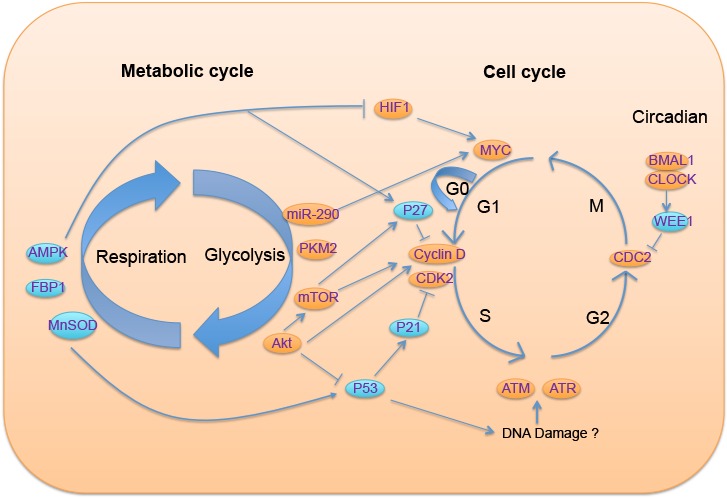
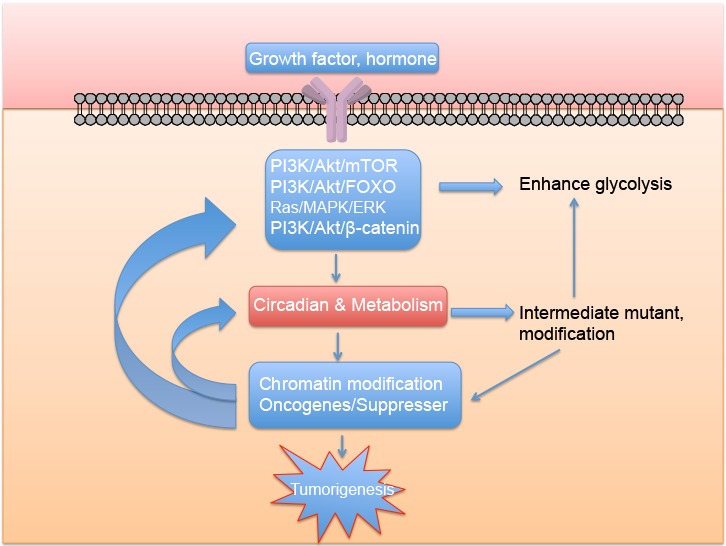
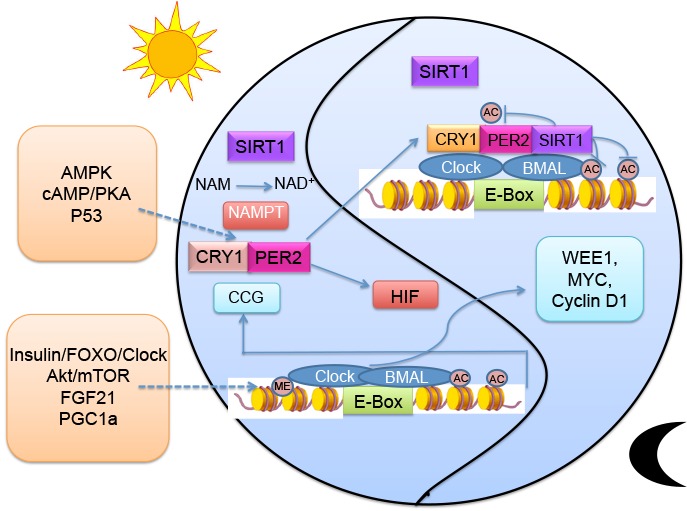
Accumulating epidemiological studies have implicated a strong link between age associated metabolic diseases and cancer, though direct and irrefutable evidence is missing. In this review, we discuss the connection between Warburg effects and tumorigenesis, as well as adaptive responses to environment such as circadian rhythms on molecular pathways involved in metabolism. We also review the central role of the sirtuin family of proteins in physiological modulation of cellular processes and age-associated metabolic diseases. We also provide a macroscopic view of how the circadian rhythm affects metabolism and may be involved in cell metabolism reprogramming and cancer pathogenesis. The aberrations in metabolism and the circadian system may lead to age-associated diseases directly or through intermediates. These intermediates may be either mutated or reprogrammed, thus becoming responsible for chromatin modification and oncogene transcription. Integration of circadian rhythm and metabolic reprogramming in the holistic understanding of metabolic diseases and cancer may provide additional insights into human diseases.
越来越多的流行病学研究表明,与年龄相关的代谢性疾病和癌症之间存在紧密联系,尽管缺乏直接且确凿的证据。在这篇综述中,我们讨论了瓦伯格效应与肿瘤发生之间的联系,以及昼夜节律等对环境的适应性反应在参与代谢的分子途径上的作用。我们还综述了沉默调节蛋白家族在细胞过程的生理调节和与年龄相关的代谢性疾病中的核心作用。我们还提供了一个宏观视角,阐述昼夜节律如何影响代谢,以及可能如何参与细胞代谢重编程和癌症发病机制。代谢和昼夜节律系统的异常可能直接或通过中间产物导致与年龄相关的疾病。这些中间产物可能发生突变或重编程,从而导致染色质修饰和癌基因转录。将昼夜节律与代谢重编程整合到对代谢性疾病和癌症的整体理解中,可能会为人类疾病提供更多见解。