Guangdong Provincial Key Laboratory of Gastroenterology, Department of Gastroenterology, Nanfang Hospital, Southern Medical University, State Key Laboratory of Organ Failure Research, Ministry of Education, Guangzhou, China.
Department of Nephrology, The first people's Hospital of Foshan, Guangdong Province, Foshan, China.
Sci Rep. 2017 Jun 6;7(1):2870. doi: 10.1038/s41598-017-02989-2.
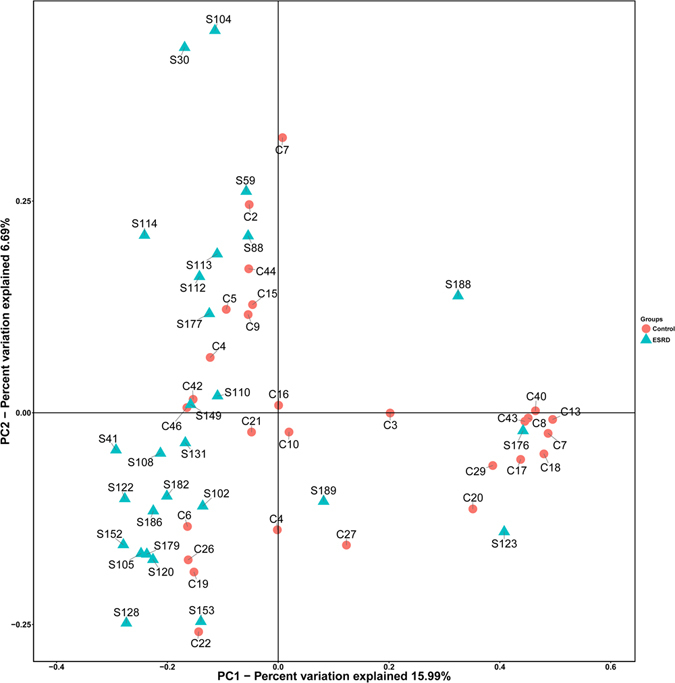
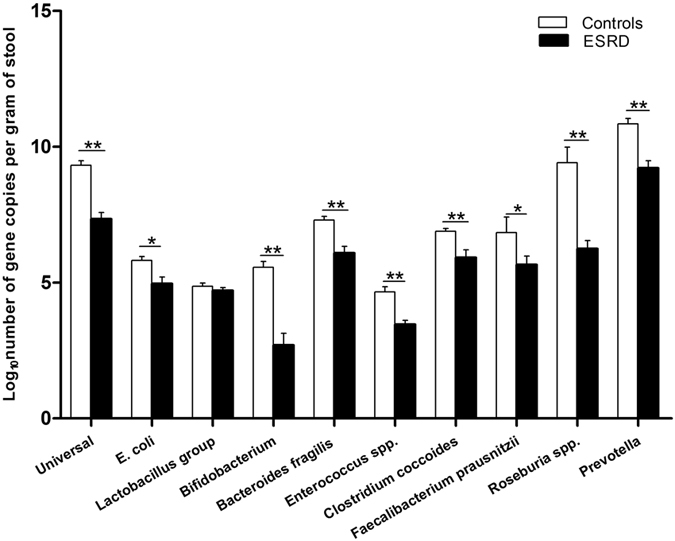
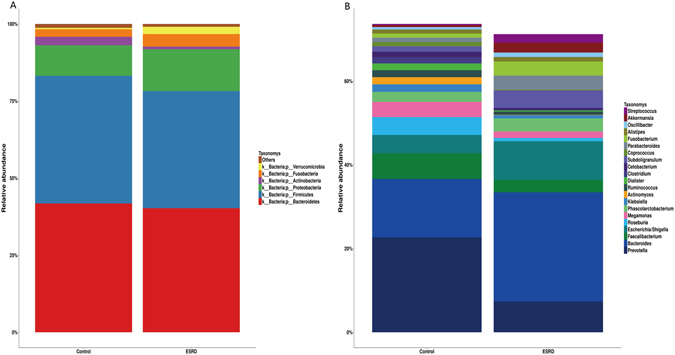
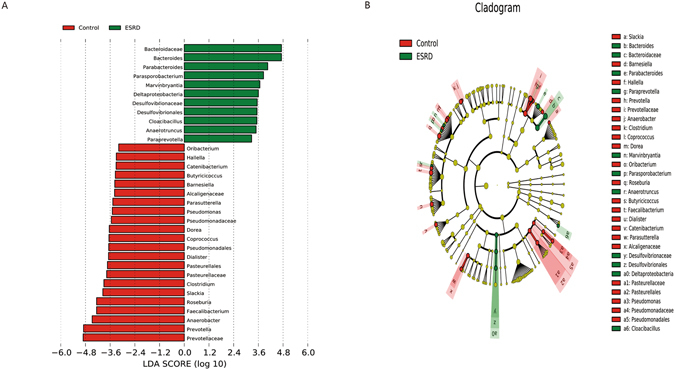
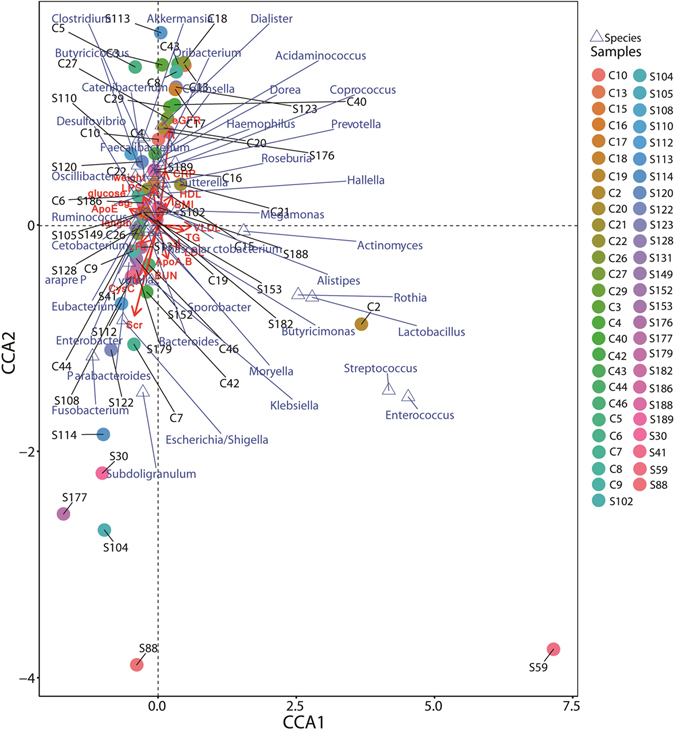
We evaluated differences in the compositions of faecal microbiota between 52 end stage renal disease (ESRD) patients and 60 healthy controls in southern China using quantitative real-time polymerase chain reaction (qPCR) and high-throughput sequencing (16S ribosomal RNA V4-6 region) methods. The absolute quantification of total bacteria was significantly reduced in ESRD patients (p < 0.01). In three enterotypes, Prevotella was enriched in the healthy group whereas Bacteroides were prevalent in the ESRD group (LDA score > 4.5). 11 bacterial taxa were significantly overrepresented in samples from ESRD and 22 bacterial taxa were overrepresented in samples from healthy controls. The butyrate producing bacteria, Roseburia, Faecalibacterium, Clostridium, Coprococcus and Prevotella were reduced in the ESRD group (LDA values > 2.0). Canonical correspondence analysis (CCA) indicated that Cystatin C (CysC), creatinine and eGFR appeared to be the most important environmental parameters to influence the overall microbial communities. In qPCR analysis, The butyrate producing species Roseburia spp., Faecalibacterium prausnitzii, Prevotella and Universal bacteria, were negatively related to CRP and CysC. Total bacteria in faeces were reduced in patients with ESRD compared to that in healthy individuals. The enterotypes change from Prevotella to Bacteroides in ESRD patients. The gut microbiota was associated with the inflammatory state and renal function of chronic kidney disease.
我们采用实时定量聚合酶链反应(qPCR)和高通量测序(16S 核糖体 RNA V4-6 区)方法,评估了中国南方 52 例终末期肾病(ESRD)患者和 60 例健康对照者粪便微生物群落组成的差异。ESRD 患者的总细菌绝对数量明显减少(p<0.01)。在三种肠型中,健康组中普雷沃氏菌富集,而 ESRD 组中拟杆菌普遍存在(LDA 评分>4.5)。11 种细菌在 ESRD 样本中显著过度表达,22 种细菌在健康对照组样本中过度表达。产丁酸细菌罗斯伯里氏菌、粪杆菌、梭菌、真杆菌和普雷沃氏菌在 ESRD 组中减少(LDA 值>2.0)。典型对应分析(CCA)表明,半胱氨酸蛋白酶抑制剂 C(CysC)、肌酐和 eGFR 似乎是影响整体微生物群落的最重要环境参数。在 qPCR 分析中,产丁酸物种罗斯伯里氏菌属、普雷沃氏菌属、前拟杆菌属和普遍细菌与 CRP 和 CysC 呈负相关。与健康个体相比,ESRD 患者粪便中的总细菌减少。ESRD 患者的肠型从普雷沃氏菌变为拟杆菌。肠道微生物群与慢性肾脏病的炎症状态和肾功能有关。