Park Kyung Min, Lewis Daniel, Gerecht Sharon
Department of Chemical and Biomolecular Engineering, Johns Hopkins Physical Sciences-Oncology Center and Institute for NanoBioTechnology, Johns Hopkins University, Baltimore, Maryland 21218; email:
Division of Bioengineering, Incheon National University, Incheon 22012, Republic of Korea.
Annu Rev Biomed Eng. 2017 Jun 21;19:109-133. doi: 10.1146/annurev-bioeng-071516-044619.
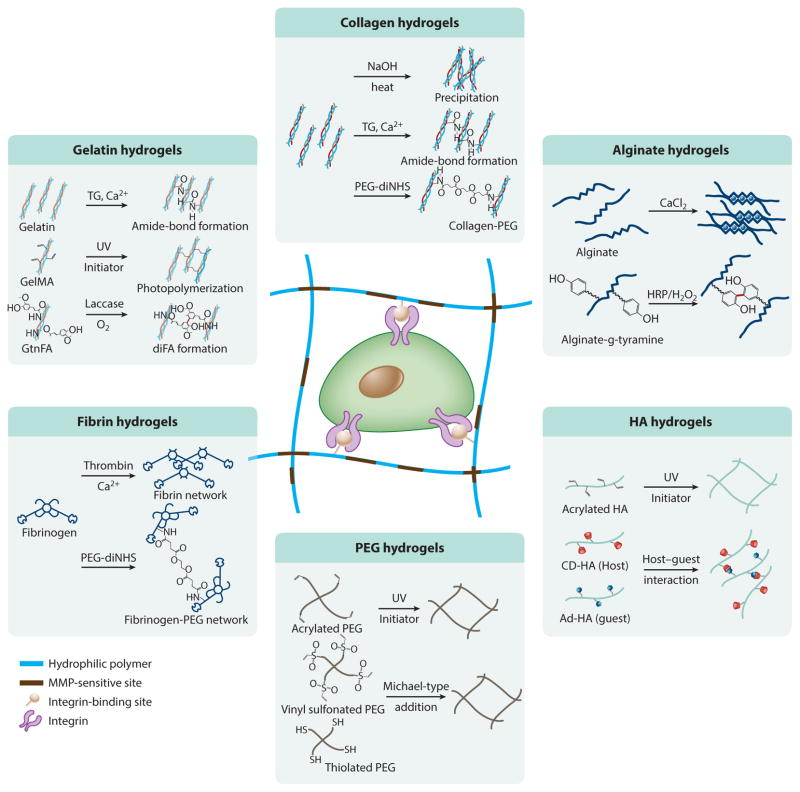
Recent research has demonstrated that tumor microenvironments play pivotal roles in tumor development and metastasis through various physical, chemical, and biological factors, including extracellular matrix (ECM) composition, matrix remodeling, oxygen tension, pH, cytokines, and matrix stiffness. An emerging trend in cancer research involves the creation of engineered three-dimensional tumor models using bioinspired hydrogels that accurately recapitulate the native tumor microenvironment. With recent advances in materials engineering, many researchers are developing engineered tumor models, which are promising platforms for the study of cancer biology and for screening of therapeutic agents for better clinical outcomes. In this review, we discuss the development and use of polymeric hydrogel materials to engineer native tumor ECMs for cancer research, focusing on emerging technologies in cancer engineering that aim to accelerate clinical outcomes.
最近的研究表明,肿瘤微环境通过各种物理、化学和生物因素,包括细胞外基质(ECM)组成、基质重塑、氧张力、pH值、细胞因子和基质硬度,在肿瘤发展和转移中发挥关键作用。癌症研究中的一个新趋势是利用生物启发水凝胶创建工程化三维肿瘤模型,该模型能准确重现天然肿瘤微环境。随着材料工程的最新进展,许多研究人员正在开发工程化肿瘤模型,这是用于癌症生物学研究和筛选治疗药物以获得更好临床结果的有前景的平台。在这篇综述中,我们讨论了用于癌症研究的聚合物水凝胶材料构建天然肿瘤ECM的开发和应用,重点关注旨在加速临床结果的癌症工程新兴技术。