Sanderson Warren C, Scherbov Sergei, Gerland Patrick
Department of Economics, Stony Brook University, Stony Brook, NY, United States of America.
International Institute for Applied Systems Analysis, World Population Program, Wittgenstein Centre for Demography and Global Human Capital (IIASA, VID/ÖAW, WU), Schlossplatz 1, Laxenburg, Austria.
PLoS One. 2017 Jun 21;12(6):e0179171. doi: 10.1371/journal.pone.0179171. eCollection 2017.
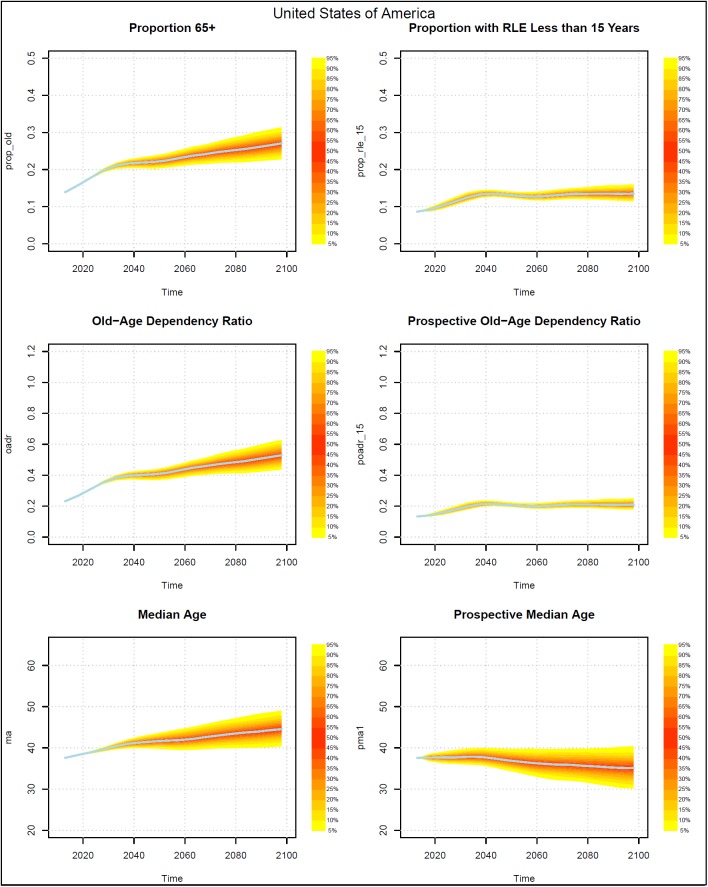
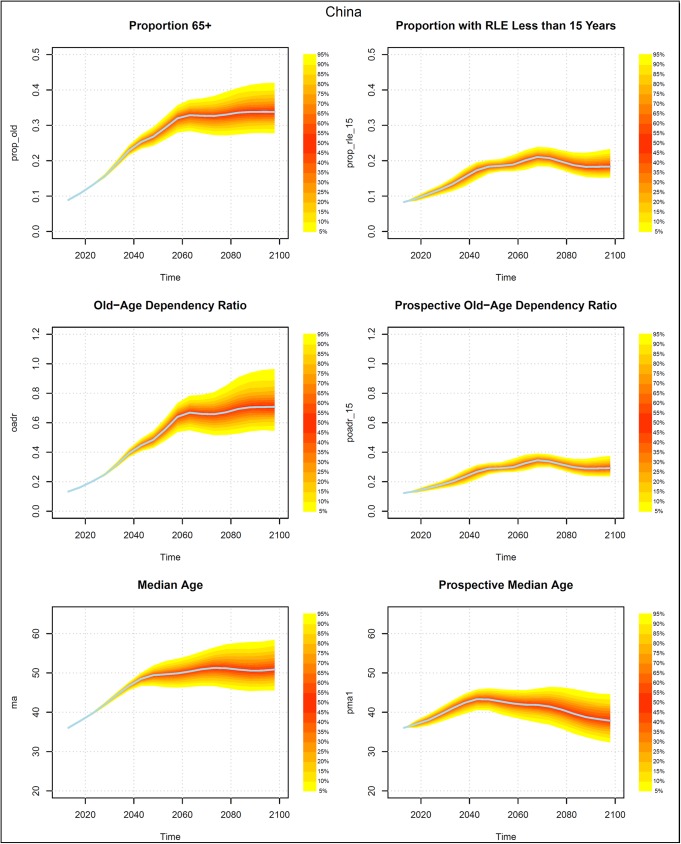
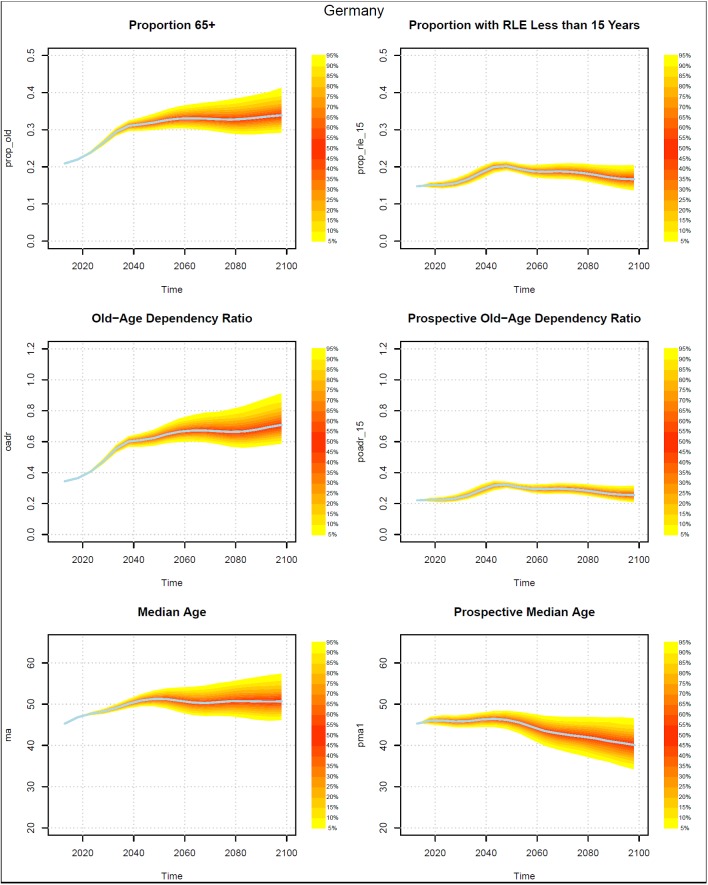
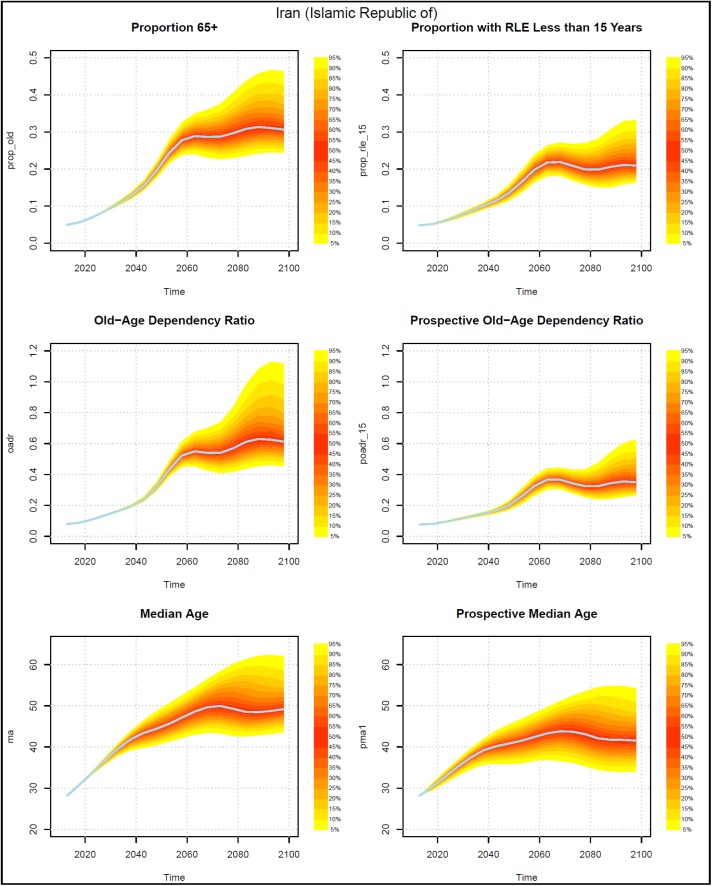
We merge two methodologies, prospective measures of population aging and probabilistic population forecasts. We compare the speed of change and variability in forecasts of the old age dependency ratio and the prospective old age dependency ratio as well as the same comparison for the median age and the prospective median age. While conventional measures of population aging are computed on the basis of the number of years people have already lived, prospective measures are computed also taking account of the expected number of years they have left to live. Those remaining life expectancies change over time and differ from place to place. We compare the probabilistic distributions of the conventional and prospective measures using examples from China, Germany, Iran, and the United States. The changes over time and the variability of the prospective indicators are smaller than those that are observed in the conventional ones. A wide variety of new results emerge from the combination of methodologies. For example, for Germany, Iran, and the United States the likelihood that the prospective median age of the population in 2098 will be lower than it is today is close to 100 percent.
我们将两种方法结合起来,即人口老龄化的前瞻性测度方法和概率性人口预测方法。我们比较了老年抚养比预测值和前瞻性老年抚养比的变化速度及变异性,同时也对中位数年龄和前瞻性中位数年龄进行了同样的比较。传统的人口老龄化测度是基于人们已经度过的年数来计算的,而前瞻性测度在计算时还会考虑人们预期剩余的寿命年数。这些剩余预期寿命会随时间变化,且因地区而异。我们以中国、德国、伊朗和美国为例,比较了传统测度和前瞻性测度的概率分布。前瞻性指标随时间的变化以及变异性均小于传统指标。方法的结合产生了各种各样的新结果。例如,对于德国、伊朗和美国而言,到2098年人口的前瞻性中位数年龄低于当前水平的可能性接近100%。