Marcial Guillermo E, Ford Amanda L, Haller Michael J, Gezan Salvador A, Harrison Natalie A, Cai Dan, Meyer Julie L, Perry Daniel J, Atkinson Mark A, Wasserfall Clive H, Garrett Timothy, Gonzalez Claudio F, Brusko Todd M, Dahl Wendy J, Lorca Graciela L
Department of Microbiology and Cell Science, Genetics Institute, Institute of Food and Agricultural Sciences, University of Florida, Gainesville, FL, United States.
Food Science and Human Nutrition Department, Institute of Food and Agricultural Sciences, University of Florida, Gainesville, FL, United States.
Front Immunol. 2017 Jun 12;8:655. doi: 10.3389/fimmu.2017.00655. eCollection 2017.
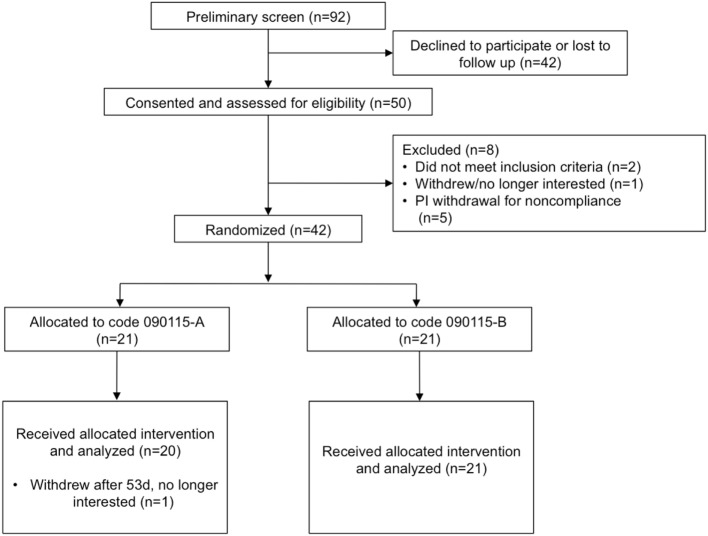
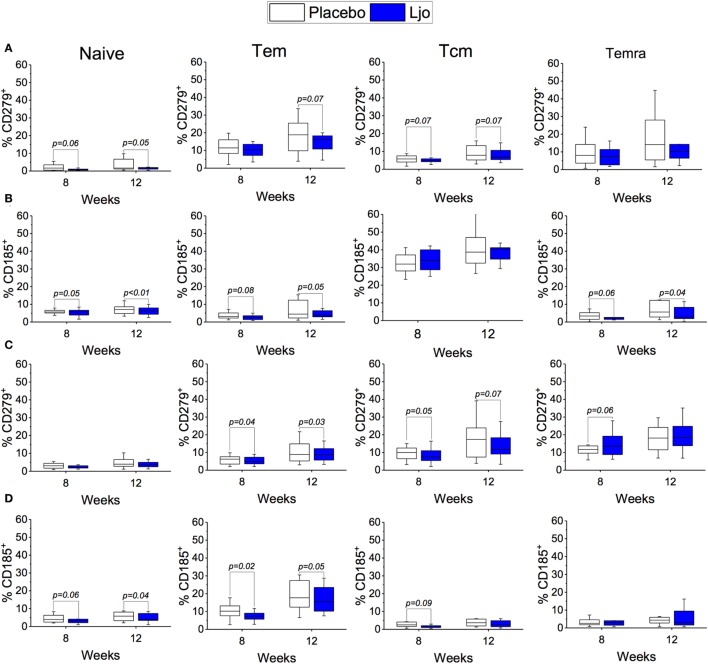
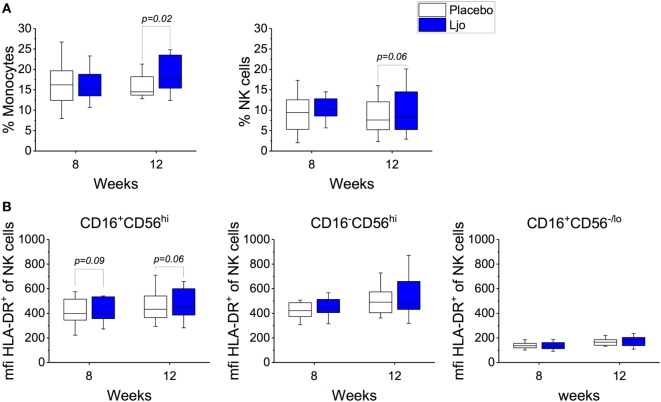
N6.2 mitigates the onset of type 1 diabetes (T1D) in biobreeding diabetes-prone rats, in part, through changes in kynurenine:tryptophan (K:T) ratios. The goal of this pilot study was to determine the safety, tolerance, and general immunological response of N6.2 in healthy subjects. A double-blind, randomized clinical trial in 42 healthy individuals with no known risk factors for T1D was undertaken to evaluate subject responses to the consumption of N6.2. Participants received 1 capsule/day containing 10 colony-forming units of N6.2 or placebo for 8 weeks. Comprehensive metabolic panel (CMP), leukocyte subpopulations by complete blood count (CBC) and flow cytometry, serum cytokines, and relevant metabolites in the indoleamine-2,3-dioxygenase pathway were assessed. N6.2 survival and intestinal microbiota was analyzed. Daily and weekly questionnaires were assessed for potential effects of probiotic treatment on general wellness. The administration of N6.2 did not modify the CMP or CBC of participants suggesting general safety. In fact, N6.2 administration significantly decreased the occurrence of abdominal pain, indigestion, and cephalic syndromes. As predicted, increased serum tryptophan levels increased resulting in a decreased K:T ratio was observed in the N6.2 group. Interestingly, immunophenotyping assays revealed that monocytes and natural killer cell numbers were increased significantly after washout (12 weeks). Moreover, an increase of circulating effector Th1 cells (CD45ROCD183CD196) and cytotoxic CD8 T cells subset was observed in the N6.2 group. Consumption of N6.2 is well tolerated in adult control subjects, demonstrates systemic impacts on innate and adaptive immune populations, and results in a decreased K:T ratio. These data provide support for the safety and feasibility of using N6.2 in prevention trials in subjects at risk for T1D.
This trial was registered at http://clinicaltrials.gov as NCT02349360.
N6.2可部分通过犬尿氨酸:色氨酸(K:T)比值的变化减轻生物繁殖糖尿病易患大鼠1型糖尿病(T1D)的发病。这项初步研究的目的是确定N6.2在健康受试者中的安全性、耐受性和一般免疫反应。对42名无T1D已知风险因素的健康个体进行了一项双盲、随机临床试验,以评估受试者对服用N6.2的反应。参与者每天服用1粒含10个N6.2菌落形成单位的胶囊或安慰剂,持续8周。评估了综合代谢指标(CMP)、全血细胞计数(CBC)和流式细胞术检测的白细胞亚群、血清细胞因子以及吲哚胺-2,3-双加氧酶途径中的相关代谢物。分析了N6.2的存活率和肠道微生物群。评估了每日和每周问卷,以了解益生菌治疗对总体健康的潜在影响。服用N6.2未改变参与者的CMP或CBC,表明总体安全性良好。事实上,服用N6.2显著降低了腹痛、消化不良和头部症状的发生率。如预期的那样,在N6.2组中观察到血清色氨酸水平升高,导致K:T比值降低。有趣的是,免疫表型分析显示,洗脱后(12周)单核细胞和自然杀伤细胞数量显著增加。此外,在N6.2组中观察到循环效应性Th1细胞(CD45ROCD183CD196)和细胞毒性CD8 T细胞亚群增加。成年对照受试者对服用N6.2耐受性良好,对先天性和适应性免疫群体有全身影响,并导致K:T比值降低。这些数据为在T1D风险受试者的预防试验中使用N6.2的安全性和可行性提供了支持。