Liang Ying, Gao Yajun, Jones Alan M
College of Natural Resources and Environment, Northwest A&F UniversityXianyang, China.
Department of Biology University of North Carolina at Chapel HillChapel Hill, NC, United States.
Front Plant Sci. 2017 Jun 13;8:1015. doi: 10.3389/fpls.2017.01015. eCollection 2017.
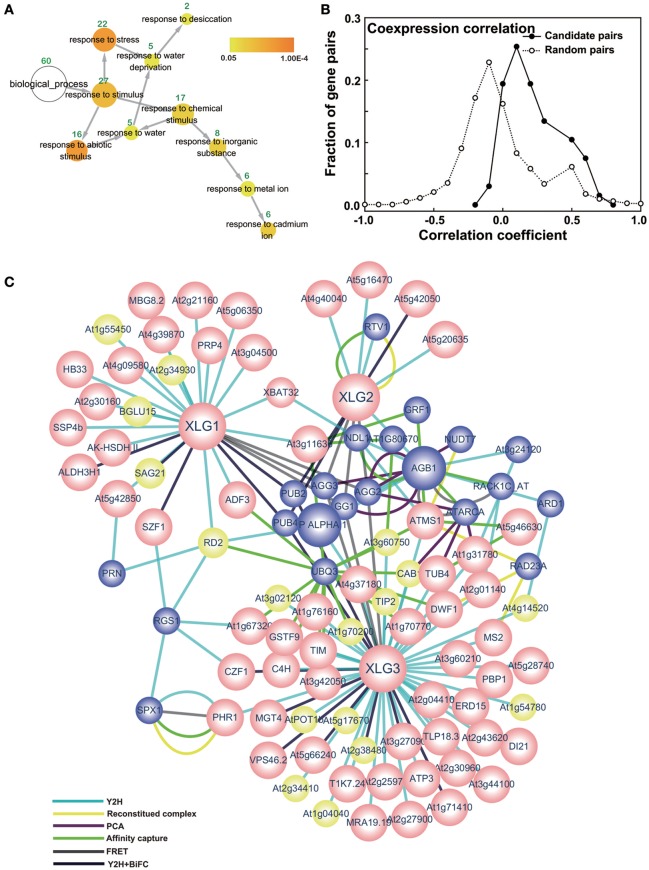
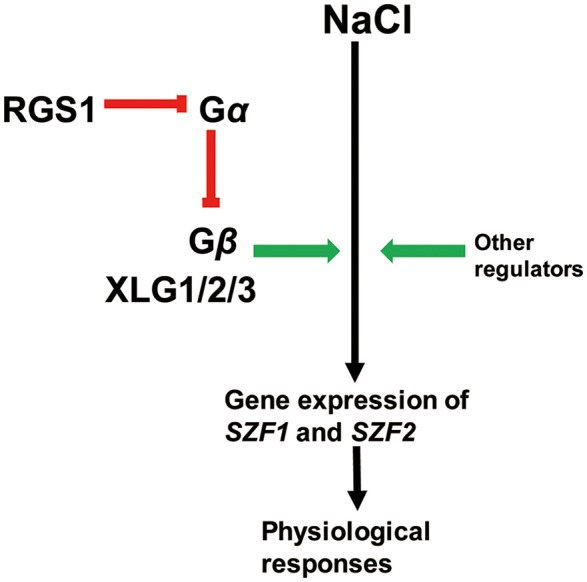
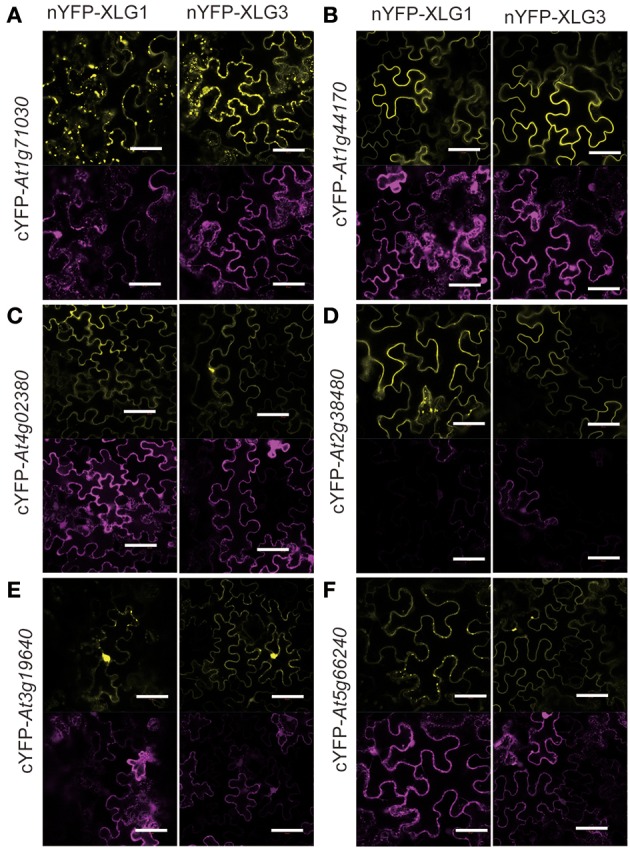
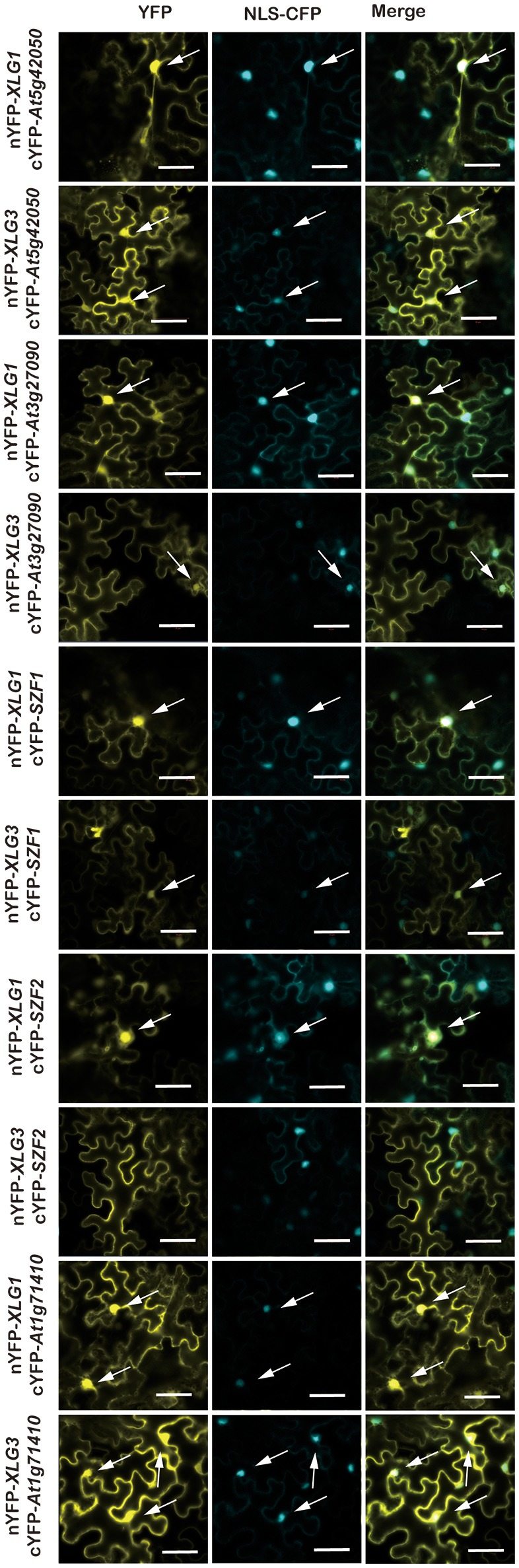
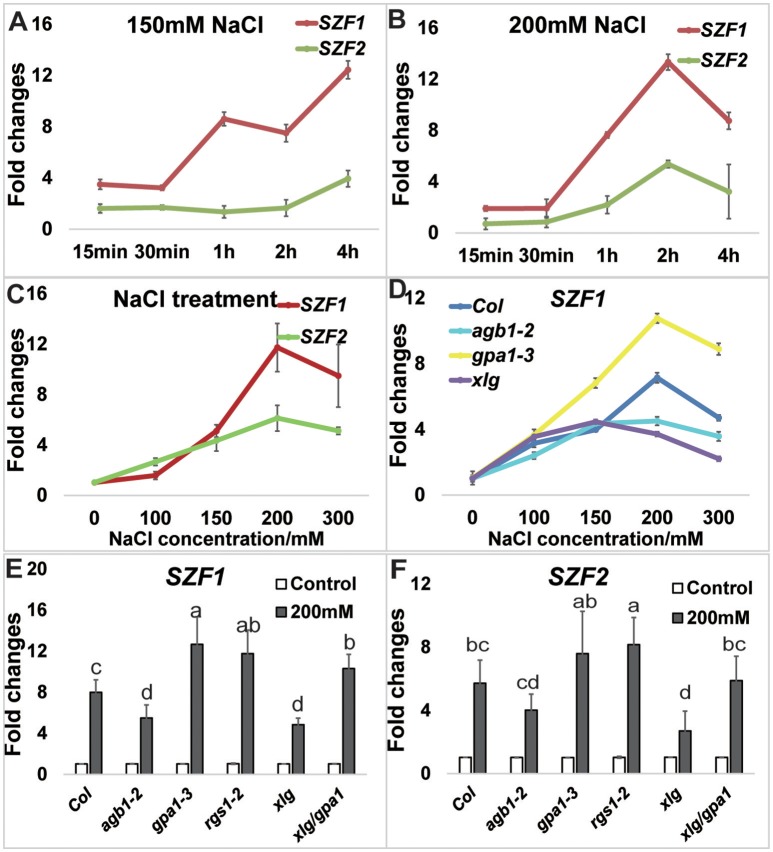
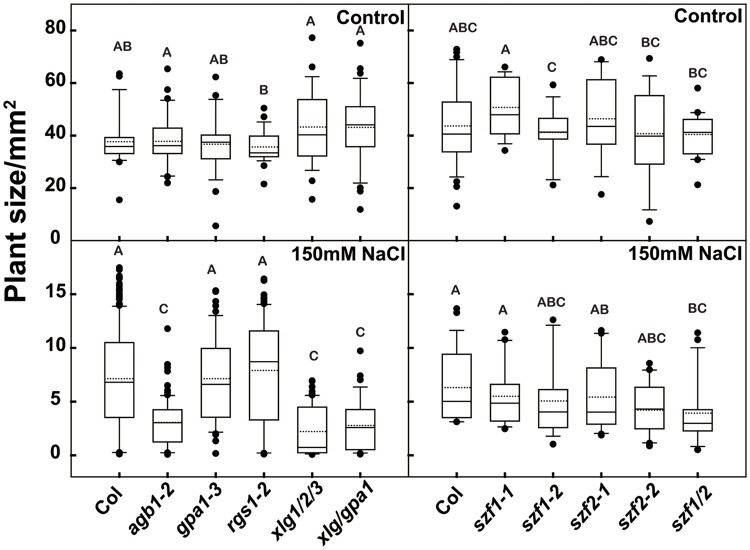
The three-member family of Arabidopsis extra-large G proteins (XLG1-3) defines the prototype of an atypical Gα subunit in the heterotrimeric G protein complex. Recent evidence indicate that XLG subunits operate along with its Gβγ dimer in root morphology, stress responsiveness, and cytokinin induced development, however downstream targets of activated XLG proteins in the stress pathways are rarely known. To assemble a set of candidate XLG-targeted proteins, a yeast two-hybrid complementation-based screen was performed using XLG protein baits to query interactions between XLG and partner protein found in glucose-treated seedlings, roots, and Arabidopsis cells in culture. Seventy two interactors were identified and >60% of a test set displayed interaction with XLG proteins. Gene co-expression analysis shows that >70% of the interactors are positively correlated with the corresponding XLG partners. Gene Ontology enrichment for all the candidates indicates stress responses and posits a molecular mechanism involving a specific set of transcription factor partners to XLG. Genes encoding two of these transcription factors, SZF1 and 2, require XLG proteins for full NaCl-induced expression. The subcellular localization of the XLG proteins in the nucleus, endosome, and plasma membrane is dependent on the specific interacting partner.
拟南芥超大G蛋白(XLG1 - 3)的三成员家族定义了异源三聚体G蛋白复合物中非典型Gα亚基的原型。最近的证据表明,XLG亚基与其Gβγ二聚体一起在根形态、胁迫响应和细胞分裂素诱导的发育过程中发挥作用,然而在胁迫途径中,激活的XLG蛋白的下游靶点却鲜为人知。为了组装一组候选的XLG靶向蛋白,利用XLG蛋白诱饵进行了基于酵母双杂交互补的筛选,以探究XLG与在葡萄糖处理的幼苗、根和培养的拟南芥细胞中发现的伴侣蛋白之间的相互作用。共鉴定出72个相互作用蛋白,并且测试集中超过60%的蛋白与XLG蛋白存在相互作用。基因共表达分析表明,超过70%的相互作用蛋白与相应的XLG伴侣呈正相关。对所有候选蛋白进行基因本体富集分析表明其与胁迫反应相关,并提出了一种涉及XLG特定转录因子伴侣集的分子机制。编码其中两种转录因子SZF1和SZF2的基因在NaCl诱导的完全表达中需要XLG蛋白。XLG蛋白在细胞核、内体和质膜中的亚细胞定位取决于特定的相互作用伴侣。