Rehfeld Kathrin, Müller Patrick, Aye Norman, Schmicker Marlen, Dordevic Milos, Kaufmann Jörn, Hökelmann Anita, Müller Notger G
German Center for Neurodegenerative DiseasesMagdeburg, Germany.
Institute for Sport Science, Otto von Guericke University MagdeburgMagdeburg, Germany.
Front Hum Neurosci. 2017 Jun 15;11:305. doi: 10.3389/fnhum.2017.00305. eCollection 2017.
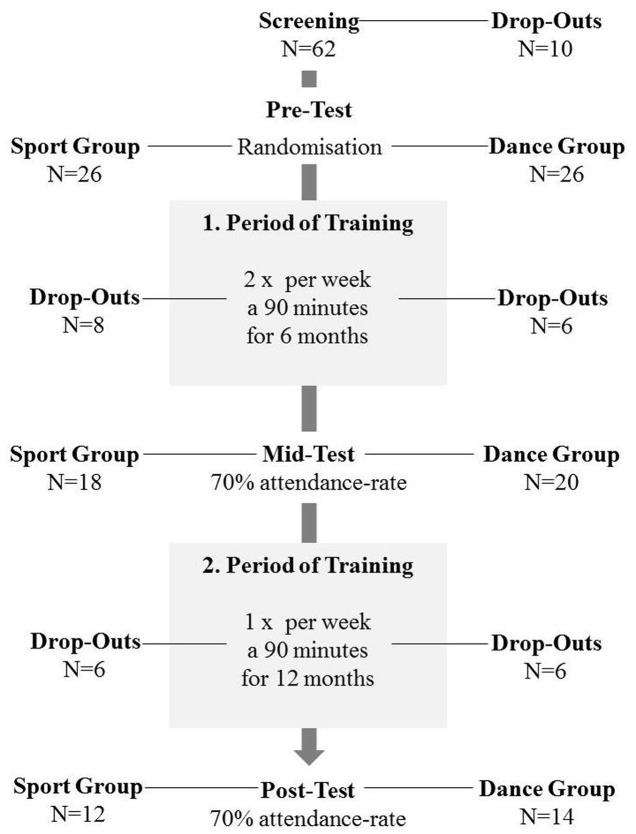
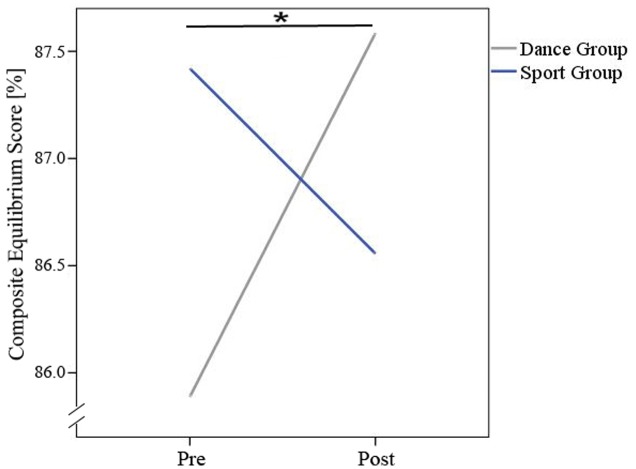
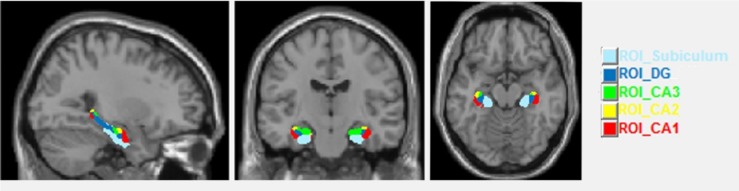
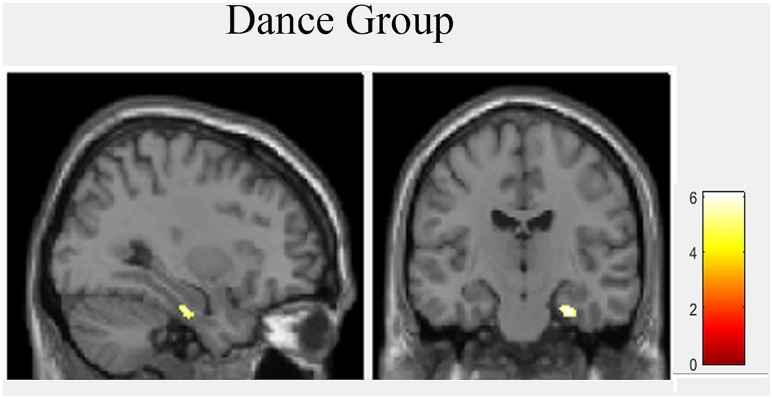
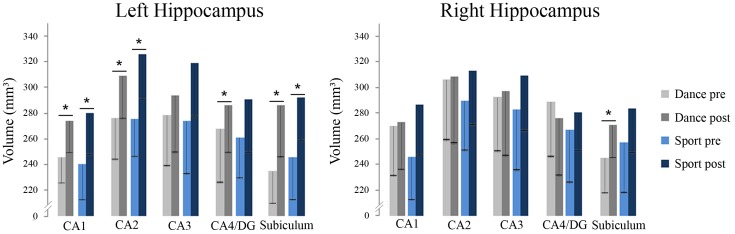
Age-related degenerations in brain structure are associated with balance disturbances and cognitive impairment. However, neuroplasticity is known to be preserved throughout lifespan and physical training studies with seniors could reveal volume increases in the hippocampus (HC), a region crucial for memory consolidation, learning and navigation in space, which were related to improvements in aerobic fitness. Moreover, a positive correlation between left HC volume and balance performance was observed. Dancing seems a promising intervention for both improving balance and brain structure in the elderly. It combines aerobic fitness, sensorimotor skills and cognitive demands while at the same time the risk of injuries is low. Hence, the present investigation compared the effects of an 18-month dancing intervention and traditional health fitness training on volumes of hippocampal subfields and balance abilities. Before and after intervention, balance was evaluated using the Sensory Organization Test and HC volumes were derived from magnetic resonance images (3T, MP-RAGE). Fourteen members of the dance (67.21 ± 3.78 years, seven females), and 12 members of the fitness group (68.67 ± 2.57 years, five females) completed the whole study. Both groups revealed hippocampal volume increases mainly in the left HC (CA1, CA2, subiculum). The dancers showed additional increases in the left dentate gyrus and the right subiculum. Moreover, only the dancers achieved a significant increase in the balance composite score. Hence, dancing constitutes a promising candidate in counteracting the age-related decline in physical and mental abilities.
大脑结构的年龄相关性退变与平衡障碍和认知损害有关。然而,已知神经可塑性在整个生命周期中都得以保留,针对老年人的体育锻炼研究可能会揭示海马体(HC)体积增加,海马体是记忆巩固、学习和空间导航的关键区域,其体积增加与有氧适能的改善有关。此外,还观察到左侧海马体体积与平衡能力之间存在正相关。舞蹈似乎是改善老年人平衡和大脑结构的一种有前景的干预方式。它结合了有氧适能、感觉运动技能和认知需求,同时受伤风险较低。因此,本研究比较了为期18个月的舞蹈干预和传统健康体能训练对海马体亚区体积和平衡能力的影响。在干预前后,使用感觉统合测试评估平衡能力,并从磁共振图像(3T,MP-RAGE)中得出海马体体积。舞蹈组的14名成员(67.21±3.78岁,7名女性)和健身组的12名成员(68.67±2.57岁,5名女性)完成了整个研究。两组均显示海马体体积主要在左侧海马体(CA1、CA2、海马下托)增加。舞蹈组在左侧齿状回和右侧海马下托也有额外增加。此外,只有舞蹈组的平衡综合得分有显著提高。因此,舞蹈是对抗与年龄相关的身心能力下降的一个有前景的选择。