Wong Elissa L, Stowell Rianne D, Majewska Ania K
Department of Environmental Medicine, University of Rochester Medical CenterRochester, NY, United States.
Department of Neuroscience, University of Rochester Medical CenterRochester, NY, United States.
Front Synaptic Neurosci. 2017 Jun 19;9:11. doi: 10.3389/fnsyn.2017.00011. eCollection 2017.
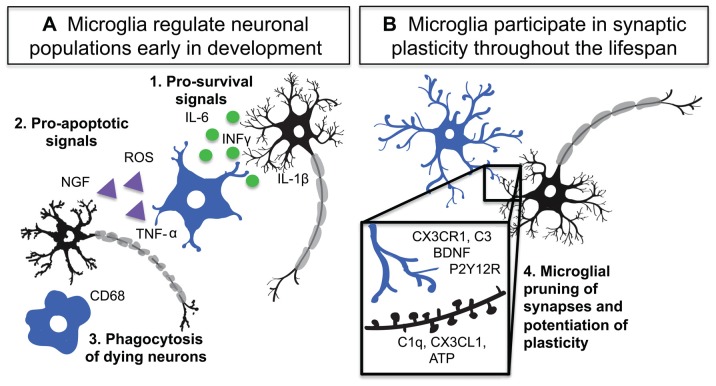
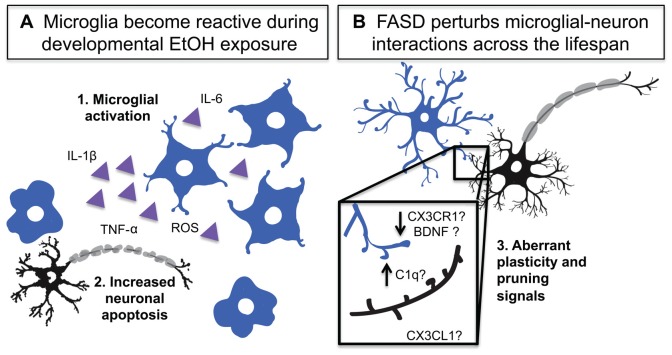
Alcohol exposure during gestation can lead to severe defects in brain development and lifelong physical, behavioral and learning deficits that are classified under the umbrella term fetal alcohol spectrum disorder (FASD). Sadly, FASD is diagnosed at an alarmingly high rate, affecting 2%-5% of live births in the United States, making it the most common non-heritable cause of mental disability. Currently, no standard therapies exist that are effective at battling FASD symptoms, highlighting a pressing need to better understand the underlying mechanisms by which alcohol affects the developing brain. While it is clear that sensory and cognitive deficits are driven by inappropriate development and remodeling of the neural circuits that mediate these processes, alcohol's actions acutely and long-term on the brain milieu are diverse and complex. Microglia, the brain's immune cells, have been thought to be a target for alcohol during development because of their exquisite ability to rapidly detect and respond to perturbations affecting the brain. Additionally, our view of these immune cells is rapidly changing, and recent studies have revealed a myriad of microglial physiological functions critical for normal brain development and long-term function. A clear and complete understanding of how microglial roles on this end of the spectrum may be altered in FASD is currently lacking. Such information could provide important insights toward novel therapeutic targets for FASD treatment. Here we review the literature that links microglia to neural circuit remodeling and provide a discussion of the current understanding of how developmental alcohol exposure affects microglial behavior in the context of developing brain circuits.
孕期饮酒会导致大脑发育严重缺陷以及终身的身体、行为和学习障碍,这些都被归类在胎儿酒精谱系障碍(FASD)这一统称之下。遗憾的是,FASD的诊断率高得惊人,在美国影响着2% - 5%的活产婴儿,使其成为智力残疾最常见的非遗传性原因。目前,尚无有效的标准疗法来对抗FASD症状,这凸显了迫切需要更好地了解酒精影响发育中大脑的潜在机制。虽然很明显,感觉和认知缺陷是由介导这些过程的神经回路的不适当发育和重塑所驱动的,但酒精对大脑环境的急性和长期作用是多样且复杂的。小胶质细胞作为大脑的免疫细胞,因其具有快速检测和应对影响大脑的干扰的卓越能力,一直被认为是发育过程中酒精作用的靶点。此外,我们对这些免疫细胞的认识正在迅速改变,最近的研究揭示了无数对正常大脑发育和长期功能至关重要的小胶质细胞生理功能。目前尚缺乏对FASD中这一谱系末端小胶质细胞作用如何改变的清晰而完整的理解。此类信息可为FASD治疗的新靶点提供重要见解。在此,我们回顾将小胶质细胞与神经回路重塑联系起来的文献,并讨论目前对发育性酒精暴露在发育中的脑回路背景下如何影响小胶质细胞行为的理解。