Link Daniel, Hoernig Martin
Department of Exercise Science and Sport Informatics, Technical University of Munich, Munich. Germany.
Department of Computer Science, Technical University of Munich, Munich, Germany.
PLoS One. 2017 Jul 10;12(7):e0179953. doi: 10.1371/journal.pone.0179953. eCollection 2017.
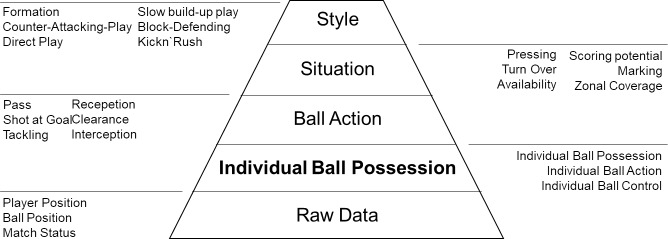
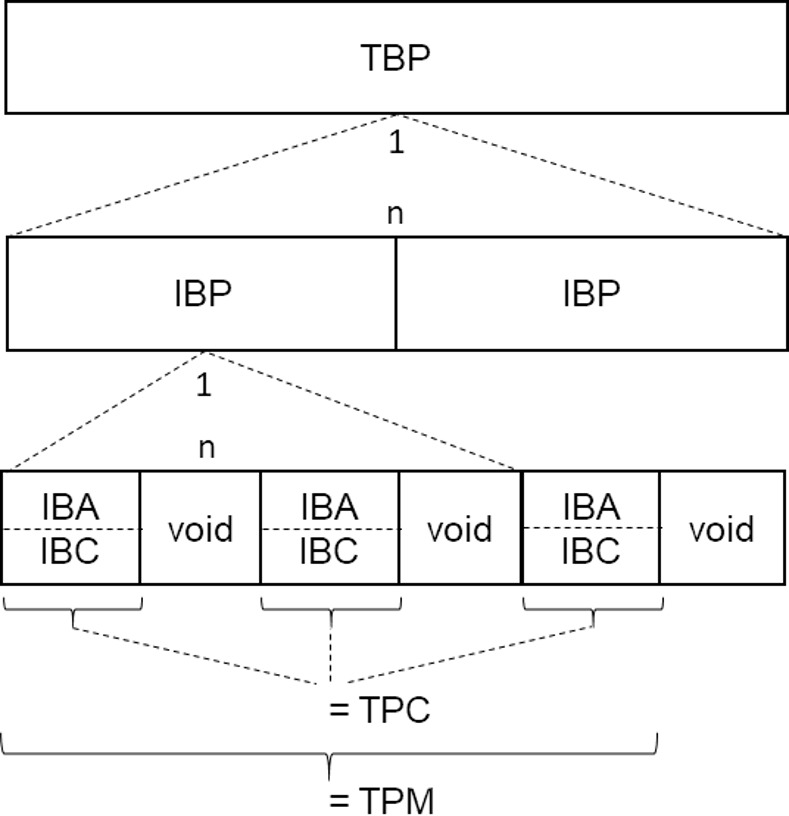
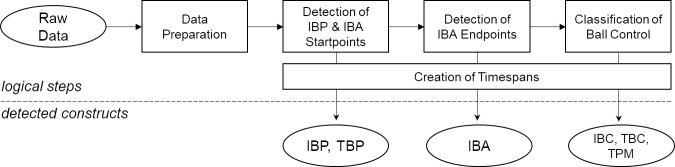
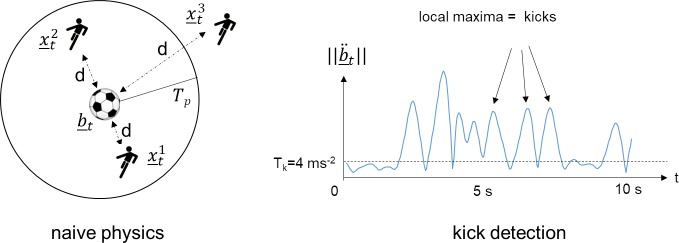
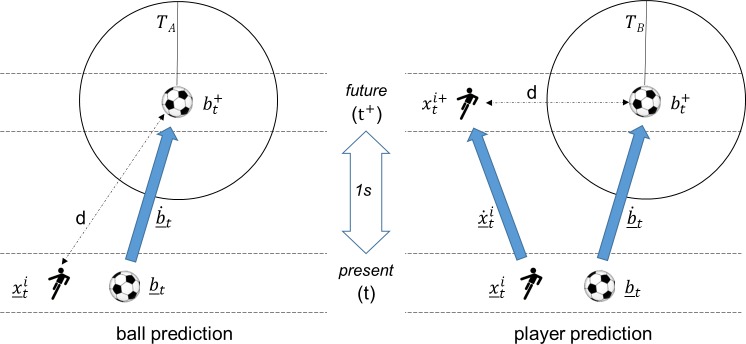
This paper describes models for detecting individual and team ball possession in soccer based on position data. The types of ball possession are classified as Individual Ball Possession (IBC), Individual Ball Action (IBA), Individual Ball Control (IBC), Team Ball Possession (TBP), Team Ball Control (TBC) und Team Playmaking (TPM) according to different starting points and endpoints and the type of ball control involved. The machine learning approach used is able to determine how long the ball spends in the sphere of influence of a player based on the distance between the players and the ball together with their direction of motion, speed and the acceleration of the ball. The degree of ball control exhibited during this phase is classified based on the spatio-temporal configuration of the player controlling the ball, the ball itself and opposing players using a Bayesian network. The evaluation and application of this approach uses data from 60 matches in the German Bundesliga season of 2013/14, including 69,667 IBA intervals. The identification rate was F = .88 for IBA and F = .83 for IBP, and the classification rate for IBC was κ = .67. Match analysis showed the following mean values per match: TBP 56:04 ± 5:12 min, TPM 50:01 ± 7:05 min and TBC 17:49 ± 8:13 min. There were 836 ± 424 IBC intervals per match and their number was significantly reduced by -5.1% from the 1st to 2nd half. The analysis of ball possession at the player level indicates shortest accumulated IBC times for the central forwards (0:49 ± 0:43 min) and the longest for goalkeepers (1:38 ± 0:58 min), central defenders (1:38 ± 1:09 min) and central midfielders (1:27 ± 1:08 min). The results could improve performance analysis in soccer, help to detect match events automatically, and allow discernment of higher value tactical structures, which is based on individual ball possession.
本文介绍了基于位置数据检测足球比赛中个人和团队控球情况的模型。根据不同的起点和终点以及所涉及的控球类型,控球类型分为个人控球(IBC)、个人控球动作(IBA)、个人控球控制(IBC)、团队控球(TBP)、团队控球控制(TBC)和团队组织进攻(TPM)。所使用的机器学习方法能够根据球员与球之间的距离以及他们的运动方向、速度和球的加速度,确定球在球员影响范围内停留的时间。在此阶段表现出的控球程度基于控球球员、球本身和对方球员的时空配置,使用贝叶斯网络进行分类。该方法的评估和应用使用了2013/14赛季德国足球甲级联赛60场比赛的数据,包括69667个IBA间隔。IBA的识别率为F = 0.88,IBP的识别率为F = 0.83,IBC的分类率为κ = 0.67。比赛分析显示每场比赛的以下平均值:TBP为56:04 ± 5:12分钟,TPM为50:01 ± 7:05分钟,TBC为