Samarghandian Saeed, Farkhondeh Tahereh, Azimi-Nezhad Mohsen
Department of Basic Medical Sciences, Neyshabur University of Medical Sciences, Neyshabur, Iran.
Department of Immunogenetics, BuAli Research Institute, Mashhad University of Medical Sciences, Mashhad, Iran.
Dose Response. 2017 Jun 23;15(2):1559325817711782. doi: 10.1177/1559325817711782. eCollection 2017 Apr-Jun.
Polyphenolic compounds, especially flavonoids, are known as the most common chemical class of phytochemicals, which possess a multiple range of health-promoting effects. Flavonoids are ubiquitous in nature. They are also present in food, providing an essential link between diet and prevention of several diseases.
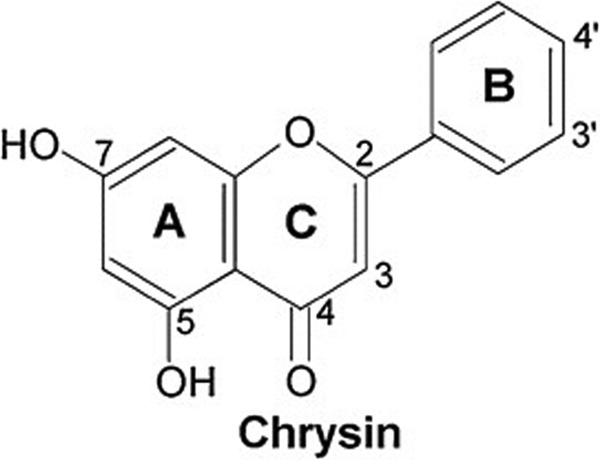
Chrysin (CH), a natural flavonoid, was commonly found in propolis and honey and traditionally used in herbal medicine. A growing body of scientific evidence has shown that CH possesses protective effects against toxic agents in various animal tissues, including brain, heart, liver, kidney, and lung.
This study found that CH may be effective in disease management induced by toxic agents. However, due to the lack of information on human, further studies are needed to determine the efficacy of CH as an antidote agent in human.
The present article aimed to critically review the available literature data regarding the protective effects of CH against toxic agent-induced toxicities as well as its possible mechanisms.
多酚类化合物,尤其是黄酮类化合物,是已知最常见的植物化学物质类别,具有多种促进健康的作用。黄酮类化合物在自然界中无处不在。它们也存在于食物中,是饮食与预防多种疾病之间的重要联系。
白杨素(CH)是一种天然黄酮类化合物,常见于蜂胶和蜂蜜中,传统上用于草药。越来越多的科学证据表明,CH对包括脑、心脏、肝脏、肾脏和肺在内的各种动物组织中的有毒物质具有保护作用。
本研究发现CH可能对有毒物质诱发的疾病具有治疗效果。然而,由于缺乏关于人类的信息,需要进一步研究以确定CH作为人类解毒剂的疗效。
本文旨在批判性地综述有关CH对有毒物质诱导的毒性的保护作用及其可能机制的现有文献数据。