De Silva R T, Mantilaka M M M G P G, Goh K L, Ratnayake S P, Amaratunga G A J, de Silva K M Nalin
Nanotechnology and Science Park, Sri Lanka Institute of Nanotechnology (SLINTEC), Pitipana, Homagama, Sri Lanka.
School of Mechanical and Systems Engineering, Newcastle University, Newcastle Upon Tyne, UK.
Int J Biomater. 2017;2017:1391298. doi: 10.1155/2017/1391298. Epub 2017 Jun 11.
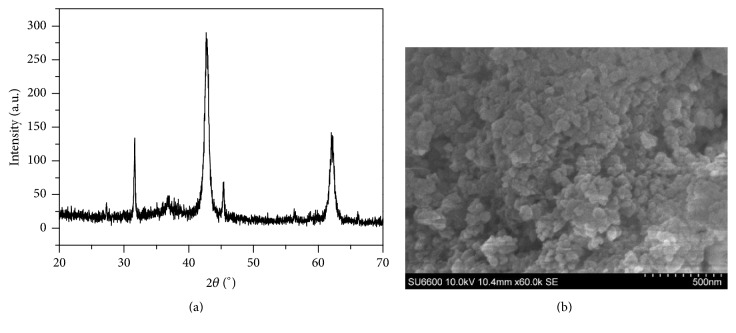
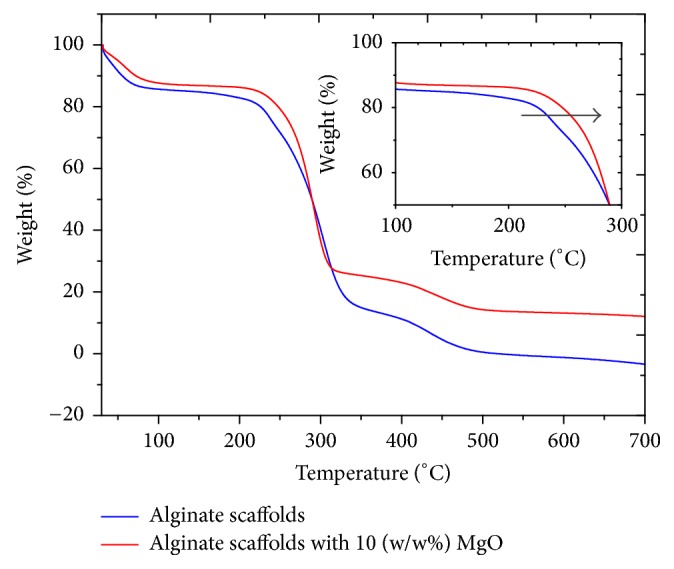
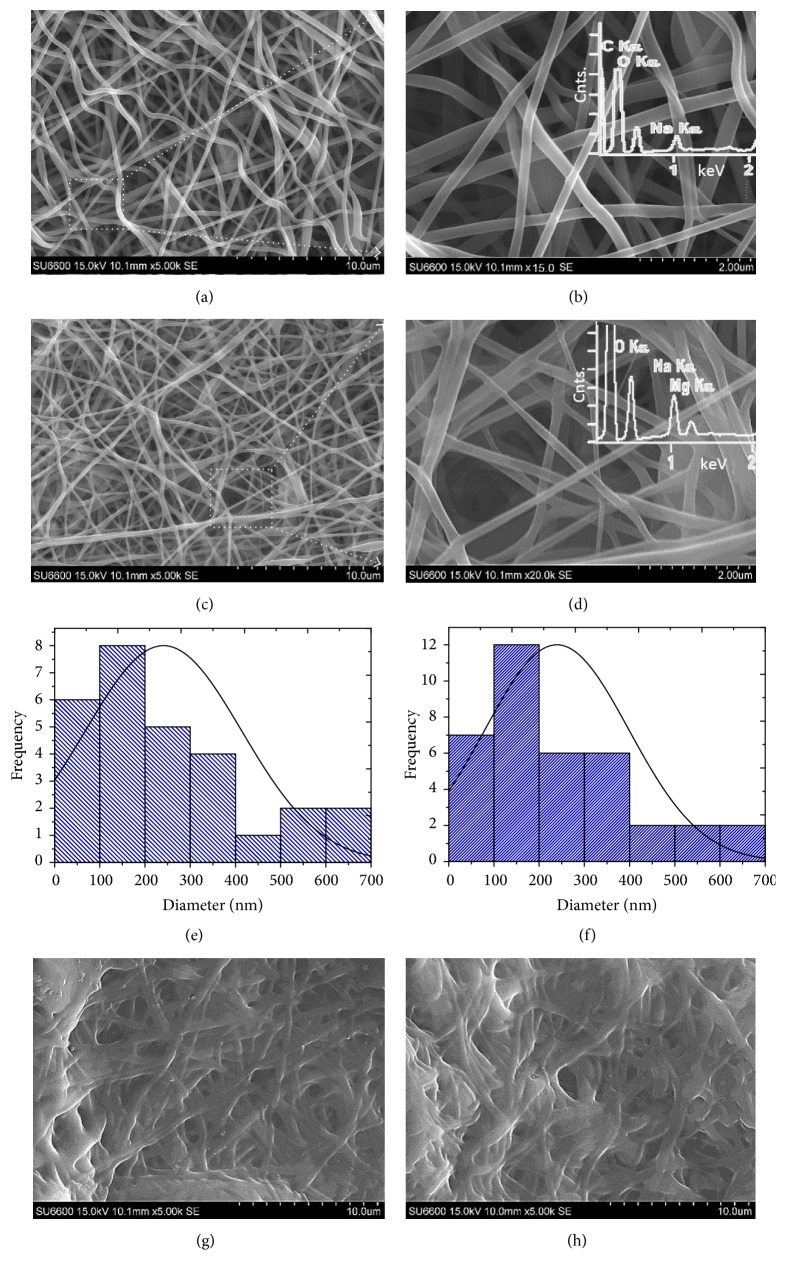
Mechanically robust alginate-based nanofibrous scaffolds were successfully fabricated by electrospinning method to mimic the natural extracellular matrix structure which benefits development and regeneration of tissues. Alginate-based nanofibres were electrospun from an alginate/poly(vinyl alcohol) (PVA) polyelectrolyte complex. SEM images revealed the spinnability of the complex composite nanofibrous scaffolds, showing randomly oriented, ultrafine, and virtually defects-free alginate-based/MgO nanofibrous scaffolds. Here, it is shown that an alginate/PVA complex scaffold, blended with near-spherical MgO nanoparticles (⌀ 45 nm) at a predetermined concentration (10% (w/w)), is electrospinnable to produce a complex composite nanofibrous scaffold with enhanced mechanical stability. For the comparison purpose, chemically cross-linked electrospun alginate-based scaffolds were also fabricated. Tensile test to rupture revealed the significant differences in the tensile strength and elastic modulus among the alginate scaffolds, alginate/MgO scaffolds, and cross-linked alginate scaffolds ( < 0.05). In contrast to cross-linked alginate scaffolds, alginate/MgO scaffolds yielded the highest tensile strength and elastic modulus while preserving the interfibre porosity of the scaffolds. According to the thermogravimetric analysis, MgO reinforced alginate nanofibrous scaffolds exhibited improved thermal stability. These novel alginate-based/MgO scaffolds are economical and versatile and may be further optimised for use as extracellular matrix substitutes for repair and regeneration of tissues.
通过静电纺丝法成功制备了机械性能稳定的海藻酸盐基纳米纤维支架,以模拟天然细胞外基质结构,这有利于组织的发育和再生。海藻酸盐基纳米纤维由海藻酸盐/聚乙烯醇(PVA)聚电解质复合物静电纺丝而成。扫描电子显微镜(SEM)图像显示了复合纳米纤维支架的可纺性,呈现出随机取向、超细且几乎无缺陷的海藻酸盐基/MgO纳米纤维支架。在此表明,将海藻酸盐/PVA复合支架与预定浓度(10%(w/w))的近球形MgO纳米颗粒(⌀ 45 nm)混合后,可进行静电纺丝,以制备具有增强机械稳定性的复合纳米纤维支架。为作比较,还制备了化学交联的静电纺丝海藻酸盐基支架。拉伸至断裂试验表明,海藻酸盐支架、海藻酸盐/MgO支架和交联海藻酸盐支架在拉伸强度和弹性模量方面存在显著差异(<0.05)。与交联海藻酸盐支架相比,海藻酸盐/MgO支架在保持支架纤维间孔隙率的同时,具有最高的拉伸强度和弹性模量。根据热重分析,MgO增强的海藻酸盐纳米纤维支架表现出更好的热稳定性。这些新型的海藻酸盐基/MgO支架经济且用途广泛,可进一步优化用作组织修复和再生的细胞外基质替代品。