University of Waterloo, 200 University Ave. West, Waterloo, ON, N2L 3G1, Canada.
J Gambl Stud. 2018 Mar;34(1):161-180. doi: 10.1007/s10899-017-9699-x.
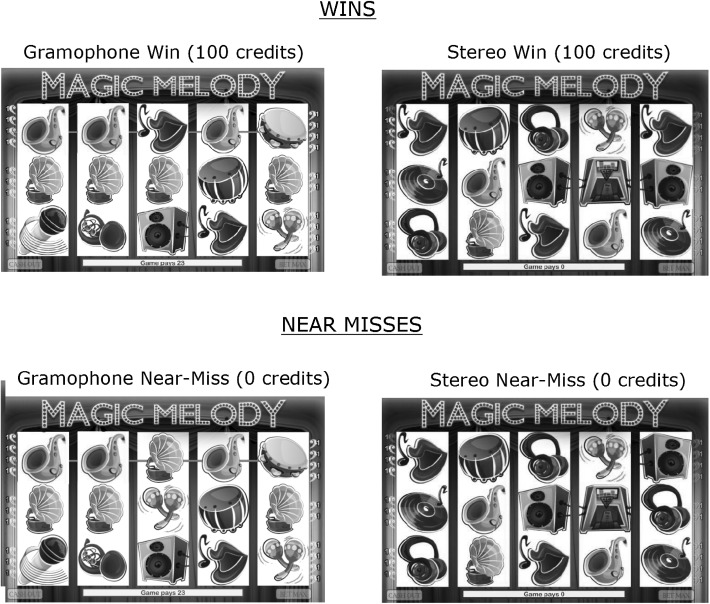
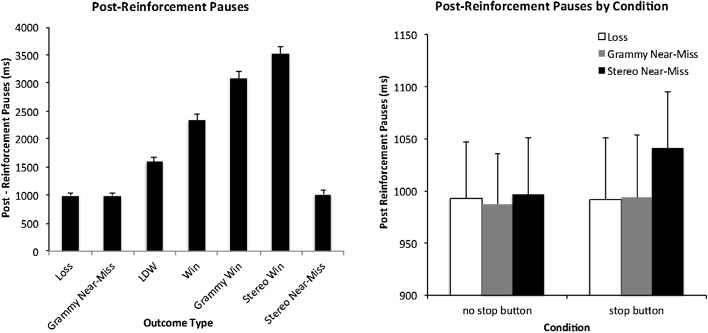
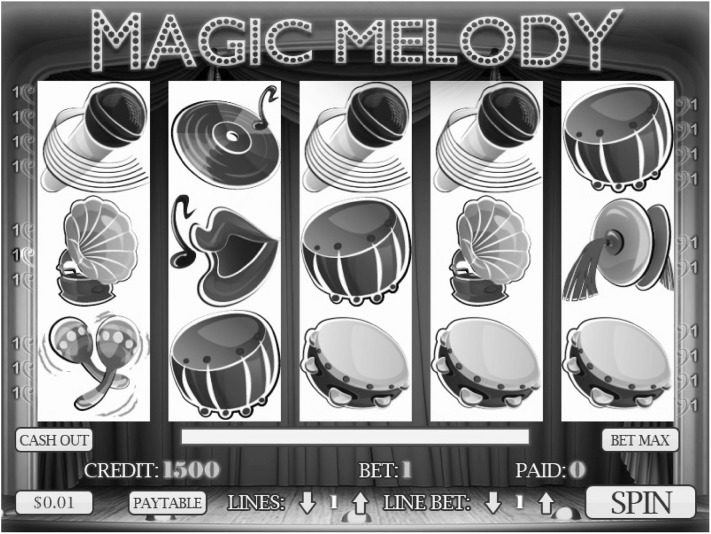
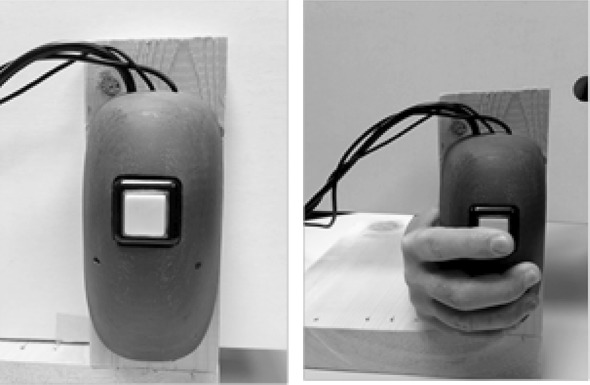
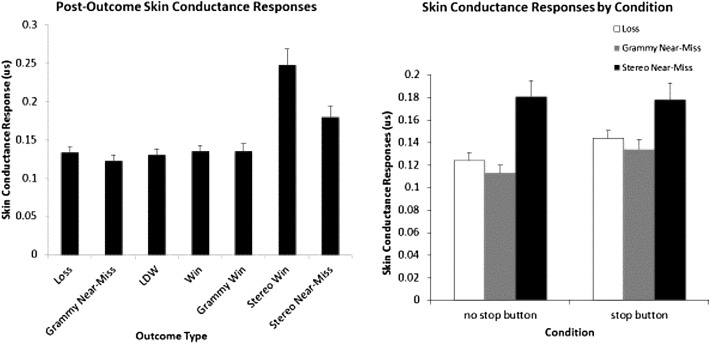
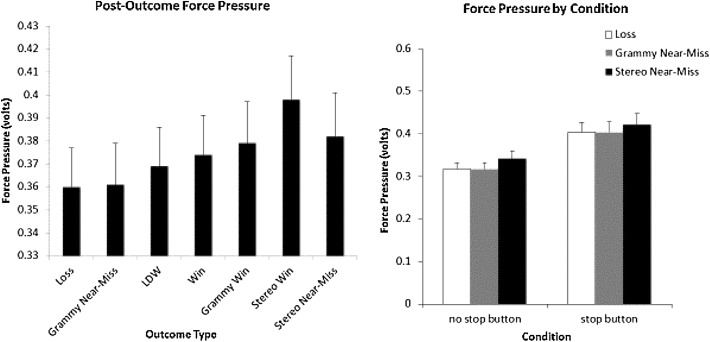
In modern casinos, multiline slot machines are becoming increasingly popular compared to traditional, three-reel slot machines. A paucity of research has examined how the unique presentation of near-misses and the use of a stop button in multiline slot machines impact erroneous cognitions related to the perception of skill and agency during play. Our goal therefore was to determine the prevalence of erroneous cognitions pertaining to near-miss outcomes and the usage of a stop button and then to see whether the stop button affected players' experiences of winning, losing and near-miss outcomes. We recruited 132 gamblers from a casino in Ontario. They played two versions of a slot machine simulator: one with a stop button and one without a stop button. We measured player's arousal [skin conductance responses (SCRs), pressure on the spin-button), and behavioural responses (post-reinforcement pauses (PRPs)] to wins, losses and near-misses during play. We predicted more robust physiological SCRs and longer PRPs to wins in the stop button game. We also predicted that near-misses encountered in the stop button game would trigger greater levels of arousal and frustration in players, as indexed by larger SCRs, and greater force applied to the spin button to initiate the next spin. Erroneous cognitions pertaining to the stop button and near-misses respectively were assessed following play. Results showed that a small but meaningful percentage of players held erroneous cognitions about the stop button (13.6%) and near-misses (16%). Players depressed the spin button harder, and had larger SCRs for all outcomes when using the stop button. Players also paused longer for near-misses in the game involving the stop button. Our findings converge to suggest that the stop button encourages an erroneous perception of skill in some players, and consequentially impacts how such players perceive their outcomes in multiline slot machines.
在现代赌场中,与传统的三 reel 老虎机相比,多线老虎机越来越受欢迎。很少有研究探讨多线老虎机中近失和使用停止按钮的独特呈现方式如何影响玩家在游戏过程中对技能和自主性的错误认知。因此,我们的目标是确定与近失结果和停止按钮使用相关的错误认知的普遍性,然后观察停止按钮是否影响玩家对输赢和近失结果的体验。我们从安大略省的一家赌场招募了 132 名赌徒。他们玩了两种老虎机模拟器版本:一种有停止按钮,另一种没有停止按钮。我们在玩家玩游戏时测量了他们对赢、输和近失结果的兴奋程度[皮肤电反应 (SCRs)、旋转按钮的压力]和行为反应(强化后停顿 (PRPs))。我们预测在停止按钮游戏中,玩家对赢的生理 SCRs 更强,PRPs 更长。我们还预测停止按钮游戏中遇到的近失会引起玩家更大的兴奋和挫折感,这可以通过更大的 SCRs 和更大的力来启动下一轮旋转来反映。游戏结束后评估了与停止按钮和近失分别相关的错误认知。结果表明,一小部分但具有重要意义的玩家对停止按钮(13.6%)和近失(16%)持有错误认知。使用停止按钮时,玩家按下旋转按钮的力度更大,所有结果的 SCR 更大。在涉及停止按钮的游戏中,玩家对近失的停顿时间也更长。我们的研究结果表明,停止按钮鼓励一些玩家对技能产生错误的认知,从而影响他们对多线老虎机中结果的感知。