Alto Barry W, Wiggins Keenan, Eastmond Bradley, Velez Daniel, Lounibos L Philip, Lord Cynthia C
Department of Entomology and Nematology, Florida Medical Entomology Laboratory, University of Florida, Vero Beach, Florida, United States of America.
PLoS Negl Trop Dis. 2017 Jul 27;11(7):e0005724. doi: 10.1371/journal.pntd.0005724. eCollection 2017 Jul.
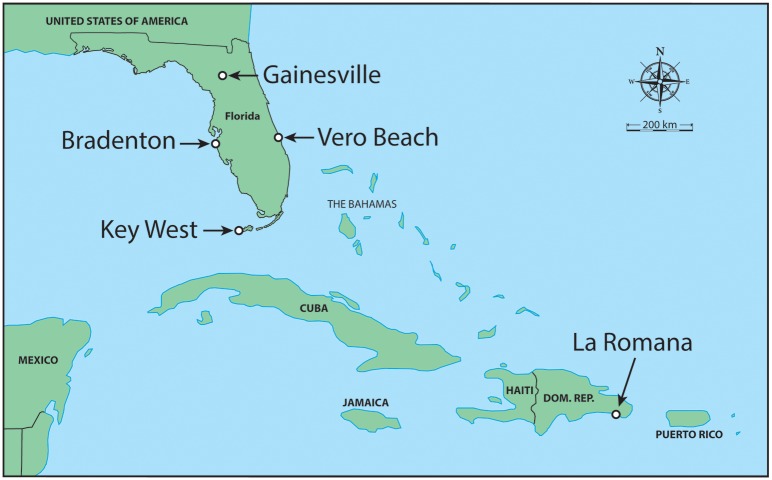
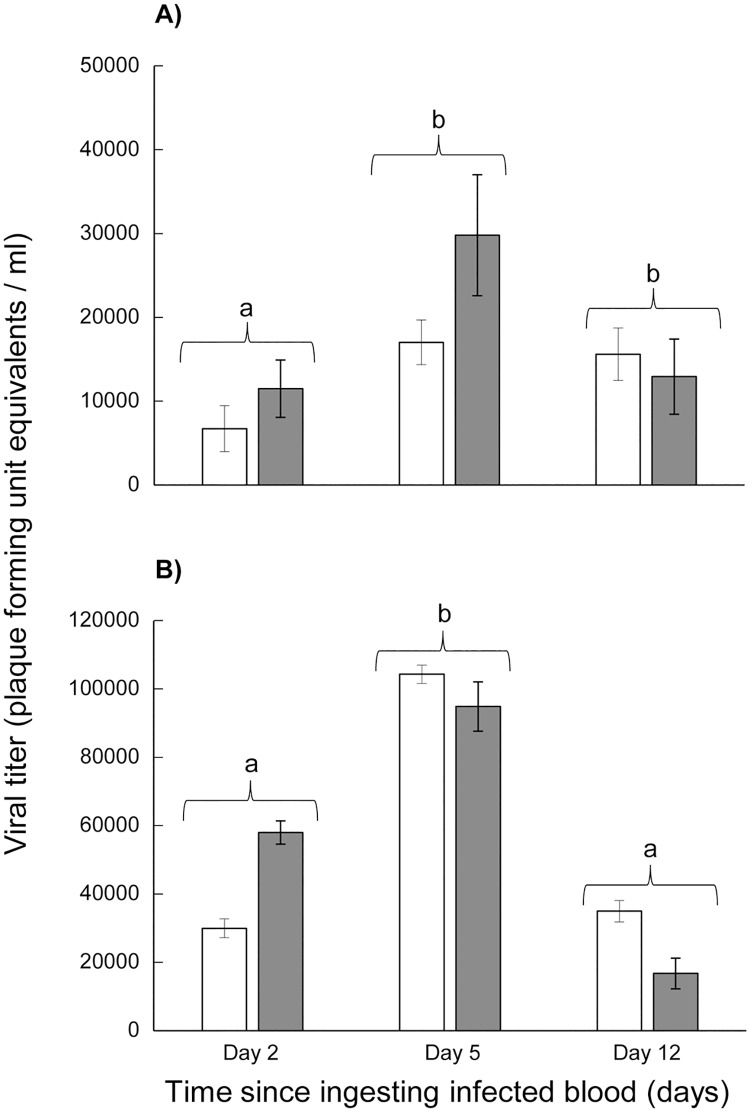
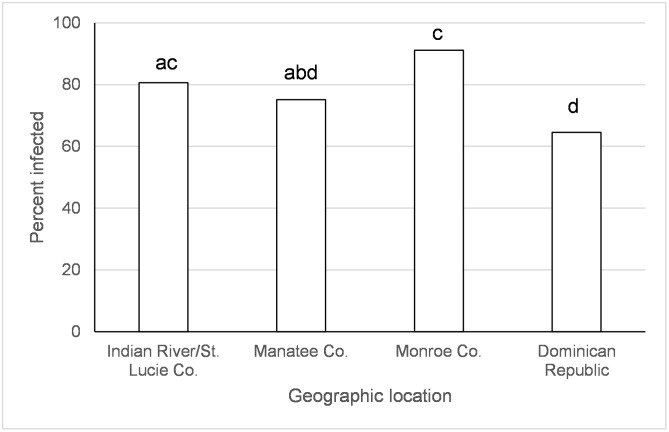
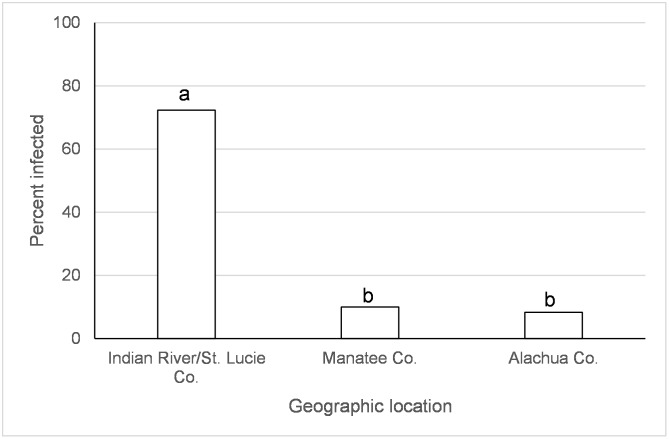
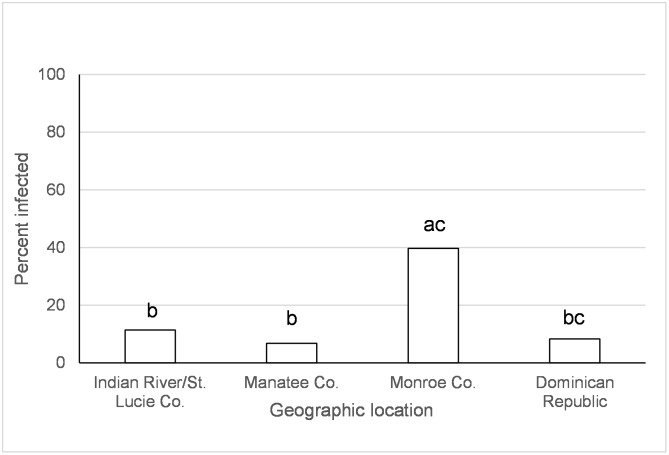
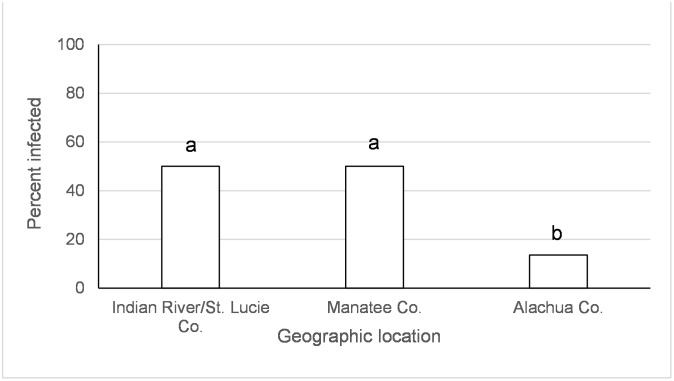
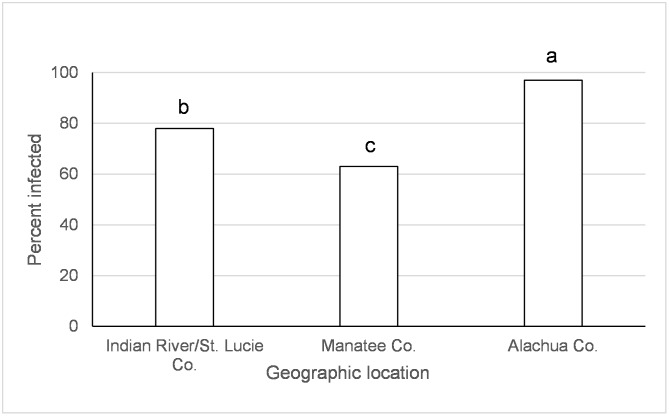
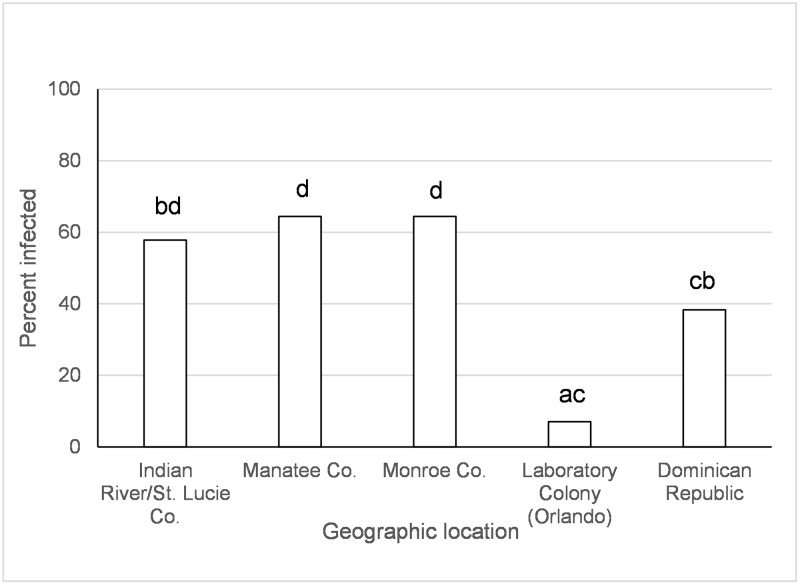
Between 2014 and 2016 more than 3,800 imported human cases of chikungunya fever in Florida highlight the high risk for local transmission. To examine the potential for sustained local transmission of chikungunya virus (CHIKV) in Florida we tested whether local populations of Aedes aegypti and Aedes albopictus show differences in susceptibility to infection and transmission to two emergent lineages of CHIKV, Indian Ocean (IOC) and Asian genotypes (AC) in laboratory experiments. All examined populations of Ae. aegypti and Ae. albopictus mosquitoes displayed susceptibility to infection, rapid viral dissemination into the hemocoel, and transmission for both emergent lineages of CHIKV. Aedes albopictus had higher disseminated infection and transmission of IOC sooner after ingesting CHIKV infected blood than Ae. aegypti. Aedes aegypti had higher disseminated infection and transmission later during infection with AC than Ae. albopictus. Viral dissemination and transmission of AC declined during the extrinsic incubation period, suggesting that transmission risk declines with length of infection. Interestingly, the reduction in transmission of AC was less in Ae. aegypti than Ae. albopictus, suggesting that older Ae. aegypti females are relatively more competent vectors than similar aged Ae. albopictus females. Aedes aegypti originating from the Dominican Republic had viral dissemination and transmission rates for IOC and AC strains that were lower than for Florida vectors. We identified small-scale geographic variation in vector competence among Ae. aegypti and Ae. albopictus that may contribute to regional differences in risk of CHIKV transmission in Florida.
2014年至2016年间,佛罗里达州有超过3800例输入性基孔肯雅热病例,凸显了本地传播的高风险。为研究基孔肯雅病毒(CHIKV)在佛罗里达州持续本地传播的可能性,我们在实验室实验中测试了埃及伊蚊和白纹伊蚊的本地种群对两种新兴CHIKV谱系(印度洋谱系(IOC)和亚洲基因型(AC))的感染易感性及传播情况。所有检测的埃及伊蚊和白纹伊蚊种群均表现出对感染的易感性、病毒迅速扩散至血腔以及对两种CHIKV新兴谱系的传播能力。白纹伊蚊在摄入感染CHIKV的血液后,比埃及伊蚊更早出现较高的扩散感染和IOC传播。埃及伊蚊在感染AC后期比白纹伊蚊有更高的扩散感染和传播。AC的病毒扩散和传播在外部潜伏期有所下降,表明传播风险随感染时间延长而降低。有趣的是,AC传播的降低在埃及伊蚊中比在白纹伊蚊中更少,这表明年龄较大的埃及伊蚊雌蚊相比同龄的白纹伊蚊雌蚊是相对更有效的传播媒介。来自多米尼加共和国的埃及伊蚊对IOC和AC毒株的病毒扩散和传播率低于佛罗里达州的传播媒介。我们在埃及伊蚊和白纹伊蚊中发现了媒介能力的小尺度地理变异,这可能导致佛罗里达州CHIKV传播风险的区域差异。