Adebamowo Sally N, Eseyin Olabimpe, Yilme Susan, Adeyemi David, Willett Walter C, Hu Frank B, Spiegelman Donna, Adebamowo Clement A
Department of Epidemiology and Public Health, University of Maryland School of Medicine, Baltimore, MD, United States.
University of Maryland Comprehensive Cancer Center, University of Maryland School of Medicine, Baltimore, MD, United States.
Front Nutr. 2017 Jul 20;4:33. doi: 10.3389/fnut.2017.00033. eCollection 2017.
Whole-grain products such as brown rice have been associated with lower risk of metabolic disorders including diabetes. We examined the acceptability and tolerability of substituting brown rice for white rice and the feasibility of introducing brown rice into the diet through a long-term trial to lower the risk of type 2 diabetes.
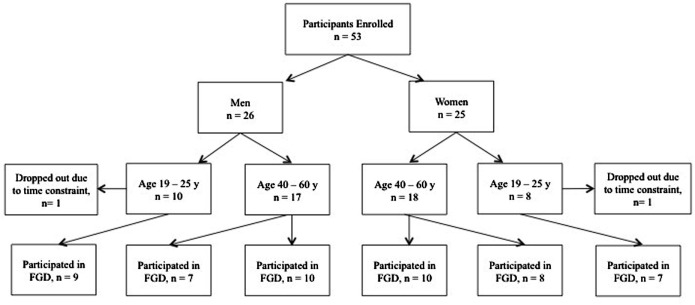
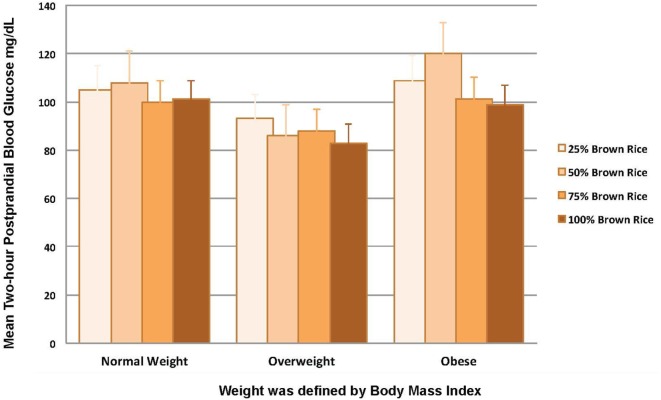
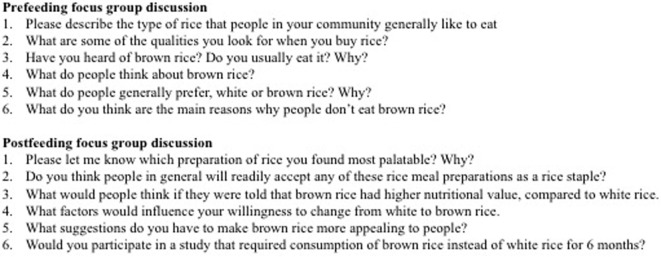
Fifty-one adults residing in Abuja, Nigeria, participated in this study. Using purposeful sampling for focus group discussions (FGDs), participants were enrolled based on their age (19-25 vs. 40-60 years) and body mass index (BMI) (normal weight vs. overweight/obese). Participants tasted four meals with different constitution of brown and white rice (25:75%, 50:50%, 75:25%, and 100% brown rice). Twelve FGDs were conducted, six before and six after the food tasting. Two-hour postprandial blood glucose was measured after consumption of each rice meal.
The mean age of the participants was 39 (±14) years, their mean BMI was 25.6 (±5.2) and about half of them were male. Most of the participants (61%) reported that rice was their main source of carbohydrate and 67% consumed rice at least five times/week. Before the food tasting, participants considered white polished rice superior to brown rice with regard to quality, taste, and nutritional value. After the food tasting, most of the participants (49%) indicated a preference for the 100% brown rice, 19% preferred the 25% brown rice, 18% preferred the 50% brown rice, and 7% preferred the 75% brown rice meals. Factors that may affect the acceptability of brown rice include its appearance, longer cooking time, cost, limited availability, and poor appreciation of its nutritional value. In general, 2-h postprandial glucose levels were lower, after consumption of meals with higher proportion of brown rice.
This study provides valuable insight into the acceptability of brown rice as a substitute for white rice in Nigeria. If confirmed in larger studies, these results highlight the importance of increasing awareness on the nutritional value of brown rice and support the rationale for conducting a large-scale intervention trial to examine the effect of brown rice consumption on blood sugar levels among Nigerians.
糙米等全谷物产品与包括糖尿病在内的代谢紊乱风险较低有关。我们通过一项长期试验研究了用糙米替代白米的可接受性和耐受性,以及将糙米引入饮食以降低2型糖尿病风险的可行性。
51名居住在尼日利亚阿布贾的成年人参与了本研究。通过有目的抽样进行焦点小组讨论(FGD),根据参与者的年龄(19 - 25岁与40 - 60岁)和体重指数(BMI)(正常体重与超重/肥胖)进行招募。参与者品尝了四种不同糙米和白米构成比例的餐食(25:75%、50:50%、75:25%和100%糙米)。进行了12次焦点小组讨论,在食物品尝前后各进行6次。在食用每餐米饭后测量餐后两小时血糖。
参与者的平均年龄为39(±14)岁,平均BMI为25.6(±5.2),其中约一半为男性。大多数参与者(61%)报告称大米是他们碳水化合物的主要来源,67%的人每周至少食用大米五次。在食物品尝前,参与者认为白米在质量、口感和营养价值方面优于糙米。食物品尝后,大多数参与者(49%)表示更喜欢100%糙米餐,19%更喜欢25%糙米餐,18%更喜欢50%糙米餐,7%更喜欢75%糙米餐。可能影响糙米可接受性的因素包括其外观、烹饪时间较长、成本、供应有限以及对其营养价值的认识不足。总体而言,食用糙米比例较高的餐食后,餐后两小时血糖水平较低。
本研究为尼日利亚用糙米替代白米的可接受性提供了有价值的见解。如果在更大规模的研究中得到证实,这些结果凸显了提高对糙米营养价值认识的重要性,并支持开展大规模干预试验以研究食用糙米对尼日利亚人血糖水平影响的合理性。