Adejumo Adebowale O, Ikoba Nehemiah A, Suleiman Esivue A, Okagbue Hilary I, Oguntunde Pelumi E, Odetunmibi Oluwole A, Job Obalowu
Department of Mathematics, Covenant University, Ota, Nigeria.
Department of Statistics, University of Ilorin, Ilorin, Nigeria.
Data Brief. 2017 Jul 24;14:175-185. doi: 10.1016/j.dib.2017.07.046. eCollection 2017 Oct.
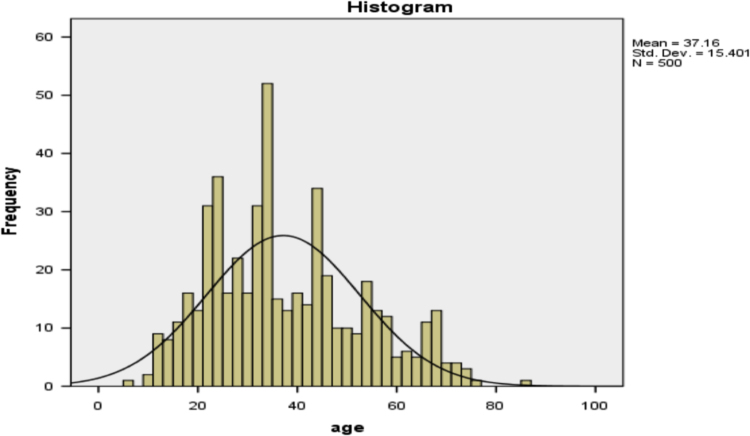
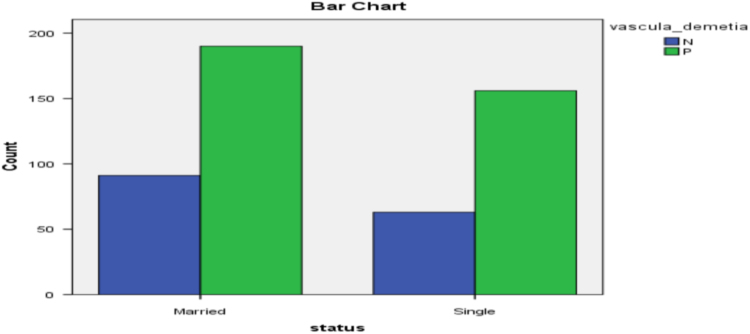
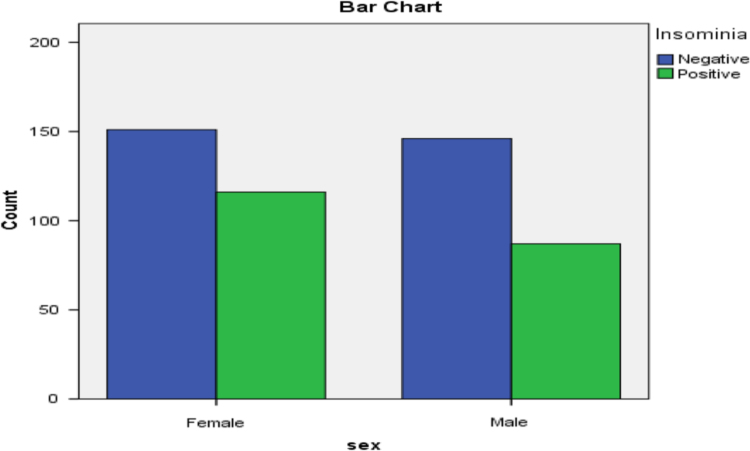
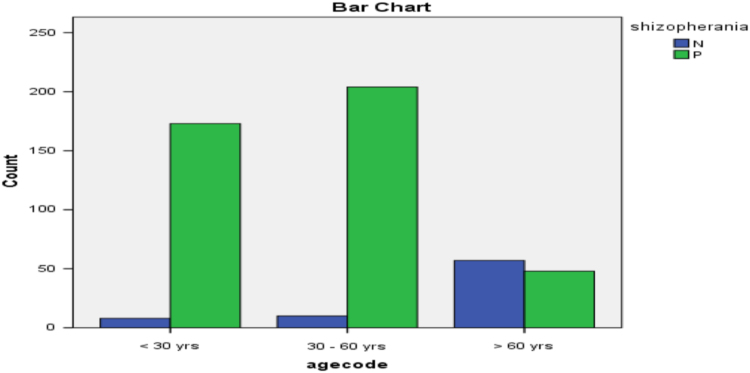
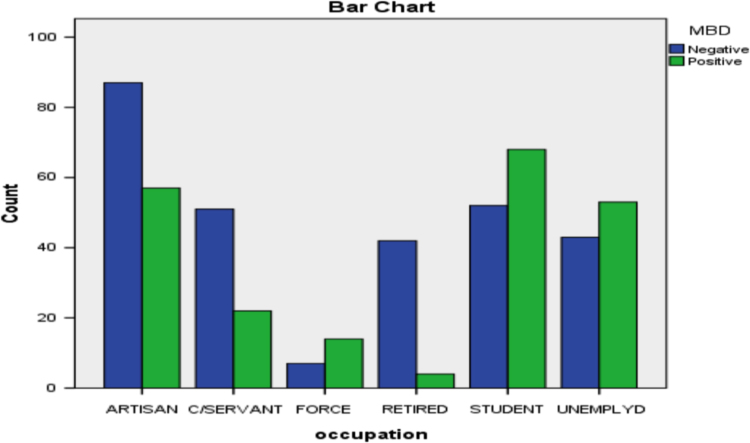
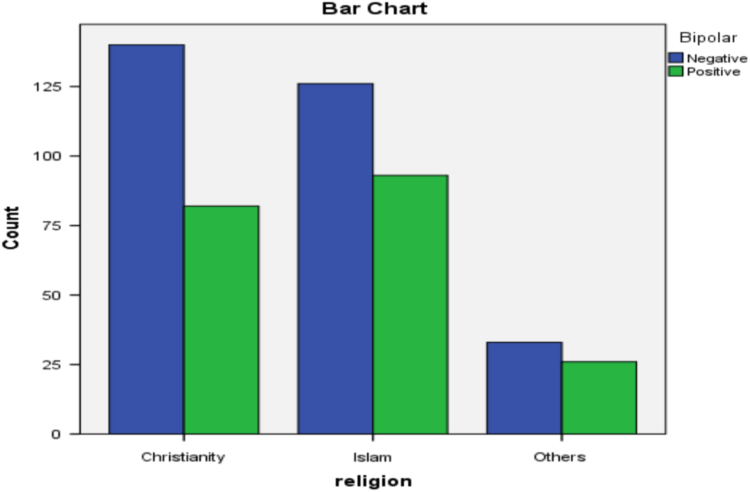
In this data article, records on demographic data, family problem issues, as well as results of medical tests from five major classes of psychotic disorder namely: bipolar; vascular dementia, minimal brain dysfunction; insomnia; and schizophrenia, were collected on 500 psychotic patients carefully selected from the pool of medical records of Yaba Psychiatric Hospital, Lagos, Nigeria, for the period of 5 years, between January 2010 and December 2014, were examined. X-squared Statistic was used to examine each of psychotic disorders to identify demographic (age, gender, religion, marital status, and occupation) and family issues (loss of parent, history of such ailment in the family (family status), divorce, head injury, and heredity of such ailment (genetic) factors that influence them. A clear description on each of these psychotic disorders (bipolar; vascular dementia, minimal brain dysfunction (MBD), insomnia and Schizophrenia) was considered separately using tables and bar diagrams. Data analysis results are as follows: firstly, 40.2%, of the 500 psychotic patients tested positive to bipolar, 40.6% to insomnia, 75.0% to schizophrenia, 43.6% to MBD and 69.2% to vascular dementia. Secondly, female patients were more prone to all the psychotic indicators than their male counterpart except in MBD. Thirdly, the oldest age group (> 60 years) is more prone to bipolar and insomnia ailments, while the mid age group (30 - 60 years) is prone to schizophrenia and vascular dementia, and the youngest group (< 30 years) is prone to MBD. Lastly, the factors that influence the ailments are listed: (age, occupation, marital status, divorce, and spiritual consultation); (age, occupation, marital status, divorce, and spiritual consultation); (age, occupation, religion, marital status, hereditary, and divorce); (gender, age, occupation, and marital status); and (history of the ailment and spiritual consultation). Bipolar and insomnia are influenced by the same set of factors, which implies that any patient having one is most likely to be at risk of having the other.
在这篇数据文章中,收集了来自尼日利亚拉各斯亚巴精神病院病历库中精心挑选的500名精神病患者在2010年1月至2014年12月这5年期间的人口统计学数据、家庭问题以及五类主要精神障碍的医学检查结果,这五类精神障碍分别为:双相情感障碍;血管性痴呆、轻度脑功能障碍;失眠症;以及精神分裂症。使用卡方统计量对每一种精神障碍进行检验,以确定影响它们的人口统计学因素(年龄、性别、宗教、婚姻状况和职业)以及家庭问题(父母离世、家族病史(家族状况)、离婚、头部受伤以及此类疾病的遗传(基因)因素)。使用表格和柱状图分别对这些精神障碍(双相情感障碍;血管性痴呆、轻度脑功能障碍(MBD)、失眠症和精神分裂症)中的每一种进行了清晰描述。数据分析结果如下:首先,在500名接受测试的精神病患者中,40.2%的患者双相情感障碍检测呈阳性,40.6%的患者失眠症检测呈阳性,75.0%的患者精神分裂症检测呈阳性,43.6%的患者MBD检测呈阳性,69.2%的患者血管性痴呆检测呈阳性。其次,除了MBD外,女性患者比男性患者更容易出现所有精神障碍指标。第三,年龄最大的年龄组(>60岁)更容易患双相情感障碍和失眠症,中年年龄组(30 - 60岁)更容易患精神分裂症和血管性痴呆,最年轻的年龄组(<30岁)更容易患MBD。最后,列出了影响这些疾病的因素:(年龄、职业、婚姻状况、离婚和精神咨询);(年龄、职业、婚姻状况、离婚和精神咨询);(年龄、职业、宗教、婚姻状况、遗传和离婚);(性别、年龄、职业和婚姻状况);以及(疾病史和精神咨询)。双相情感障碍和失眠症受同一组因素影响,这意味着患有其中一种疾病的任何患者很可能有患另一种疾病的风险。