Department of Pathology, University of Otago, Christchurch, P.O. Box 4345, Christchurch 8140, New Zealand.
Nutrients. 2017 Aug 12;9(8):866. doi: 10.3390/nu9080866.
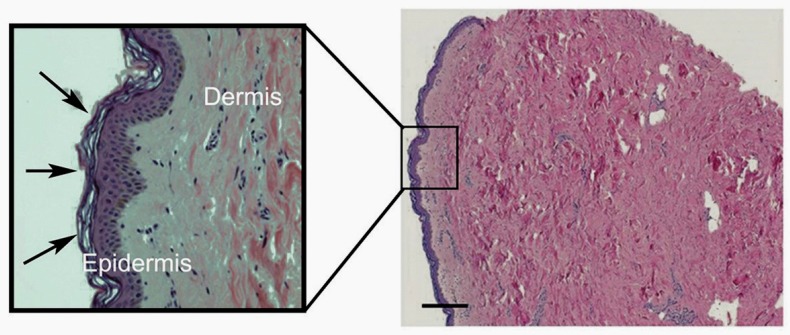
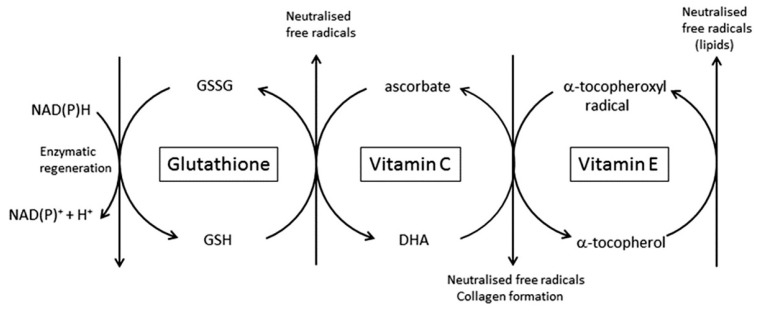
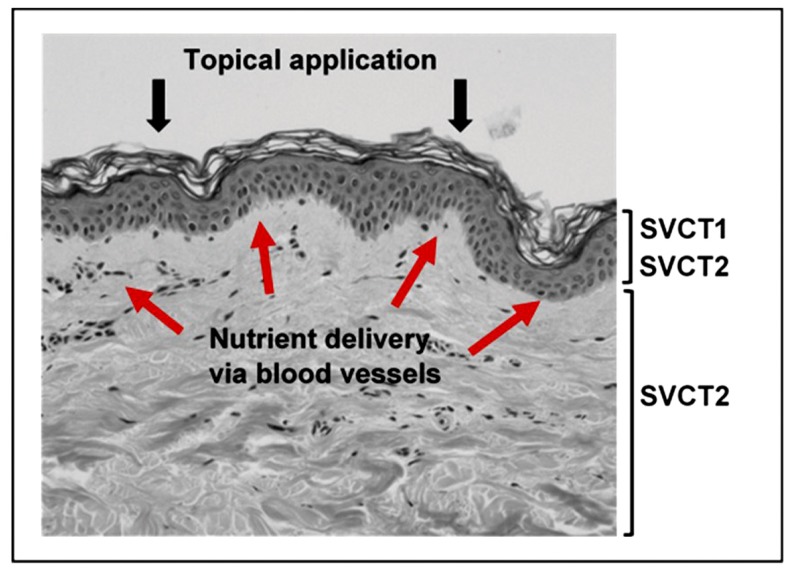
The primary function of the skin is to act as a barrier against insults from the environment, and its unique structure reflects this. The skin is composed of two layers: the epidermal outer layer is highly cellular and provides the barrier function, and the inner dermal layer ensures strength and elasticity and gives nutritional support to the epidermis. Normal skin contains high concentrations of vitamin C, which supports important and well-known functions, stimulating collagen synthesis and assisting in antioxidant protection against UV-induced photodamage. This knowledge is often used as a rationale for the addition of vitamin C to topical applications, but the efficacy of such treatment, as opposed to optimising dietary vitamin C intake, is poorly understood. This review discusses the potential roles for vitamin C in skin health and summarises the in vitro and in vivo research to date. We compare the efficacy of nutritional intake of vitamin C versus topical application, identify the areas where lack of evidence limits our understanding of the potential benefits of vitamin C on skin health, and suggest which skin properties are most likely to benefit from improved nutritional vitamin C intake.
皮肤的主要功能是作为抵御环境侵害的屏障,其独特的结构反映了这一点。皮肤由两层组成:表皮外层高度细胞化,提供屏障功能,内层真皮层确保强度和弹性,并为表皮提供营养支持。正常皮肤含有高浓度的维生素 C,它支持着重要且广为人知的功能,刺激胶原蛋白合成,并有助于抗氧化保护,防止紫外线引起的光损伤。这一知识常被用作在局部应用中添加维生素 C 的依据,但与优化饮食中维生素 C 的摄入相比,这种治疗的效果尚不清楚。本文综述了维生素 C 在皮肤健康中的潜在作用,并总结了迄今为止的体外和体内研究。我们比较了营养摄入维生素 C 与局部应用的效果,确定了缺乏证据限制我们对维生素 C 对皮肤健康潜在益处的理解的领域,并提出了哪些皮肤特性最有可能受益于改善营养摄入维生素 C。