Department of Electrical and Electronic Engineering, Imperial College London, London, UK.
TainiTec Ltd., Barking Road, London, UK.
Sci Rep. 2017 Aug 14;7(1):8086. doi: 10.1038/s41598-017-08078-8.
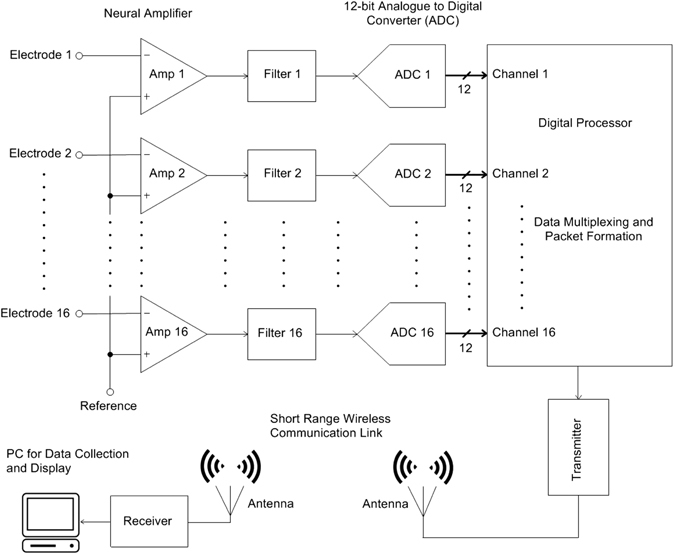
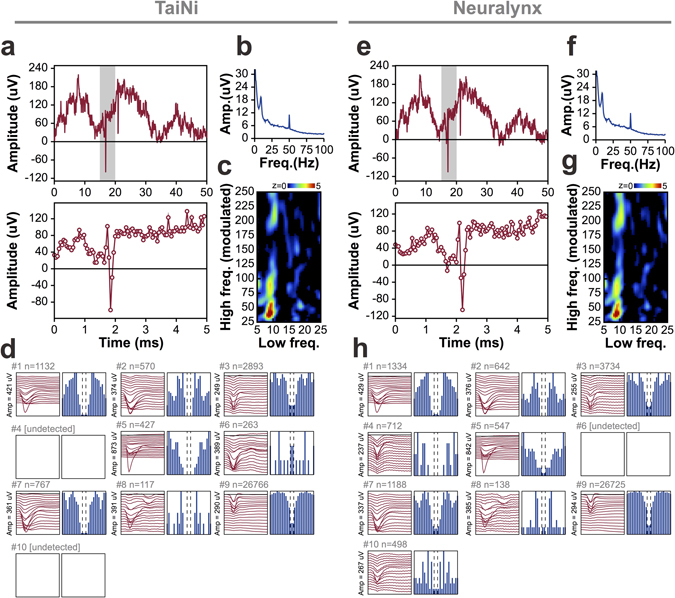
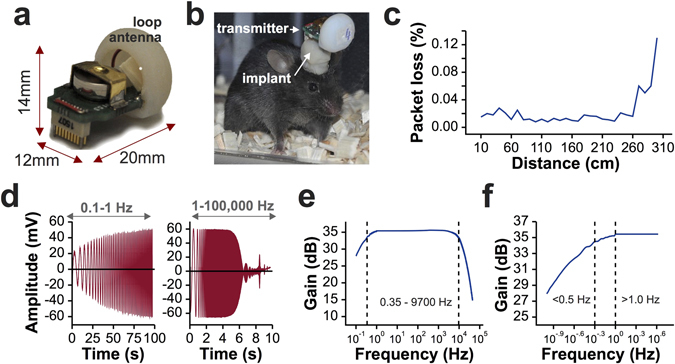
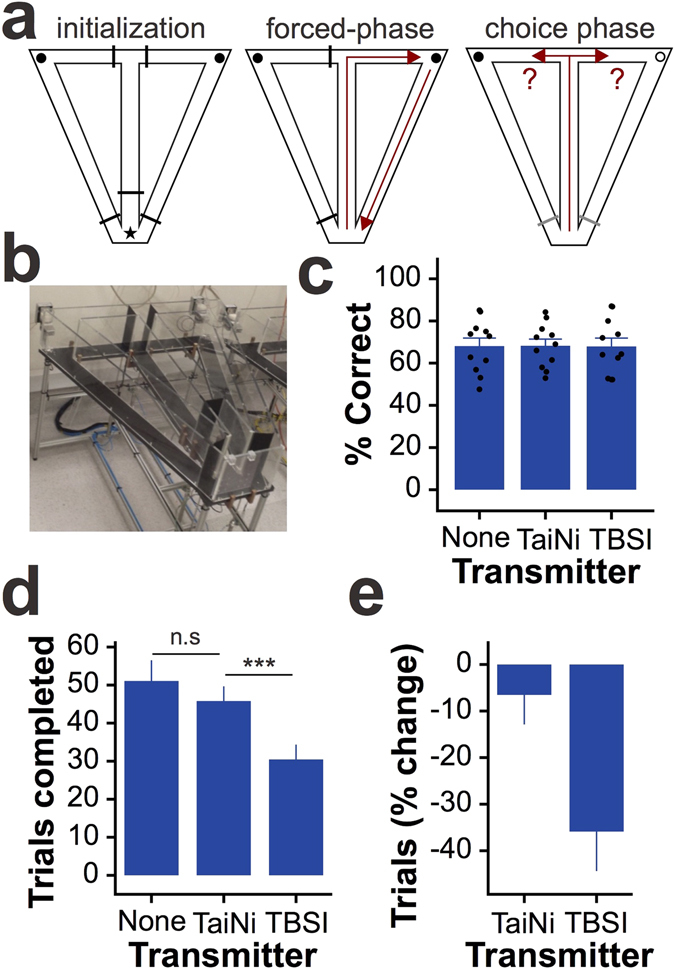
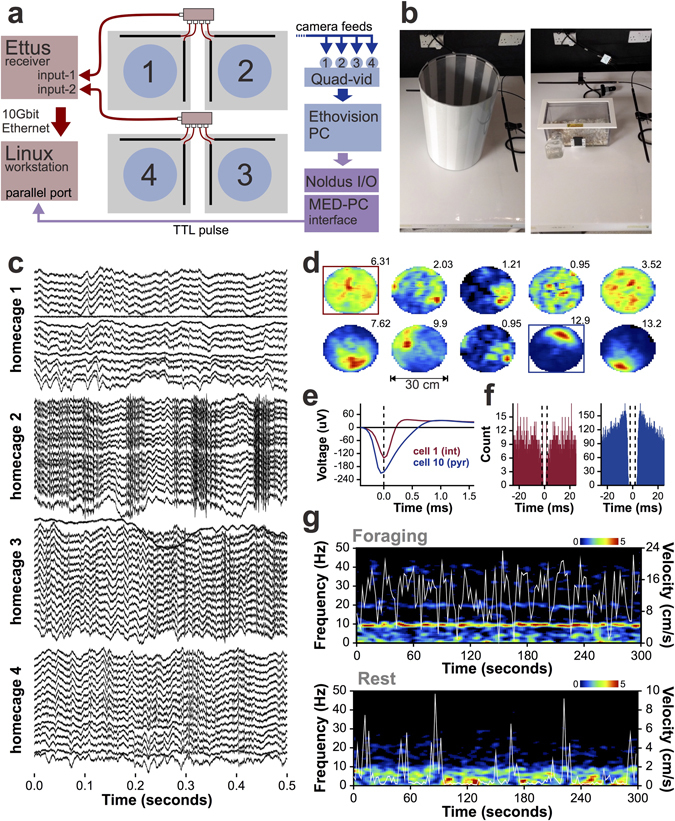
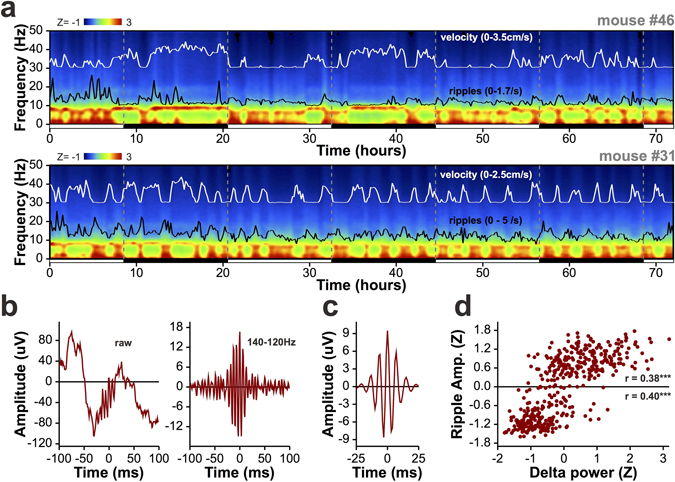
Understanding brain function at the cell and circuit level requires representation of neuronal activity through multiple recording sites and at high sampling rates. Traditional tethered recording systems restrict movement and limit the environments suitable for testing, while existing wireless technology is still too heavy for extended recording in mice. Here we tested TaiNi, a novel ultra-lightweight (<2 g) low power wireless system allowing 72-hours of recording from 16 channels sampled at ~19.5 KHz (9.7 KHz bandwidth). We captured local field potentials and action-potentials while mice engaged in unrestricted behaviour in a variety of environments and while performing tasks. Data was synchronized to behaviour with sub-second precision. Comparisons with a state-of-the-art wireless system demonstrated a significant improvement in behaviour owing to reduced weight. Parallel recordings with a tethered system revealed similar spike detection and clustering. TaiNi represents a significant advance in both animal welfare in electrophysiological experiments, and the scope for continuously recording large amounts of data from small animals.
理解细胞和回路层面的大脑功能需要通过多个记录位点以高采样率来表示神经元活动。传统的有线记录系统限制了动物的移动,限制了适合测试的环境,而现有的无线技术对于在老鼠身上进行长时间记录仍然太重。在这里,我们测试了 TaiNi,这是一种新型的超轻量级(<2g)低功耗无线系统,可从 16 个通道以约 19.5 kHz(9.7 kHz 带宽)的采样率进行长达 72 小时的记录。当老鼠在各种环境中不受限制地活动并执行任务时,我们捕获了局部场电位和动作电位。数据以亚秒级的精度与行为同步。与最先进的无线系统的比较表明,由于重量减轻,行为有了显著改善。与有线系统的并行记录显示出类似的尖峰检测和聚类。TaiNi 在动物福利的电生理实验以及从小动物中连续记录大量数据的范围方面都取得了重大进展。