Suhaimi Shafinah Ahmad, Hong Sok Lai, Abdul Malek Sri Nurestri
Institute of Biological Sciences, Faculty of Science, University of Malaya, 50603 Kuala Lumpur, Malaysia.
Center of Research Services, Institute of Research Management and Monitoring, Research Management and Innovation Complex, University of Malaya, 50603 Kuala Lumpur, Malaysia.
Pharmacogn Mag. 2017 Jul;13(Suppl 2):S179-S188. doi: 10.4103/pm.pm_432_16. Epub 2017 Jul 11.
Pers. is a perennial herb that is cultivated worldwide, including Southeast Asia, for the treatment of various diseases as traditional medicine.
The purpose of the study was to identify an active principle of and to investigate its effect on the HT29 cell death.
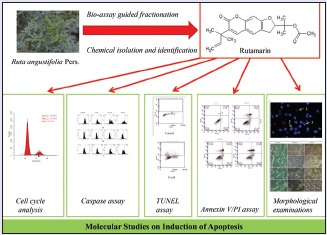
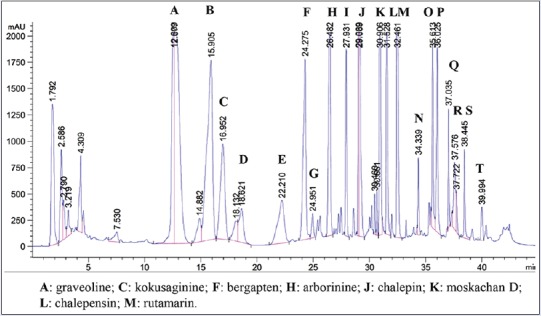
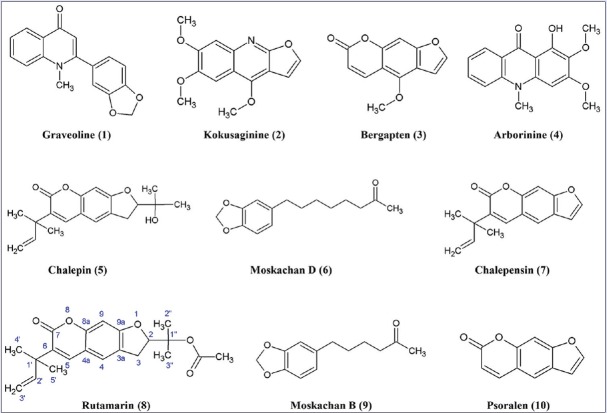
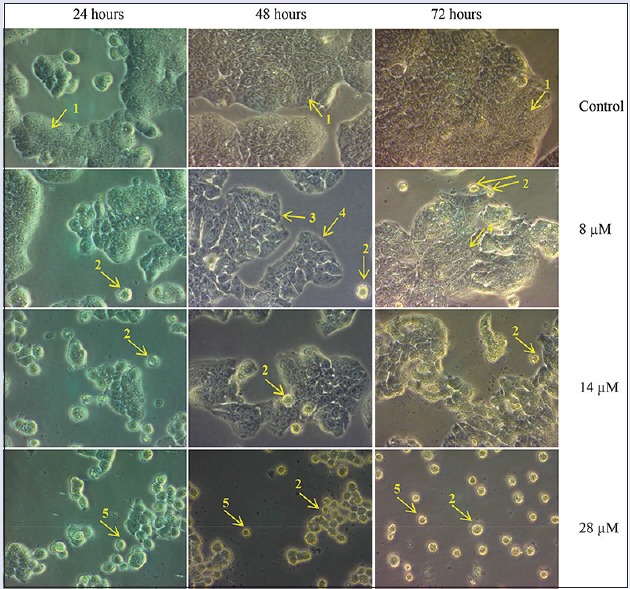
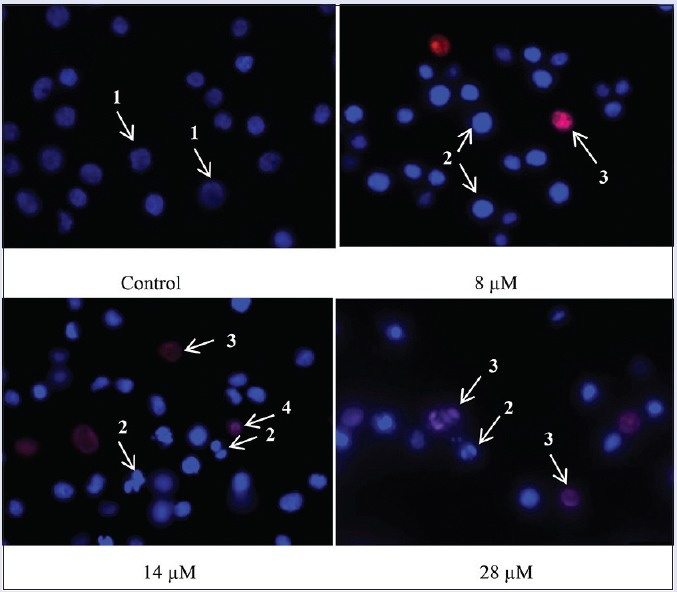
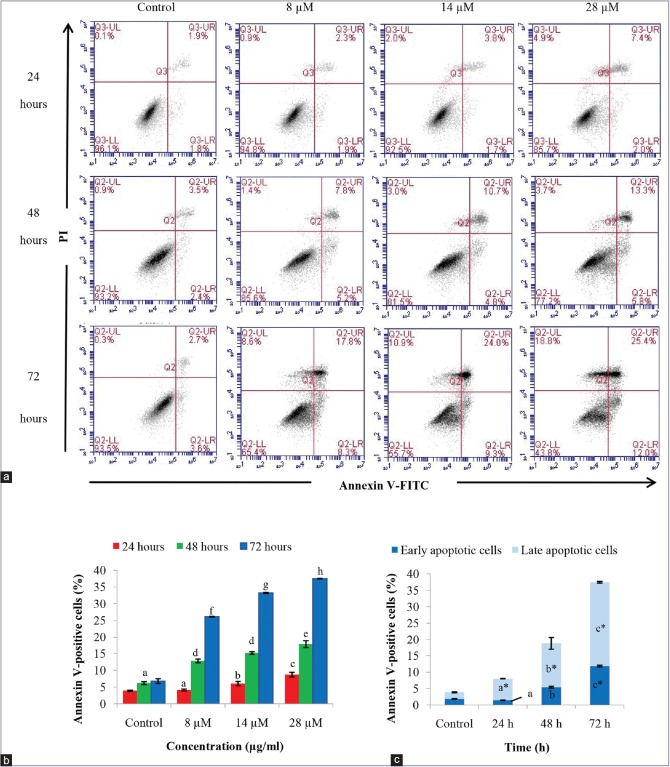
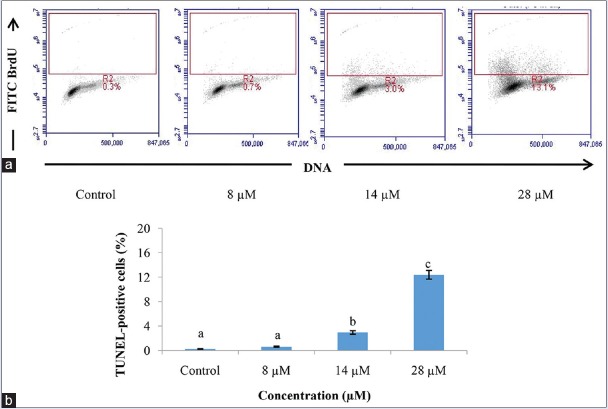
The methanol and fractionated extracts (hexane, chloroform, ethyl acetate, and water) of Pers. were initially investigated for their cytotoxic activity against two human carcinoma cell lines (MCF7 and HT29) and a normal human colon fibroblast cell line (CCD-18Co) using sulforhodamine B cytotoxicity assay. Eight compounds including rutamarin were isolated from the active chloroform extract and evaluated for their cytotoxic activity against HT29 human colon carcinoma cell line and CCD-18Co noncancer cells. Further studies on the induction of apoptosis such as morphological examinations, biochemical analyses, cell cycle analysis, and caspase activation assay were conducted in rutamarin-treated HT29 cells.
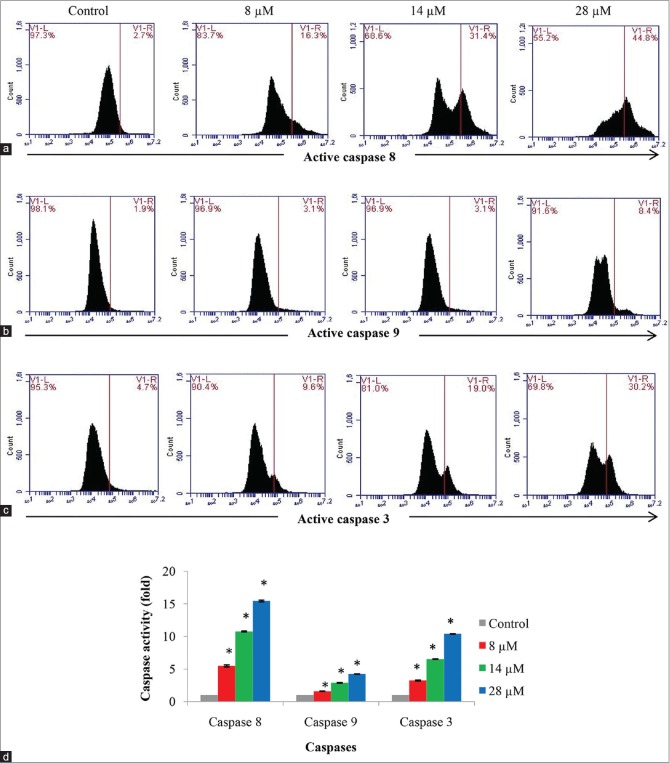
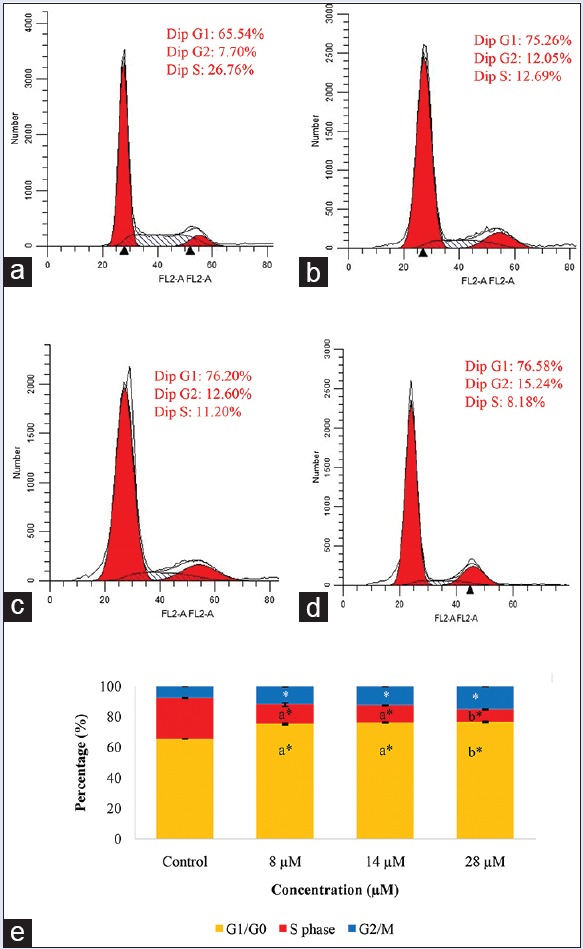
Rutamarin exhibited remarkable cytotoxic activity against HT29 cells (IC value of 5.6 μM) but was not toxic to CCD-18Co cells. The morphological and biochemical hallmarks of apoptosis including activation of caspases 3, 8, and 9 were observed in rutamarin-treated HT29 cells. These may be associated with cell cycle arrest at the G0/G1 and G2/M checkpoints, which was also observed in HT29 cells.
The present study describes rutamarin-induced apoptosis in the HT29 cell line for the first time and suggests that rutamarin has the potential to be developed as an anticancer agent.
Rutamarin was cytotoxic to HT29 colon cancer cells but exerted no damage to normal colon cellsRutamarin induced morphological and biochemical hallmarks of apoptosis in HT29 cellsRutamarin induced cell cycle arrest at the G0/G1 and G2/M checkpoints in a dose-dependent manner in HT29 cellsRutamarin activated caspases 3, 8, and 9 in a dose-dependent manner in HT29 cells. ACN: Acetonitrile, ANOVA: One-way analysis of variance, BrdU: Bromodeoxyuridine, 13C-NMR: Carbon-13 Nuclear magnetic resonance, CAD: Caspase-activated endonuclease, CCD-18Co: Human colon normal, DLD1: Human Duke's type C colorectal adenocarcinoma, DMRT: Duncan's multiple range test, DMSO: Dimethyl sulfoxide, DNA: Deoxyribonucleic acid, DR4/5: Death receptor 4/5 protein, EMEM: Eagle's minimum essential media, FBS: Fetal bovine serum, FITC Annexin V: Annexin V conjugated with fluorescein isothiocyanate, FITC-DEVD-FMK: Fluorescein isothiocyanate conjugate of caspase inhibitor Asp-Glu-Val-Asp-fluoromethyl ketone, FITC-IETD-FMK: Fluorescein isothiocyanate conjugate of caspase inhibitor Ile-Glu-Thr-Asp-fluoromethyl ketone, FITC-LEHD-FMK: Fluorescein isothiocyanate conjugate of caspase inhibitor Leu-Glu-His-Asp-fluoromethyl ketone, G0: Quiescent phase of cell cycle, G1: Gap 1 phase of cell cycle, G2: Gap 2 phase of cell cycle, GC-MS: Gas chromatography-mass spectrometry, HeLa: Human cervical adenocarcinoma, HPLC: High performance liquid chromatography, HT29: Human colon adenocarcinoma, Huh7.5: Human hepatocellular carcinoma, IC50: Half maximal inhibitory concentration, KSHV: Kaposi's sarcoma-associated herpesvirus, M phase: Mitotic phase of cell cycle, MCF7: Human breast adenocarcinoma, NMR: Nuclear magnetic resonance, PBS: Phosphate-buffered saline, PI: Propidium iodide, RNase: Ribonuclease, rt: Retention time, S phase: Synthesis phase of cell cycle, SD: Standard deviation, SRB: Sulforhodamine B, TCA: Trichloroacetic acid, TLC: Thin layer chromatography, TNF-R1: Tumor necrosis factor receptor 1 protein, TUNEL: Terminal deoxynucleotidyl transferase (TdT) dUTP nick-end labeling, UV: Ultraviolet.
Pers. 是一种多年生草本植物,作为传统药物在全球范围内种植,包括东南亚地区,用于治疗各种疾病。
本研究旨在鉴定 Pers. 的一种活性成分,并研究其对 HT29 细胞死亡的影响。
首先采用磺酰罗丹明 B 细胞毒性试验,研究 Pers. 的甲醇提取物及分级提取物(己烷、氯仿、乙酸乙酯和水)对两种人癌细胞系(MCF7 和 HT29)以及一种正常人结肠成纤维细胞系(CCD - 18Co)的细胞毒性活性。从活性氯仿提取物中分离出包括鲁他马林在内的 8 种化合物,并评估它们对 HT29 人结肠癌细胞系和 CCD - 18Co 非癌细胞的细胞毒性活性。对经鲁他马林处理的 HT29 细胞进行进一步的凋亡诱导研究,如形态学检查、生化分析、细胞周期分析和半胱天冬酶激活试验。
鲁他马林对 HT29 细胞表现出显著的细胞毒性活性(IC50 值为 5.6 μM),但对 CCD - 18Co 细胞无毒。在经鲁他马林处理的 HT29 细胞中观察到凋亡的形态学和生化特征,包括半胱天冬酶 3、8 和 9 的激活。这些可能与细胞周期在 G0/G1 和 G2/M 检查点的停滞有关,这在 HT29 细胞中也有观察到。
本研究首次描述了鲁他马林诱导 HT29 细胞系凋亡,并表明鲁他马林有潜力被开发为一种抗癌药物。
鲁他马林对 HT29 结肠癌细胞具有细胞毒性,但对正常结肠细胞无损害。鲁他马林在 HT29 细胞中诱导凋亡的形态学和生化特征。鲁他马林在 HT29 细胞中以剂量依赖性方式诱导细胞周期在 G0/G1 和 G2/M 检查点停滞。鲁他马林在 HT29 细胞中以剂量依赖性方式激活半胱天冬酶 3、8 和 9。ACN:乙腈,ANOVA:单因素方差分析,BrdU:溴脱氧尿苷,13C - NMR:碳 - 13 核磁共振,CAD:半胱天冬酶激活的核酸内切酶,CCD - 18Co:人结肠正常细胞,DLD1:人杜克 C 型结肠腺癌,DMRT:邓肯多重极差检验,DMSO:二甲基亚砜,DNA:脱氧核糖核酸,DR4/5:死亡受体 4/5 蛋白,EMEM:伊格尔最低必需培养基,FBS:胎牛血清,FITC Annexin V:异硫氰酸荧光素偶联的膜联蛋白 V,FITC - DEVD - FMK:半胱天冬酶抑制剂天冬氨酸 - 谷氨酸 - 缬氨酸 - 天冬氨酸 - 氟甲基酮的异硫氰酸荧光素偶联物,FITC - IETD - FMK:半胱天冬酶抑制剂异亮氨酸 - 谷氨酸 - 苏氨酸 - 天冬氨酸 - 氟甲基酮的异硫氰酸荧光素偶联物,FITC - LEHD - FMK:半胱天冬酶抑制剂亮氨酸 - 谷氨酸 - 组氨酸 - 天冬氨酸 - 氟甲基酮的异硫氰酸荧光素偶联物,G0:细胞周期的静止期,G1:细胞周期的 G1 期,G2:细胞周期的 G2 期,GC - MS:气相色谱 - 质谱联用,HeLa:人宫颈腺癌,HPLC:高效液相色谱,HT29:人结肠腺癌,Huh7.5:人肝癌细胞,IC50:半数最大抑制浓度,KSHV:卡波西肉瘤相关疱疹病毒,M 期:细胞周期的有丝分裂期,MCF7:人乳腺腺癌,NMR:核磁共振,PBS:磷酸盐缓冲盐水,PI:碘化丙啶,RNase:核糖核酸酶,rt:保留时间,S 期:细胞周期的合成期,SD:标准差,SRB:磺酰罗丹明 B,TCA:三氯乙酸,TLC:薄层色谱,TNF - R1:肿瘤坏死因子受体 1 蛋白,TUNEL:末端脱氧核苷酸转移酶介导的 dUTP 缺口末端标记,UV:紫外线。