National Veterinary Institute, Technical University of Denmark, Copenhagen, Denmark.
Research and Development Department, Danish Meteorological Institute, Copenhagen, Denmark.
Sci Rep. 2017 Aug 15;7(1):8175. doi: 10.1038/s41598-017-08514-9.
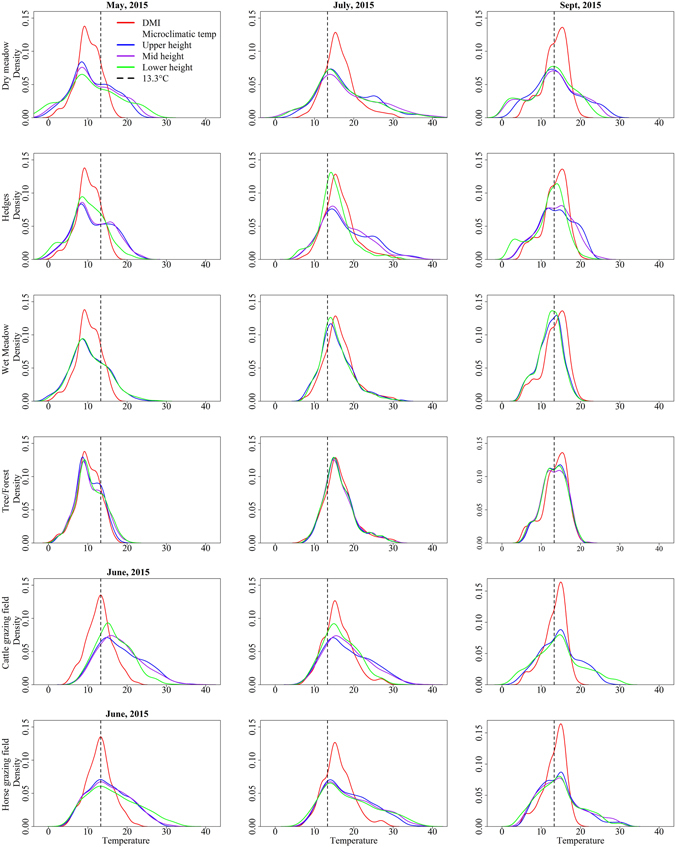
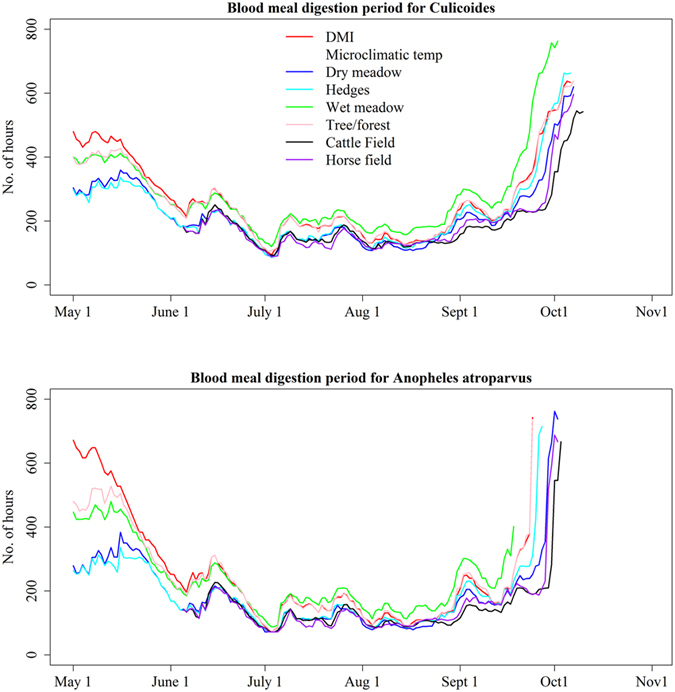
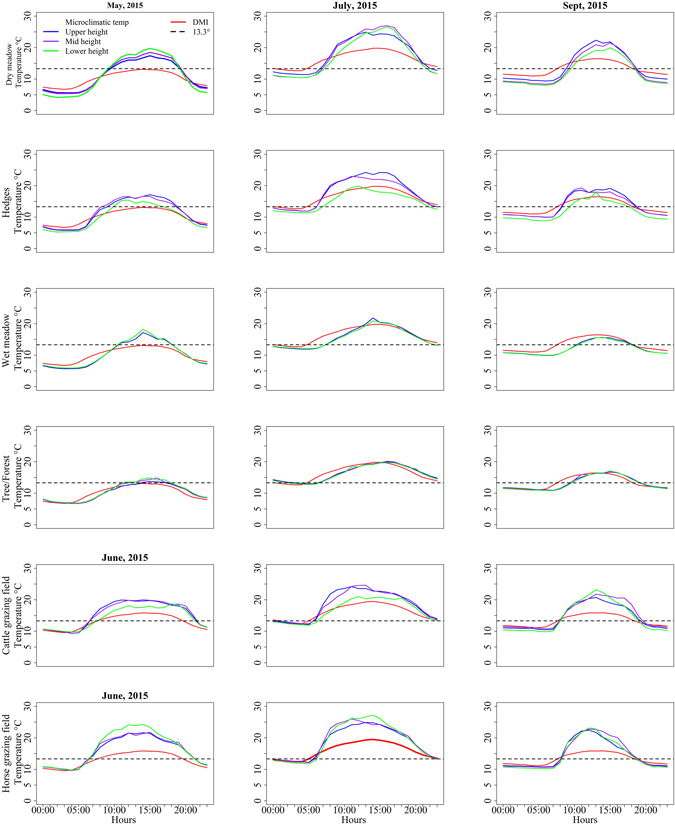
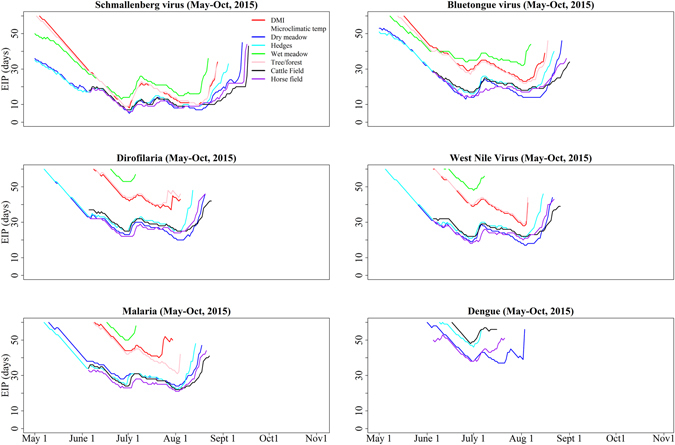
We quantified the difference between the meteorological temperature recorded by the Danish Meteorological Institute (DMI) weather stations and the actual microclimatic temperatures at two or three different heights at six potential insect habitats. We then compared the impact of the hourly temperature on the extrinsic incubation period (EIP) of six pathogens. Finally, we developed a regression model, enabling us to predict the microclimatic temperatures of different habitats based on five standard meteorological parameters readily available from any meteorological institution. Microclimatic habitats were on average 3.5-5 °C warmer than the DMI recorded temperatures during midday and 1-3 °C cooler at midnight. The estimated EIP for five of the six microclimatic habitats was shorter than the estimates based on DMI temperatures for all pathogens studied. The microclimatic temperatures also predicted a longer season for virus development compared to DMI temperatures. Based on DMI data of hourly temperature, solar radiation, wind speed, rain and humidity, we were able to predict the microclimatic temperature of different habitats with an R of 0.87-0.96. Using only meteorological temperatures for vector-borne disease transmission models may substantially underestimate both the daily potential for virus development and the duration of the potential transmission season.
我们量化了丹麦气象局(DMI)气象站记录的气象温度与六个潜在昆虫栖息地的两个或三个不同高度的实际小气候温度之间的差异。然后,我们比较了每小时温度对六种病原体外潜伏期(EIP)的影响。最后,我们开发了一个回归模型,使我们能够根据任何气象机构都可获得的五个标准气象参数来预测不同栖息地的小气候温度。在中午,小气候栖息地的平均温度比 DMI 记录的温度高 3.5-5°C,而在午夜,小气候栖息地的温度比 DMI 记录的温度低 1-3°C。对于研究的所有病原体,五个小气候栖息地中的五个病原体的估计 EIP 比基于 DMI 温度的估计值短。与 DMI 温度相比,小气候温度还预测了病毒发育的更长季节。基于 DMI 数据的每小时温度、太阳辐射、风速、降雨和湿度,我们能够以 0.87-0.96 的 R ²预测不同栖息地的小气候温度。仅使用气象温度进行虫媒传染病传播模型可能会大大低估病毒发育的每日潜力和潜在传播季节的持续时间。