Liu Hong, Chen Yue-Tong, Wang Rui, Chen Xin-Zu
Department of Integrated Traditional Chinese and Western Medicine Intensive Care Unit Nursing Section, Department of Gastroenterology Department of Gastrointestinal Surgery, West China Hospital, Sichuan University, Chengdu, China.
Medicine (Baltimore). 2017 Aug;96(33):e7811. doi: 10.1097/MD.0000000000007811.
To investigate the associations of Helicobacter pylori (Hp) infection and atrophic gastritis (AG) with pancreatic cancer risk.
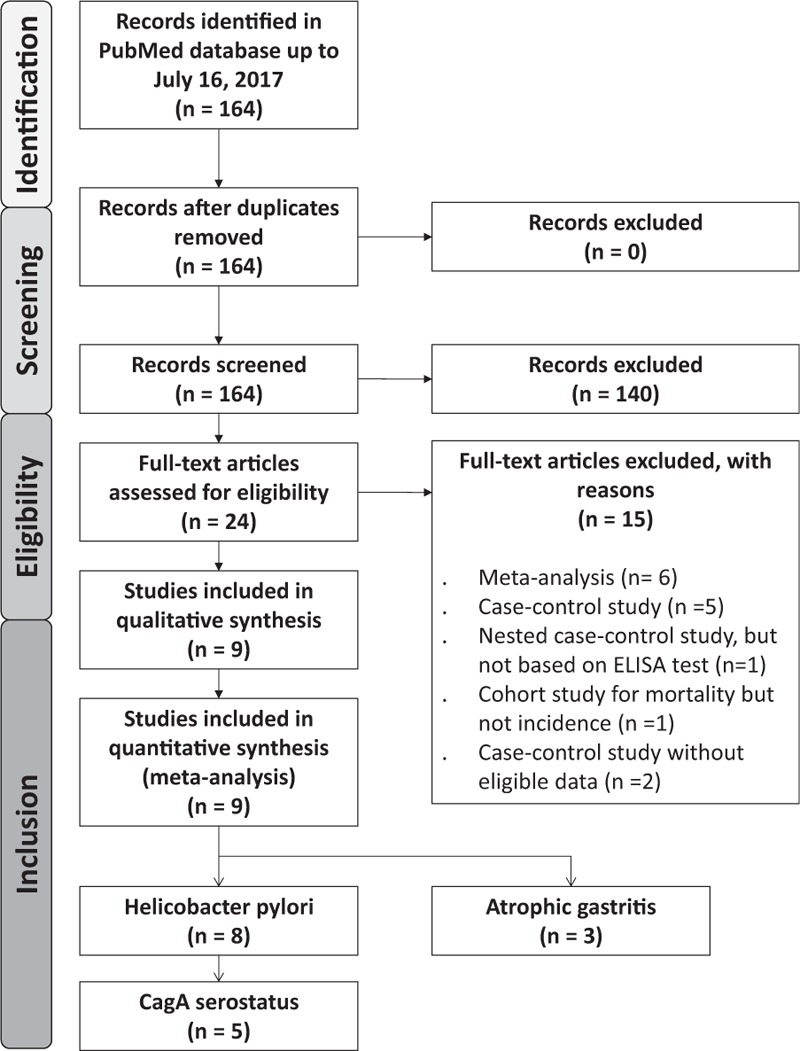
A literature search in PubMed was performed up to July 2017. Only prospective cohort and nested case-control studies enrolling cancer-free participants were eligible. Incident pancreatic cancer cases were ascertained during the follow-up. The risks of pancreatic cancer were compared between persons infected and noninfected with Hp, or between those with and without AG status at baseline. Odds ratios (ORs) or hazard ratios were combined. Subgroup and sensitivity analyses were performed, and publication bias was estimated.
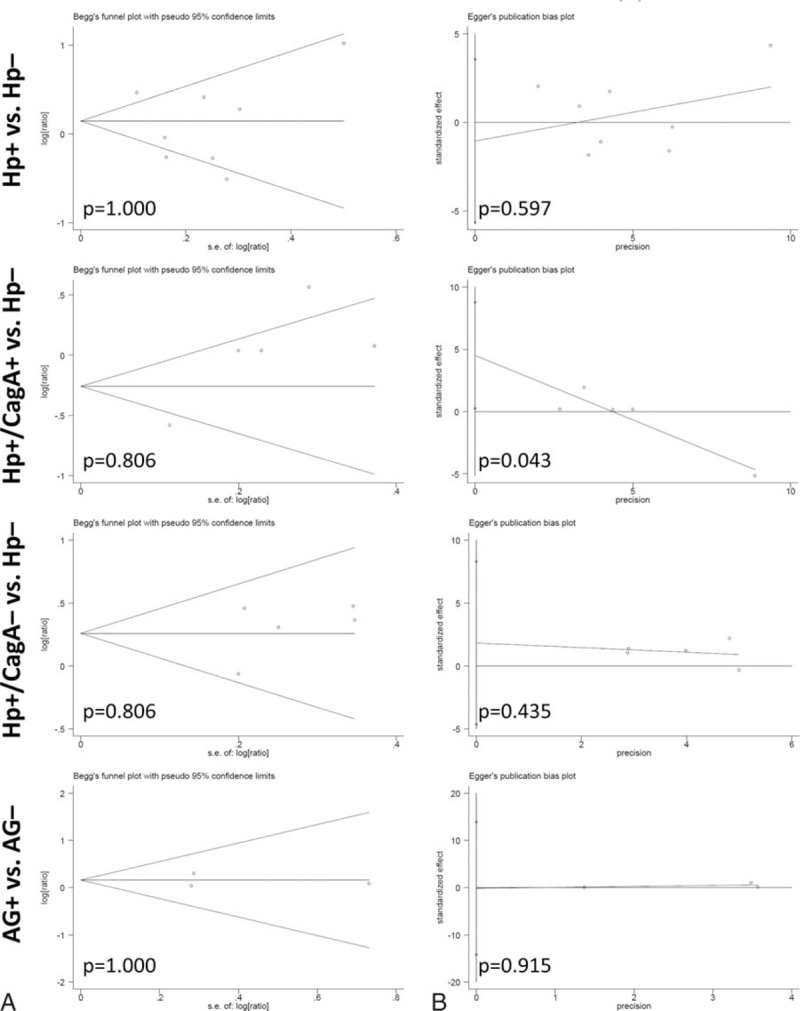
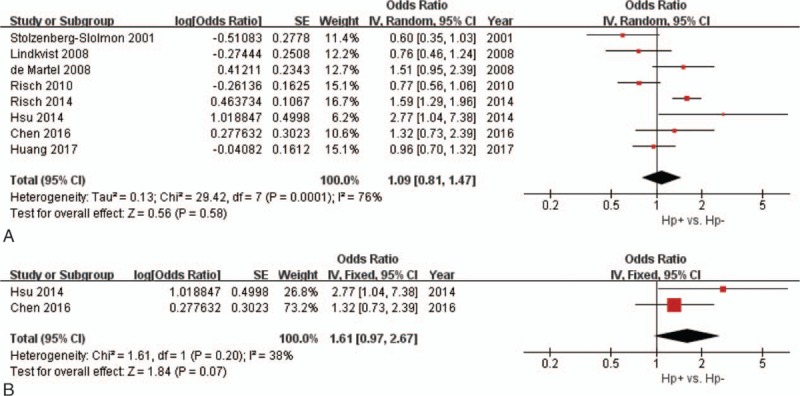
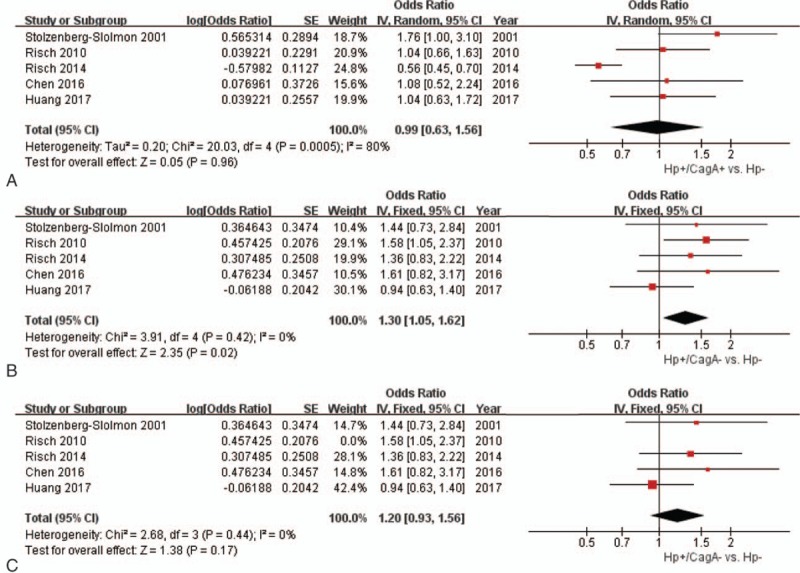
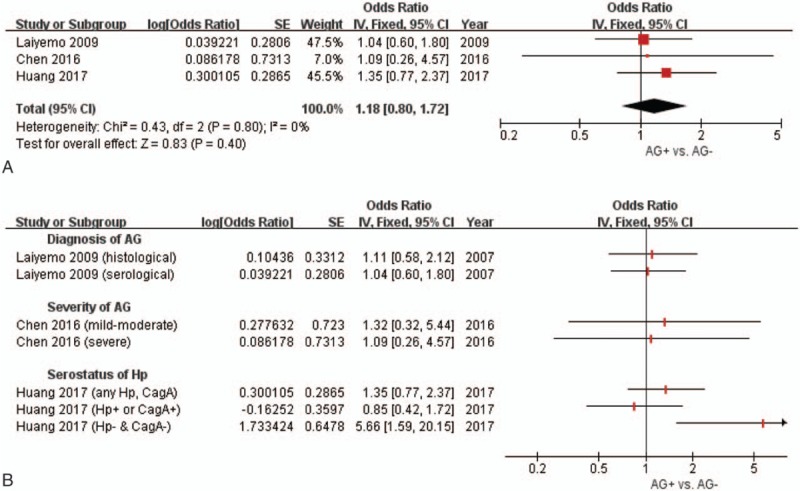
Three cohort studies and 6 nested case-control studies, including 65,155 observations, were analyzed. The meta-analyses did not confirm the association between pancreatic cancer risk and Hp infection (OR = 1.09, 95% confidence interval [CI] = 0.81-1.47) or AG status (OR = 1.18, 95% CI = 0.80-1.72). However, particular subpopulations potentially had increased risks of pancreatic cancer. Cytotoxin-associated gene A (CagA)-negative strains of Hp might be a causative factor of pancreatic cancer (OR = 1.30, 95% CI = 1.05-1.62), but a sensitivity analysis by leave-one-out method did not fully warrant it (OR = 1.20, 95% CI = 0.93-1.56). In 1 nested case-control study, AG at stomach corpus in Hp-negative subpopulation might have increased risk of pancreatic cancer, but with a poor test power = 0.56. Publication biases were nonsignificant in the present meta-analysis.
Based on current prospective epidemiologic studies, the linkage of pancreatic cancer to Hp infection or AG status was not warranted on the whole. Nevertheless, prospective studies only focusing on those specific subpopulations are further required to obtain better power.
探讨幽门螺杆菌(Hp)感染和萎缩性胃炎(AG)与胰腺癌风险之间的关联。
截至2017年7月在PubMed上进行文献检索。仅纳入无癌症参与者的前瞻性队列研究和巢式病例对照研究符合要求。在随访期间确定新发胰腺癌病例。比较Hp感染组与未感染组、或基线时有无AG状态者的胰腺癌风险。合并比值比(OR)或风险比。进行亚组分析和敏感性分析,并评估发表偏倚。
分析了3项队列研究和6项巢式病例对照研究,共65155例观察对象。荟萃分析未证实胰腺癌风险与Hp感染(OR = 1.09,95%置信区间[CI] = 0.81 - 1.47)或AG状态(OR = 1.18,95% CI = 0.80 - 1.72)之间的关联。然而,特定亚组人群的胰腺癌风险可能增加。Hp细胞毒素相关基因A(CagA)阴性菌株可能是胰腺癌的致病因素(OR = 1.30,95% CI = 1.05 - 1.62),但采用逐一剔除法的敏感性分析并未完全证实这一点(OR = 1.20,95% CI = 0.93 - 1.56)。在1项巢式病例对照研究中,Hp阴性亚组胃体部的AG可能增加胰腺癌风险,但检验效能较低 = 0.56。在本荟萃分析中发表偏倚不显著。
基于当前的前瞻性流行病学研究,总体上没有证据支持胰腺癌与Hp感染或AG状态之间存在关联。然而,仍需要进一步开展仅聚焦于那些特定亚组人群的前瞻性研究以获得更高的检验效能。