Dureshahwar Khan, Mubashir Mohammed, Une Hemant Devidas
Department of Pharmacology, Y B Chavan College of Pharmacy, Dr. Rafiq Zakaria Campus, Aurangabad, Maharashtra, India.
Department of Pharmacology, SDMVM's Dr. Vedprakash Patil Pharmacy College, Aurangabad, Maharashtra, India.
Pharmacognosy Res. 2017 Jul-Sep;9(3):287-293. doi: 10.4103/pr.pr_147_16.
Antioxidant potential has protective effects in diabetic neuropathy (DN); hence, the present study was designed with an objective to quantify quercetin from shade-dried leaves of Lam. and to study its effects on streptozotocin (STZ)-induced chronic DN.
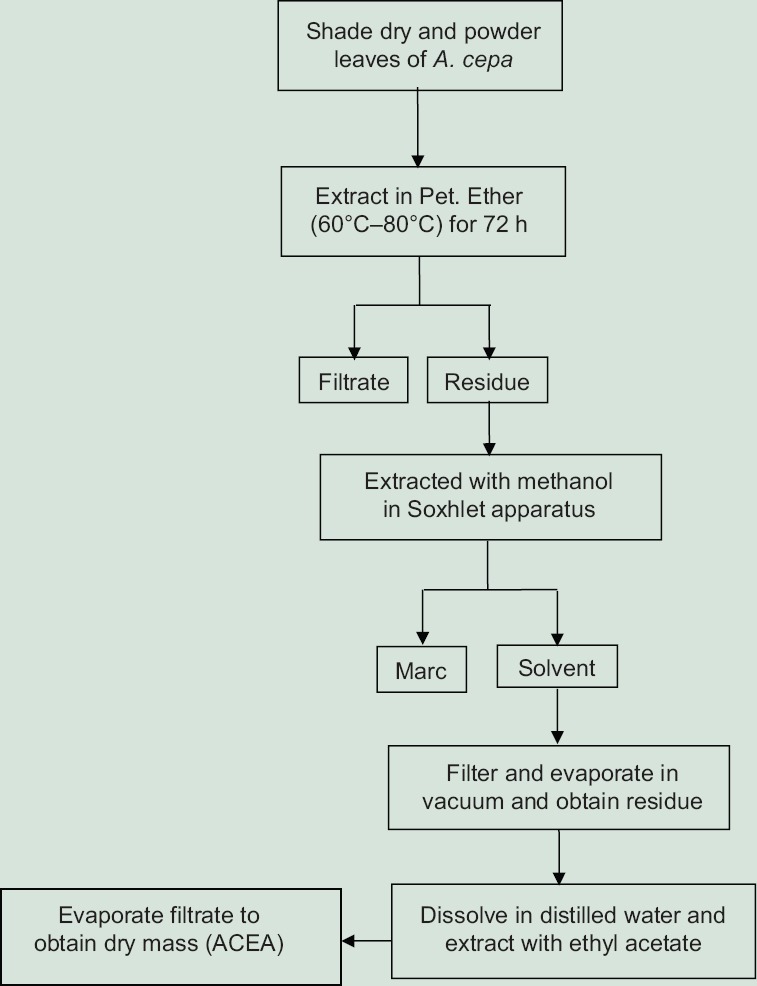
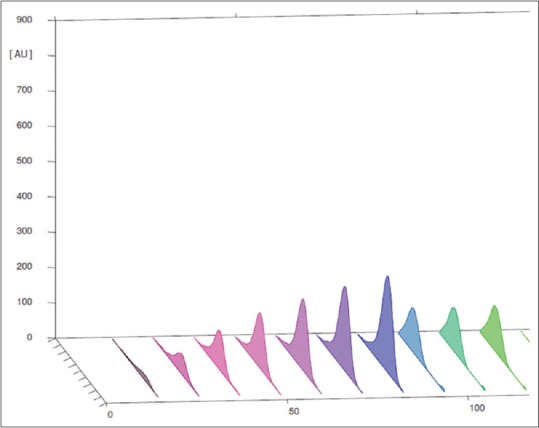
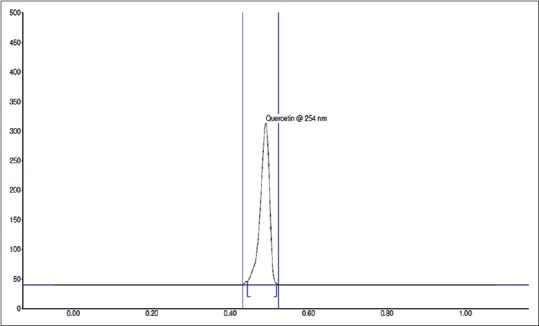
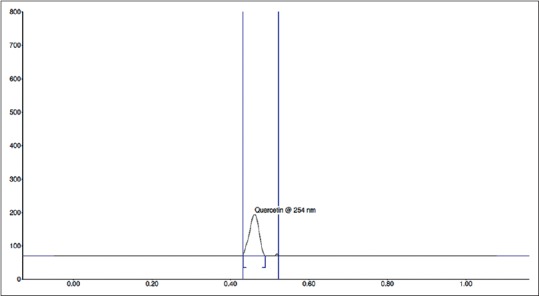
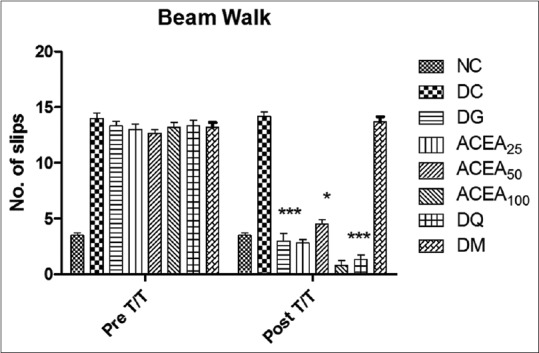
The shade-dried leaves of Lam. were extracted with methanol and then fractionated using ethyl acetate (ACEA). The quantification of quercetin in ACEA was evaluated by high-performance thin layer chromatography (HPTLC). The STZ (40 mg/kg) was administered to Sprague-Dawley rats (180-250 g) maintained at normal housing conditions. The STZ was administered once a day for 3 consecutive days. The elevation in blood glucose was monitored for 3 weeks periodically using flavin adenine dinucleotide-glucose dehydrogenase method by Contour TS glucometer. Rats showing blood glucose above 250 mg/dl were selected for the study. Animals were divided into eight groups. ACEA (25, 50, and 100 mg/kg), quercetin (40 mg/kg), metformin (120 mg/kg), and gabapentin (100 mg/kg) were given orally once a day for 2 weeks. The blood glucose level was again measured at the end of treatment to assess DN. Thermal hyperalgesia, cold allodynia, motor incoordination, and neurotoxicity were studied initially and at the end of 2-week treatment. Biochemical parameters were also evaluated after 2-week drug treatment.
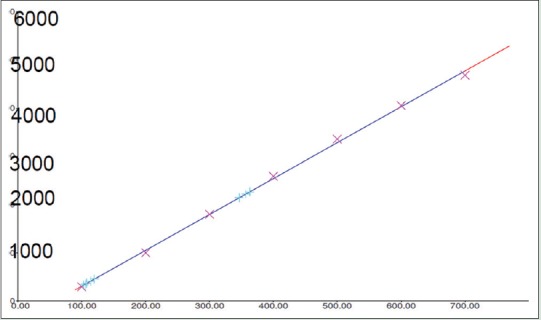
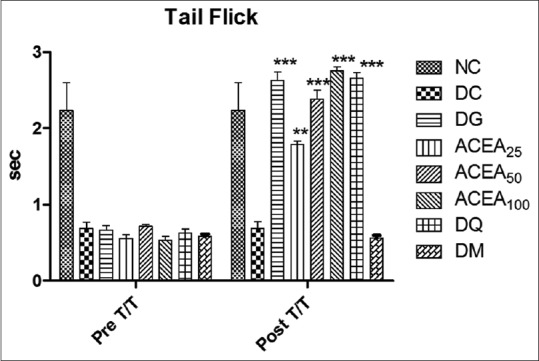
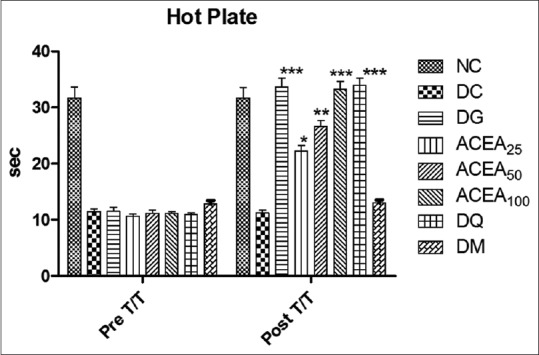
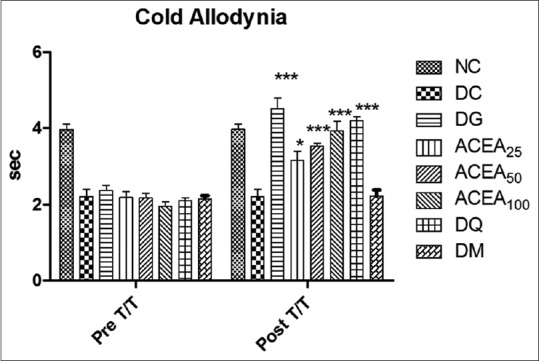
The quercetin present in ACEA was 4.82% by HPTLC. All the ACEA treatment reduces blood glucose level at the end of the 2-week study and shows a significant neuroprotective effect in STZ-induced DN in the above experimental models.
The quercetin present in ACEA proved protective effect in STZ-induced DN.
High-performance thin layer chromatography reveals the presence of 4.82% quercetin in ethyl acetate. (ACEA). Its investigation against various diabetic neuropathy biomarkers has proved that ACEA has significant blood glucose reducing action shown neuroprotective action in thermal hyperalgesia, motor incoordination, and biochemical parameters. : HPTLC: High-performance thin layer chromatography, TLC: Thin layer chromatography, UV: Ultraviolet, ACEA: ethyl acetate, STZ: Streptozotocin, LDL: Low-density lipids, HDL: High-density lipids.
抗氧化潜能对糖尿病神经病变(DN)具有保护作用;因此,本研究旨在对[植物名称]阴干叶中的槲皮素进行定量,并研究其对链脲佐菌素(STZ)诱导的慢性DN的影响。
[植物名称]的阴干叶用甲醇提取,然后用乙酸乙酯(ACEA)进行分离。通过高效薄层色谱法(HPTLC)对ACEA中的槲皮素进行定量。将STZ(40 mg/kg)给予饲养在正常环境条件下的Sprague-Dawley大鼠(180 - 250 g)。连续3天每天给药一次STZ。使用Contour TS血糖仪通过黄素腺嘌呤二核苷酸 - 葡萄糖脱氢酶法定期监测3周内血糖升高情况。选择血糖高于250 mg/dl的大鼠进行研究。动物分为八组。每天口服给予ACEA(25、50和100 mg/kg)、槲皮素(40 mg/kg)、二甲双胍(120 mg/kg)和加巴喷丁(100 mg/kg),持续2周。治疗结束时再次测量血糖水平以评估DN。在治疗开始时和2周治疗结束时研究热痛觉过敏、冷痛觉异常、运动不协调和神经毒性。在2周药物治疗后还评估了生化参数。
通过HPTLC测定,ACEA中槲皮素含量为4.82%。在上述实验模型中,所有ACEA治疗在2周研究结束时均降低了血糖水平,并在STZ诱导的DN中显示出显著的神经保护作用。
ACEA中的槲皮素在STZ诱导的DN中被证明具有保护作用。
高效薄层色谱法显示乙酸乙酯提取物(ACEA)中槲皮素含量为4.82%。对各种糖尿病神经病变生物标志物的研究证明,ACEA具有显著的降血糖作用,在热痛觉过敏、运动不协调和生化参数方面显示出神经保护作用。:HPTLC:高效薄层色谱法,TLC:薄层色谱法,UV:紫外线,ACEA:乙酸乙酯提取物,STZ:链脲佐菌素,LDL:低密度脂蛋白,HDL:高密度脂蛋白。