Department of Chemical, Biological, Pharmaceutical and Environmental Science, University of Messina, Viale Ferdinando Stagno D'Alcontres 31, 98166 Messina, Italy.
American Pistachio Growers, 9 River Park Pl E, Fresno, CA 93720, USA.
Nutrients. 2017 Aug 22;9(8):915. doi: 10.3390/nu9080915.
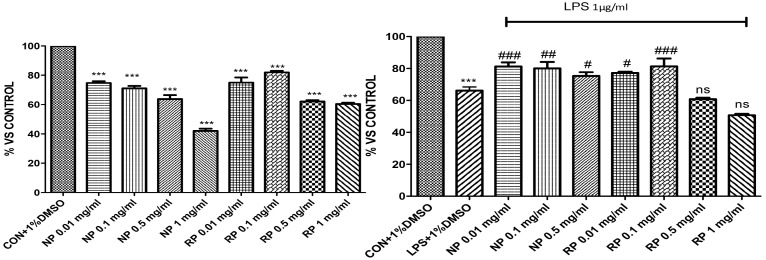
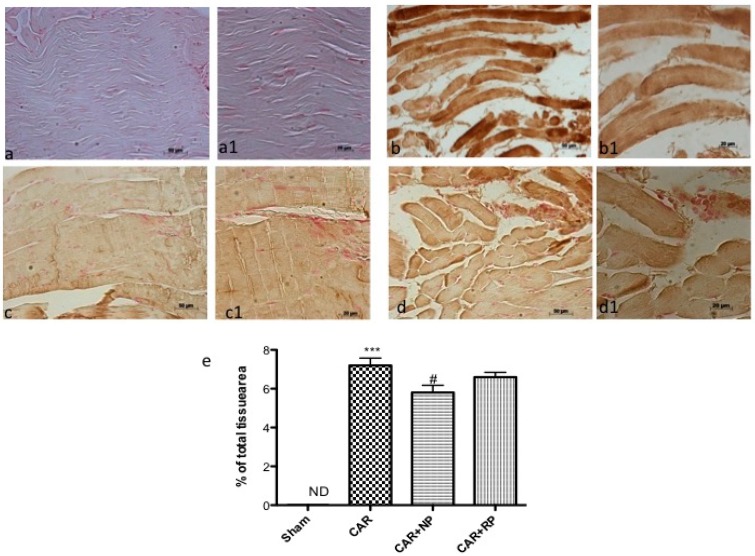
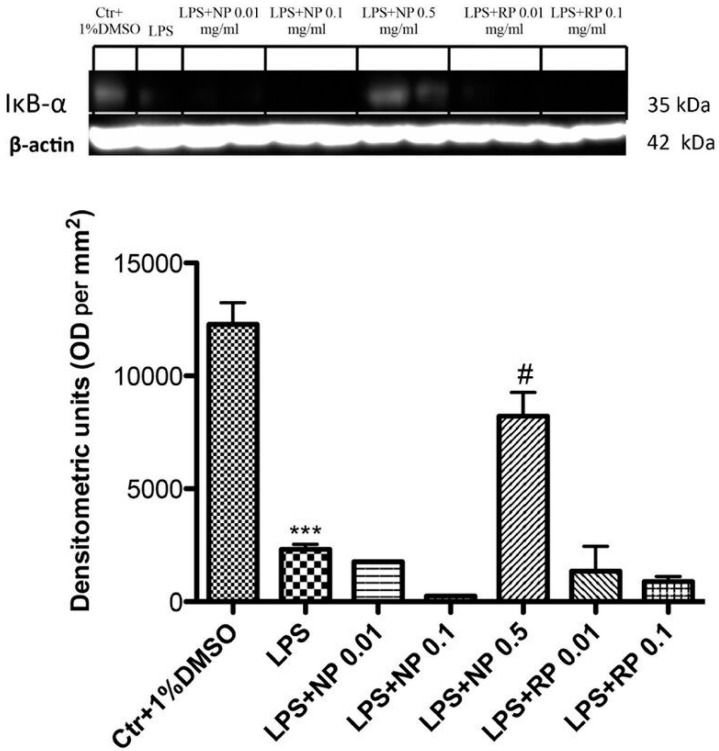
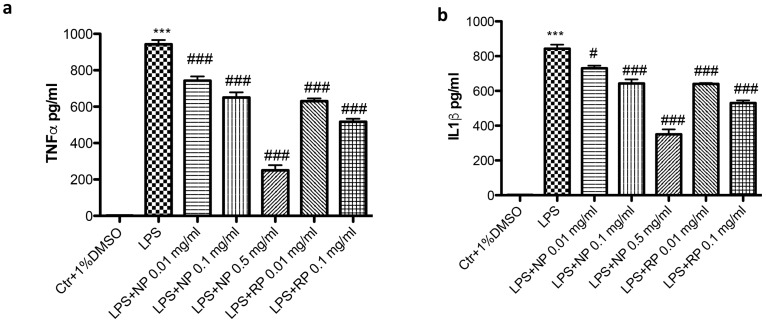
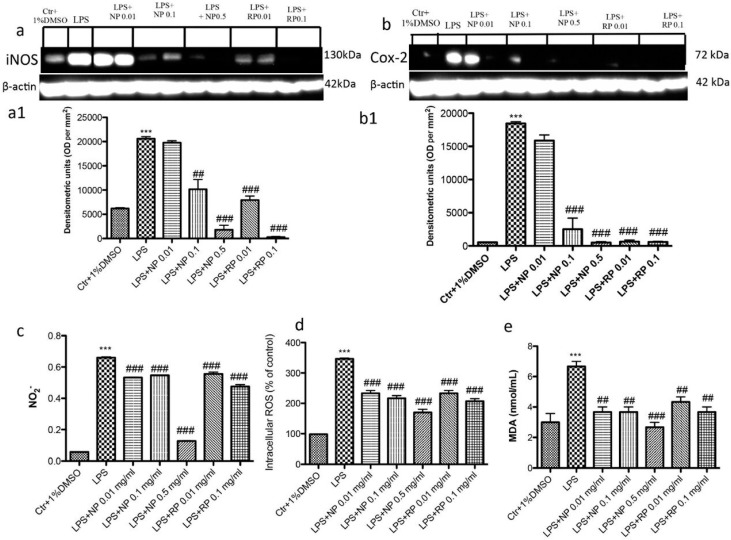
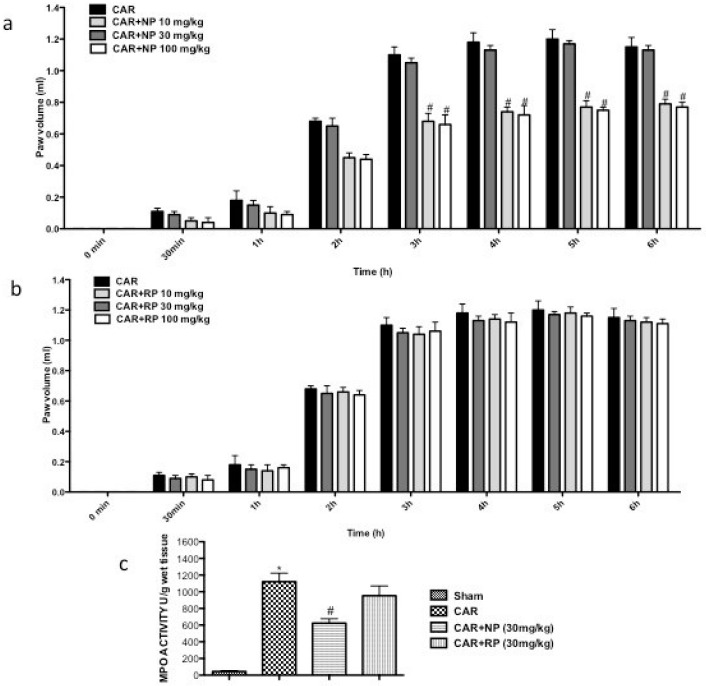
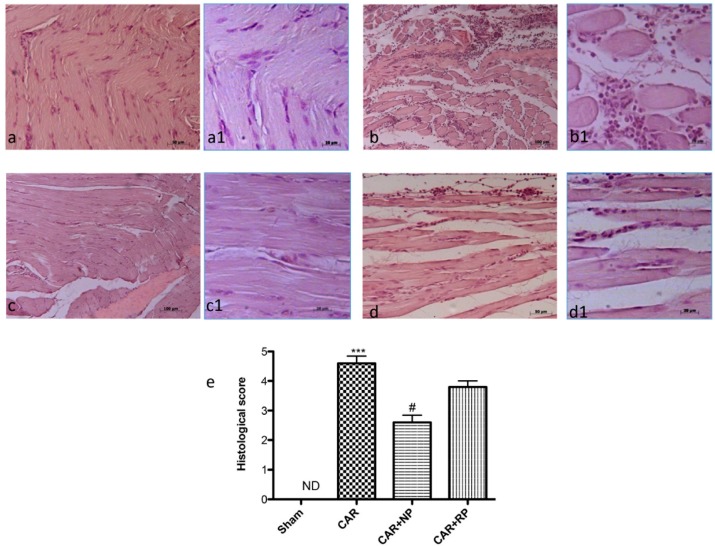
Several reports have demonstrated the effectiveness of pistachio against oxidative stress and inflammation. In this study, we investigate if polyphenols extracts from natural raw shelled pistachios (NP) or roasted salted pistachio (RP) kernels have anti-inflammatory and antioxidant properties at lower doses than reported previously, in both in vitro and in vivo models. The monocyte/macrophage cell line J774 was used to assess the extent of protection by NP and RP pistachios against lipopolysaccharide (LPS)-induced inflammation. Moreover, antioxidant activity of NP and RP was assessed in an in vivo model of paw edema in rats induced by carrageenan (CAR) injection in the paw. Results from the in vitro study demonstrated that pre-treatment with NP (0.01, 0.1 and 0.5 mg/mL) and RP (0.01 and 0.1 mg/mL) exerted a significant protection against LPS induced inflammation. Western blot analysis showed NP reduced the degradation of IκB-α, although not significantly, whereas both NP and RP decreased the TNF-α and IL-1β production in a dose-dependent way. A significant reduction of CAR-induced histological paw damage, neutrophil infiltration and nitrotyrosine formation was observed in the rats treated with NP. These data demonstrated that, at lower doses, polyphenols present in pistachios possess antioxidant and anti-inflammatory properties. This may contribute toward a better understanding of the beneficial health effects associated with consumption of pistachios.
已有多项研究表明,开心果具有抗氧化应激和抗炎作用。本研究旨在探究天然带壳开心果(NP)或盐焗开心果(RP)果仁中的多酚提取物,在体外和体内模型中,是否以低于以往报道的剂量发挥抗炎和抗氧化作用。本研究使用单核细胞/巨噬细胞系 J774 来评估 NP 和 RP 对脂多糖(LPS)诱导的炎症的保护作用。此外,本研究还通过爪垫注射角叉菜胶(CAR)诱导大鼠爪垫水肿的体内模型评估 NP 和 RP 的抗氧化活性。体外研究结果表明,NP(0.01、0.1 和 0.5mg/ml)和 RP(0.01 和 0.1mg/ml)预处理可显著对抗 LPS 诱导的炎症。Western blot 分析表明,NP 可减少 IκB-α的降解,尽管不显著,但 NP 和 RP 均可呈剂量依赖性降低 TNF-α和 IL-1β的产生。NP 治疗可显著减少 CAR 诱导的爪垫组织损伤、中性粒细胞浸润和硝基酪氨酸形成。这些数据表明,在较低剂量下,开心果中存在的多酚具有抗氧化和抗炎作用。这可能有助于更好地理解与开心果消费相关的有益健康影响。