Lima-E-Silva Agostinho Alves, Silva-Filho Renato Geraldo, Fernandes Henry Marcel Zalona, Saramago Carmen Soares Meirelles, Viana Alice Slotfeldt, Souza Maria José, Nogueira Eduardo Matos
Department of Microbiology and Parasitology Rio de Janeiro, Biomedical Institute, Federal University of the State of Rio de Janeiro (UNIRIO), Rio de Janeiro, Brazil.
IPPMG, Federal University of Rio de Janeiro (UFRJ), Rio de Janeiro, Brazil.
Open Microbiol J. 2017 Jun 30;11:142-151. doi: 10.2174/1874285801711010142. eCollection 2017.
is an important pathogen and a frequent cause of infections associated with biofilm production in implantable medical devices. Biofilm production can be induced by sub-inhibitory concentrations (sub-MICs) of certain antibiotics, but few studies have researched this occurrence in . In this study, we investigated the effect of sub-MICs of rifampicin and minocycline on biofilm production by five clinical and five non-clinical isolates.
Microtiter Plate assay and Congo Red Agar Test were used to analyze the biofilm production. The biofilm composition was evaluated by the detachment assay with sodium metaperiodate and proteinase K.
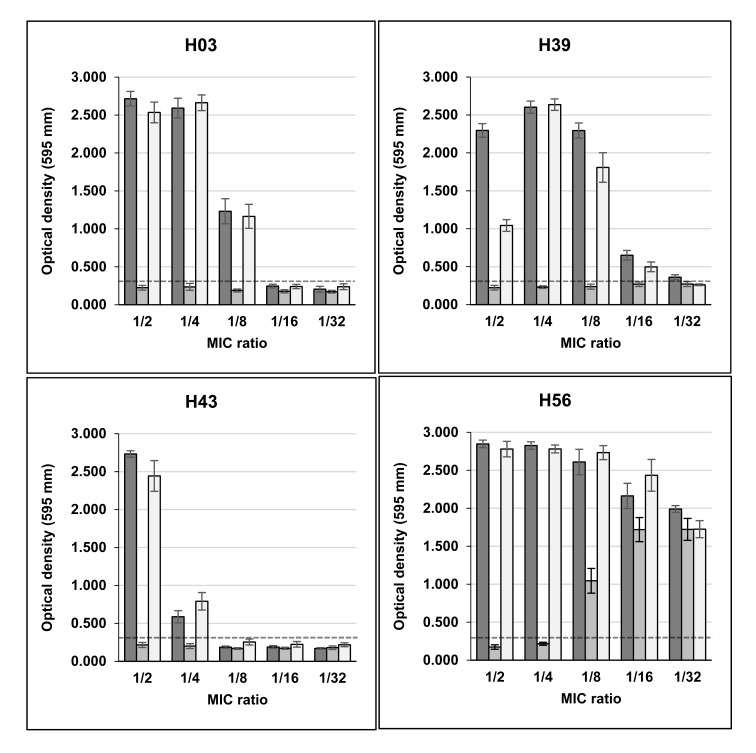
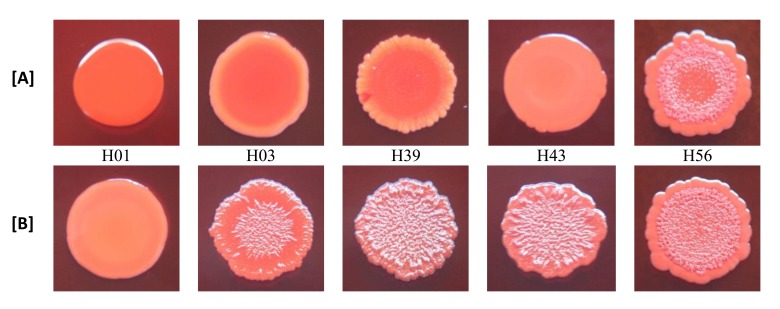
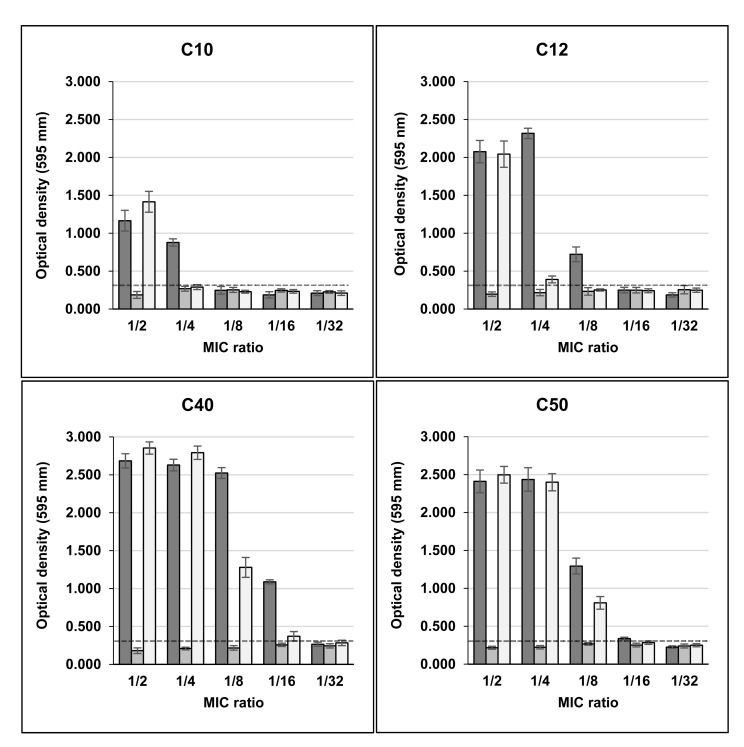
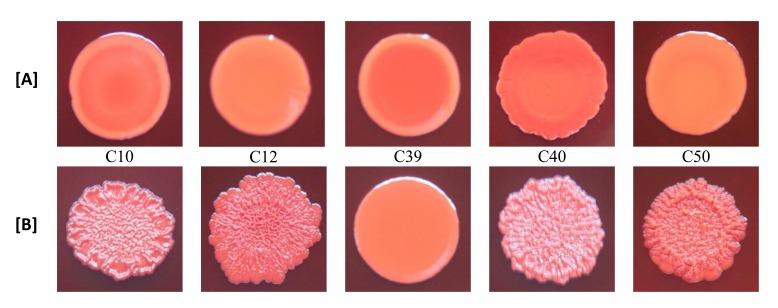
Rifampicin sub-MICs induced very high biofilm formation in seven isolates that were non-producers in Tryptic Soy Broth. In one producer isolate, the biofilm formation level was not affected by sub-MICs of this drug. Sub-MICs of minocycline did not induce biofilm production in all isolates tested and in two producer isolates, instead, MIC/2 and MIC/4 inhibited biofilm production. The results of the drugs in combination were similar to those with rifampicin alone. The biofilm matrix was identified as polysaccharide, except for one producer isolate, classified as proteinaceous. Polysaccharide biofilm producer isolates, when grown on Congo Red Agar without sucrose, but with sub-MICs of rifampicin, showed results in agreement with those obtained in Microtiter Plate Test.
The high biofilm production induced by sub-MICs of rifampicin has potential clinical relevance, because this is one of the drugs commonly used in the impregnation of catheters. In addition, it is used adjunctively to treat certain infections.
是一种重要的病原体,是可植入医疗器械中与生物膜形成相关的感染的常见原因。某些抗生素的亚抑菌浓度(亚最小抑菌浓度,sub-MICs)可诱导生物膜形成,但很少有研究在中研究这种情况。在本研究中,我们调查了利福平与米诺环素的亚最小抑菌浓度对5株临床和5株非临床分离株生物膜形成的影响。
采用微量滴定板法和刚果红琼脂试验分析生物膜形成。通过高碘酸钠和蛋白酶K的脱离试验评估生物膜组成。
利福平亚最小抑菌浓度在7株胰蛋白胨大豆肉汤中不产生生物膜的分离株中诱导了非常高的生物膜形成。在1株产生生物膜的分离株中,该药物的亚最小抑菌浓度未影响生物膜形成水平。米诺环素的亚最小抑菌浓度在所有测试的分离株中均未诱导生物膜产生,而在2株产生生物膜的分离株中,MIC/2和MIC/4抑制了生物膜产生。联合用药的结果与单独使用利福平的结果相似。除1株产生生物膜的分离株被归类为蛋白质类外,生物膜基质被鉴定为多糖。多糖生物膜产生菌分离株在不含蔗糖但有利福平亚最小抑菌浓度的刚果红琼脂上生长时,其结果与微量滴定板试验结果一致。
利福平亚最小抑菌浓度诱导的高生物膜产生具有潜在的临床相关性,因为这是常用于导管浸渍的药物之一。此外,它还被用于辅助治疗某些感染。