Alty Jane, Cosgrove Jeremy, Thorpe Deborah, Kempster Peter
Department of Neurology, Leeds General Infirmary, Leeds Teaching Hospitals NHS Trust, Leeds, UK.
Department of Electronics, University of York, York, UK.
Pract Neurol. 2017 Dec;17(6):456-463. doi: 10.1136/practneurol-2017-001719. Epub 2017 Aug 26.
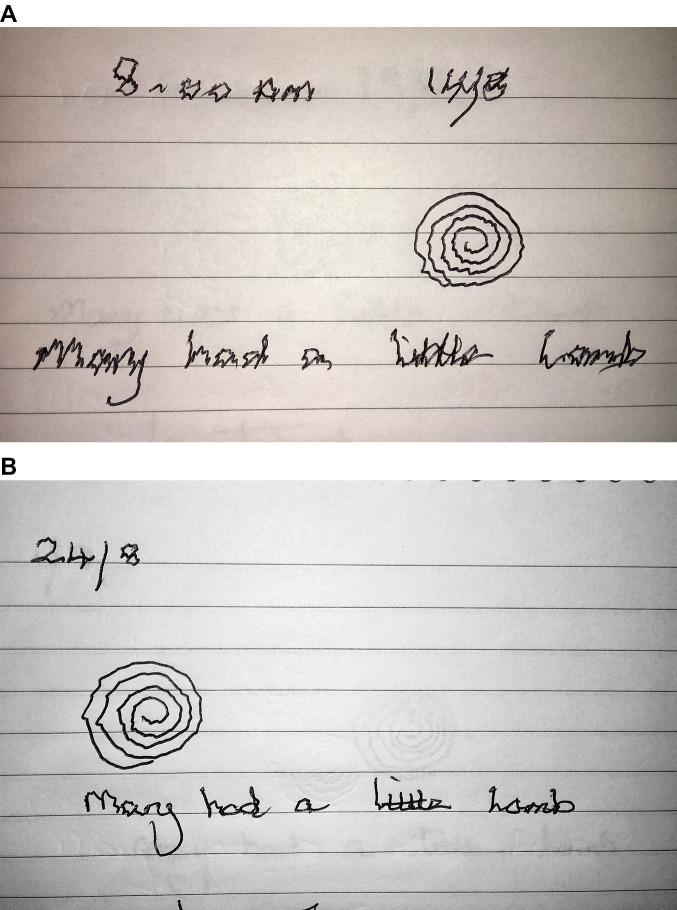
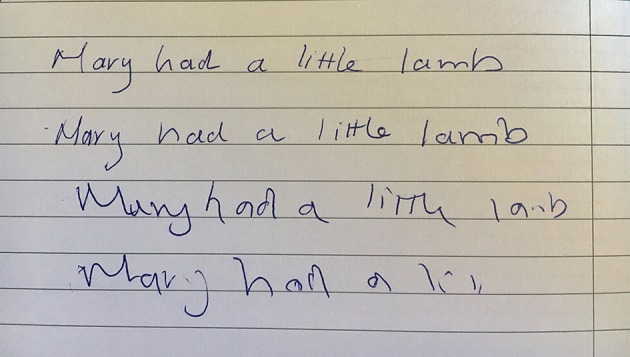
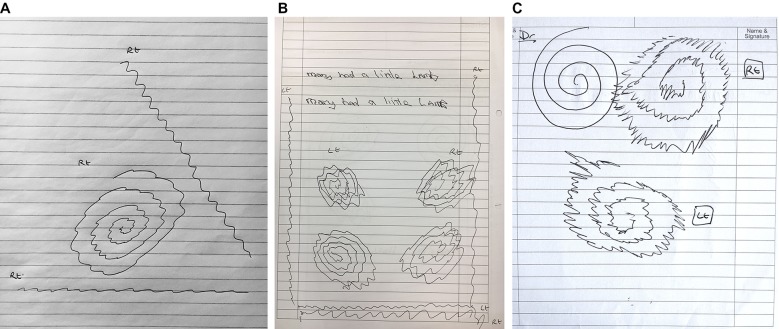
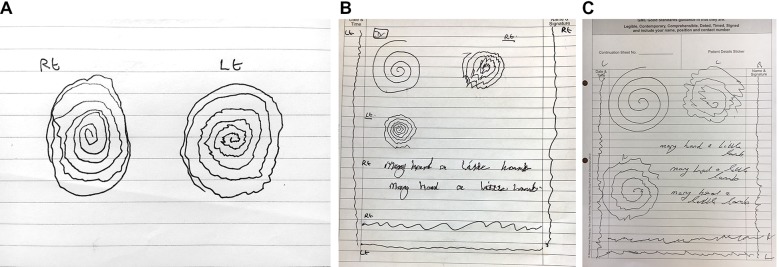
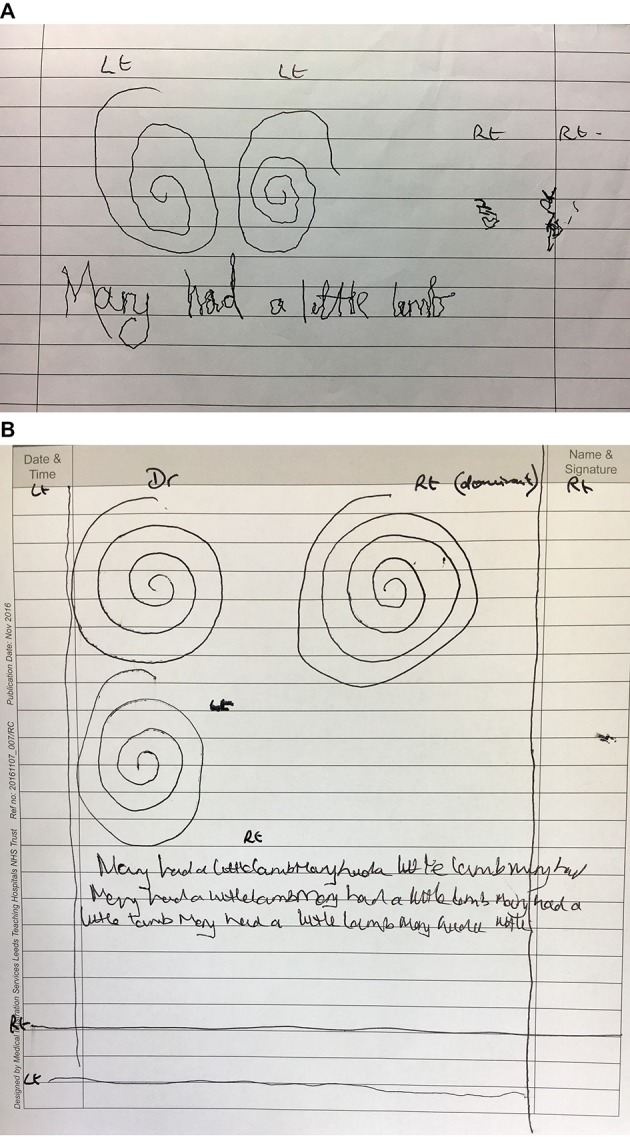
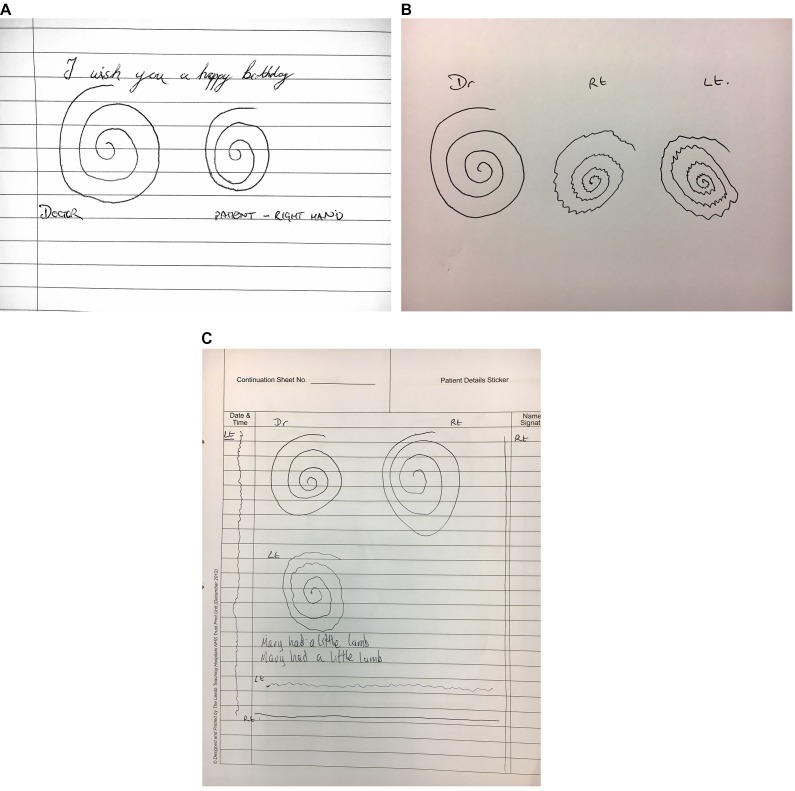
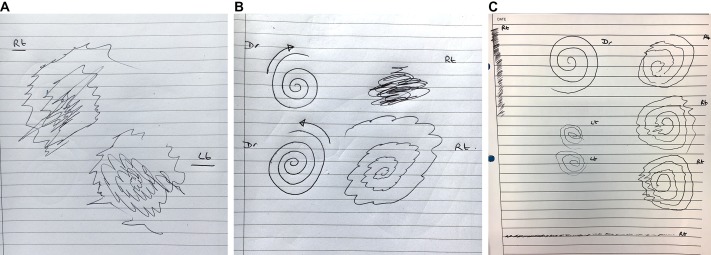
When a patient presents with tremor, it can be useful to perform a few simple pen and paper tests. In this article, we explain how to maximise the value of handwriting and of drawing Archimedes spirals and straight lines as clinical assessments. These tasks take a matter of seconds to complete but provide a wealth of information that supplements the standard physical examination. They aid the diagnosis of a tremor disorder and can contribute to its longitudinal monitoring. Watching the patient's upper limb while they write and draw may reveal abnormalities such as bradykinesia, dystonic posturing and distractibility. The finished script and drawings can then be evaluated for frequency, amplitude, direction and symmetry of oscillatory pen movements and for overall scale of penmanship. Essential, dystonic, functional and parkinsonian tremor each has a characteristic pattern of abnormality on these pen and paper tests.
当患者出现震颤时,进行一些简单的纸笔测试可能会有所帮助。在本文中,我们将解释如何将书写、绘制阿基米德螺旋线和直线作为临床评估手段,以最大化其价值。这些任务只需几秒钟就能完成,但能提供丰富的信息,作为标准体格检查的补充。它们有助于震颤障碍的诊断,并可用于其长期监测。观察患者书写和绘图时的上肢,可能会发现诸如运动迟缓、肌张力障碍姿势和注意力分散等异常情况。然后可以对完成的笔迹和绘图进行评估,以确定振荡笔触运动的频率、幅度、方向和对称性,以及整体书写规模。原发性震颤、肌张力障碍性震颤、功能性震颤和帕金森病性震颤在这些纸笔测试中各自都有特征性的异常模式。