Nawrocka Justyna, Małolepsza U, Szymczak K, Szczech M
Department of Plant Physiology and Biochemistry, Faculty of Biology and Environmental Protection, University of Lodz, Banacha 12/16, 90-237, Lodz, Poland.
Institute of General Food Chemistry, Lodz University of Technology, Stefanowskiego 4/10, 90-237, Lodz, Poland.
Protoplasma. 2018 Jan;255(1):359-373. doi: 10.1007/s00709-017-1157-1. Epub 2017 Sep 6.
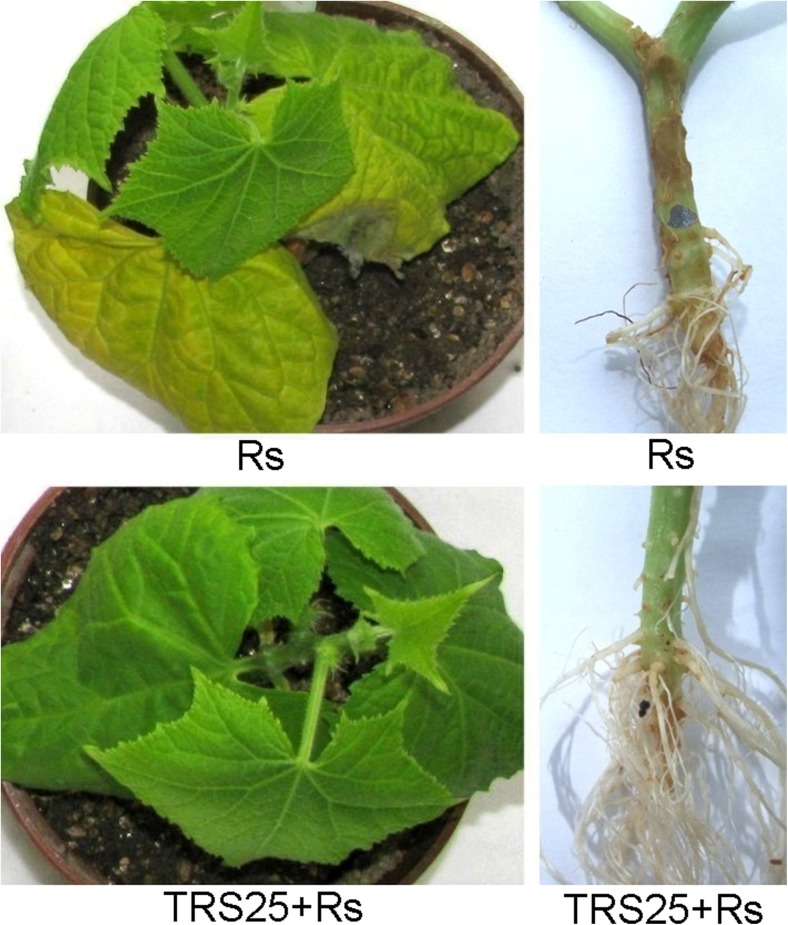
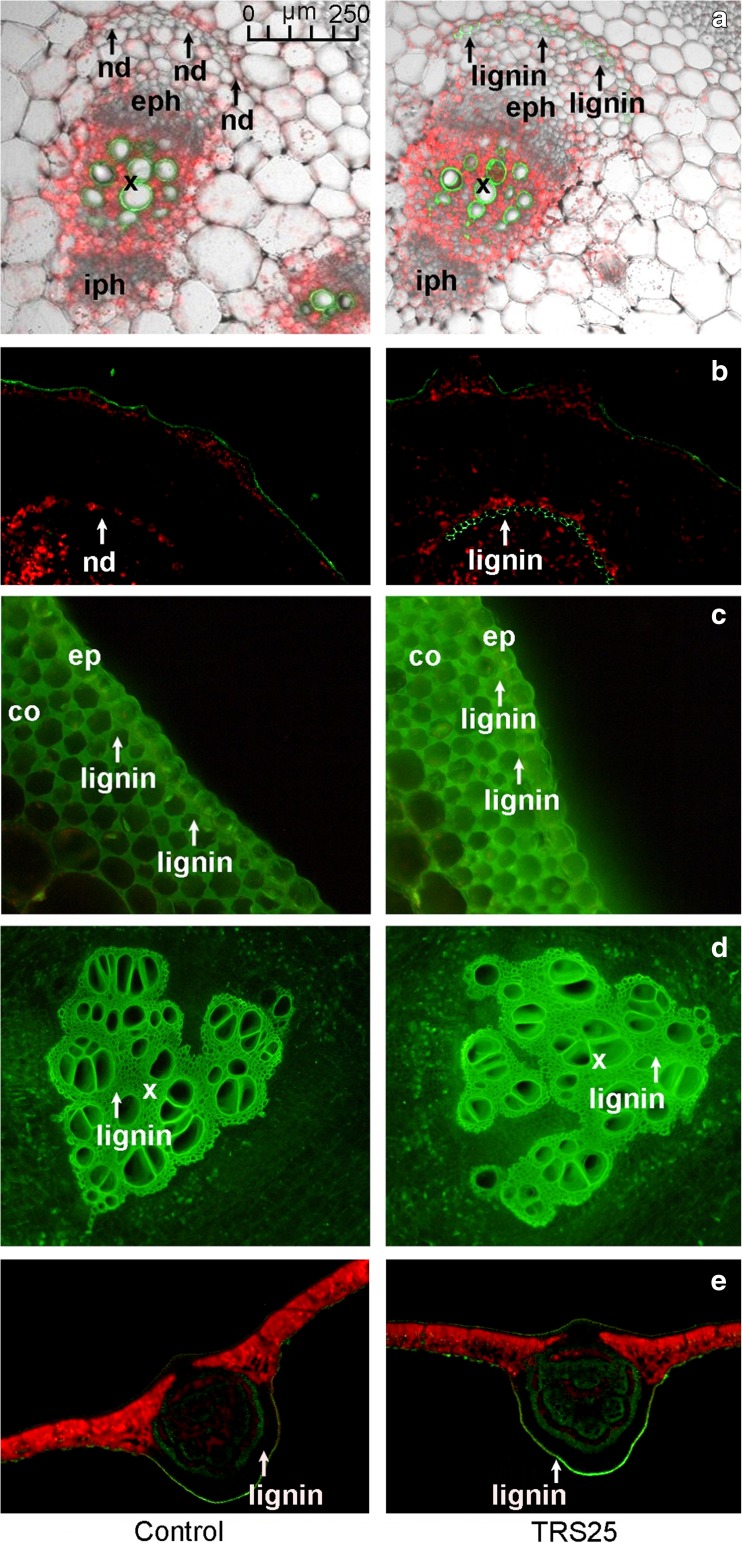
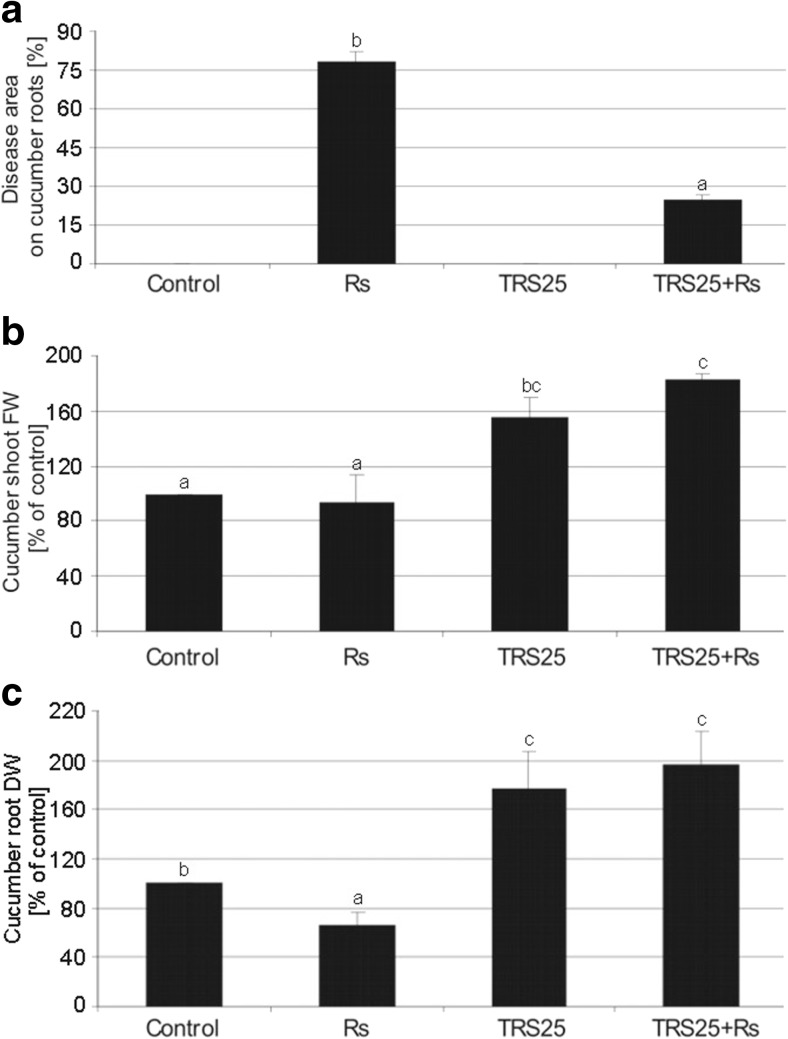
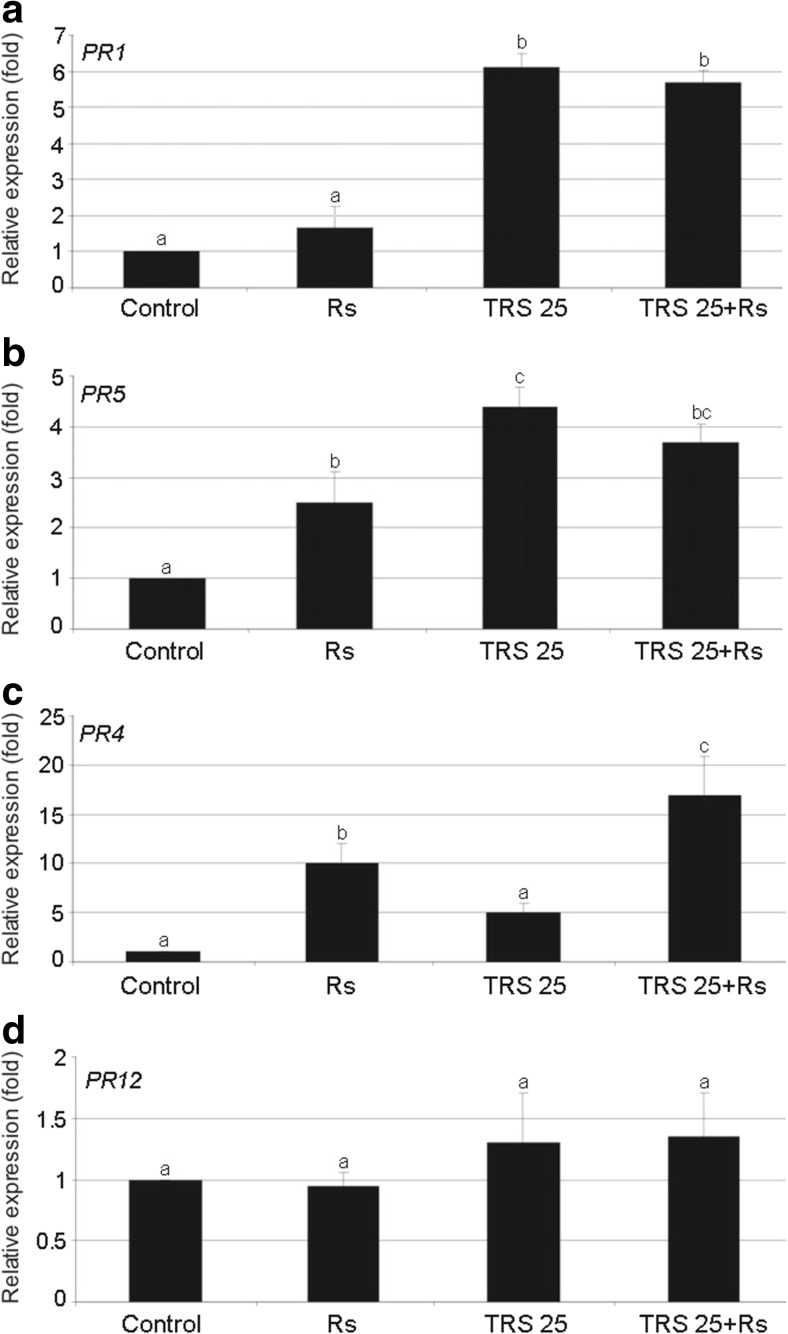
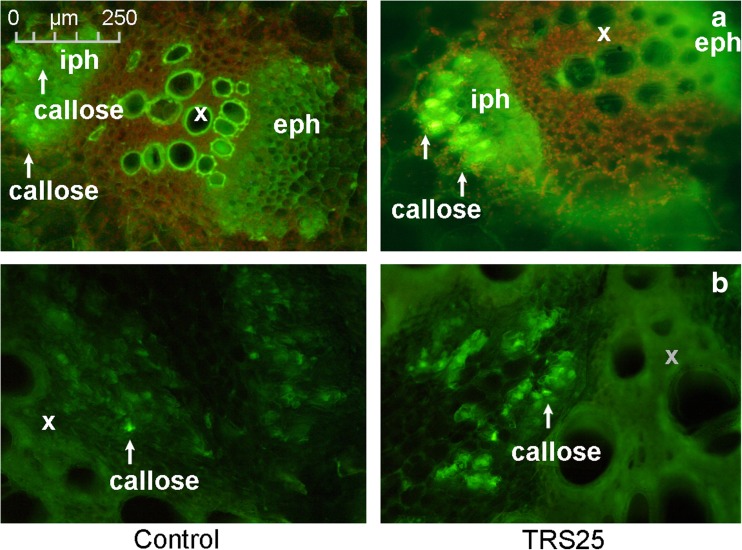
In the present study, the spread of Rhizoctonia solani-induced disease was limited when cucumber plants were pretreated with Trichoderma atroviride TRS25. The systemic disease suppression was related to TRS25-induced resistance (TISR) induction with simultaneous plant growth promotion. Protection of cucumber was related to enhanced activity of defense enzymes, e.g., guaiacol peroxidase (GPX), syringaldazine peroxidase (SPX), phenylalanine ammonia lyase (PAL), and polyphenol oxidase (PPO) as well as phenolic (PC) concentration increases in the conditions of hydrogen peroxide (HO) accumulation, resulting in thiobarbituric acid reactive substance (TBARS) decrease. Moreover, the obtained results indicated that TISR might depend on accumulation of salicylic acid derivatives, that is methyl salicylate (MeSA), ethylhexyl salicylate (EHS), salicylic acid glucosylated conjugates (SAGC), and β-cyclocitral as well as volatile organic compounds (VOC) such as Z-3-hexanal, Z-3-hexenol, and E-2-hexenal. The results point to important, not previously documented, roles of these VOC in TISR signaling with up-regulation of PR1 and PR5 gene characteristic of systemic acquired resistance (SAR) and of PR4 gene, marker of induced systemic resistance (ISR). The study established that TRS25 enhanced deposition of callose and lignin in specialized plant cells, which protected vascular system in cucumber shoots and roots as well as assimilation cells and dermal tissues in shoots and leaves. These compounds protected cucumber organs against R. solani influence and made them more flexible and resilient, which contributed to better nutrition and hydration of plants. The growth promotion coupled with systemic mobilization of biochemical and mechanical strengthening might be involved in multilayer protection of cucumber against R. solani activated by TRS25.
在本研究中,用绿色木霉TRS25预处理黄瓜植株时,茄丝核菌引起的病害传播受到限制。系统病害抑制与TRS25诱导的抗性(TISR)诱导以及同时促进植物生长有关。黄瓜的保护与防御酶活性增强有关,例如愈创木酚过氧化物酶(GPX)、丁香醛连氮过氧化物酶(SPX)、苯丙氨酸解氨酶(PAL)和多酚氧化酶(PPO),以及在过氧化氢(HO)积累条件下酚类物质(PC)浓度增加,导致硫代巴比妥酸反应性物质(TBARS)减少。此外,所得结果表明,TISR可能取决于水杨酸衍生物的积累,即水杨酸甲酯(MeSA)、水杨酸己酯(EHS)、水杨酸糖基化共轭物(SAGC)和β-环柠檬醛以及挥发性有机化合物(VOC),如Z-3-己醛、Z-3-己烯醇和E-2-己烯醛。结果表明,这些VOC在TISR信号传导中具有重要作用,此前未被记录,它们上调了系统获得性抗性(SAR)特征的PR1和PR5基因以及诱导系统抗性(ISR)标记PR4基因。该研究证实,TRS25增强了特定植物细胞中胼胝质和木质素的沉积,保护了黄瓜茎和根中的维管系统以及茎和叶中的同化细胞和表皮组织。这些化合物保护黄瓜器官免受茄丝核菌的影响,使其更具柔韧性和弹性,有助于植物更好地营养和水分吸收。生长促进以及生化和机械强化的系统动员可能参与了TRS25激活的黄瓜对茄丝核菌的多层保护。