Veliev Farida, Han Zheng, Kalita Dipankar, Briançon-Marjollet Anne, Bouchiat Vincent, Delacour Cécile
Institut Néel, Centre National de la Recherche Scientifique and Université Grenoble AlpesGrenoble, France.
Grenoble Alpes, HP2 Laboratory, Institut National de la Santé et de la Recherche Médicale U1042Grenoble, France.
Front Neurosci. 2017 Aug 28;11:466. doi: 10.3389/fnins.2017.00466. eCollection 2017.
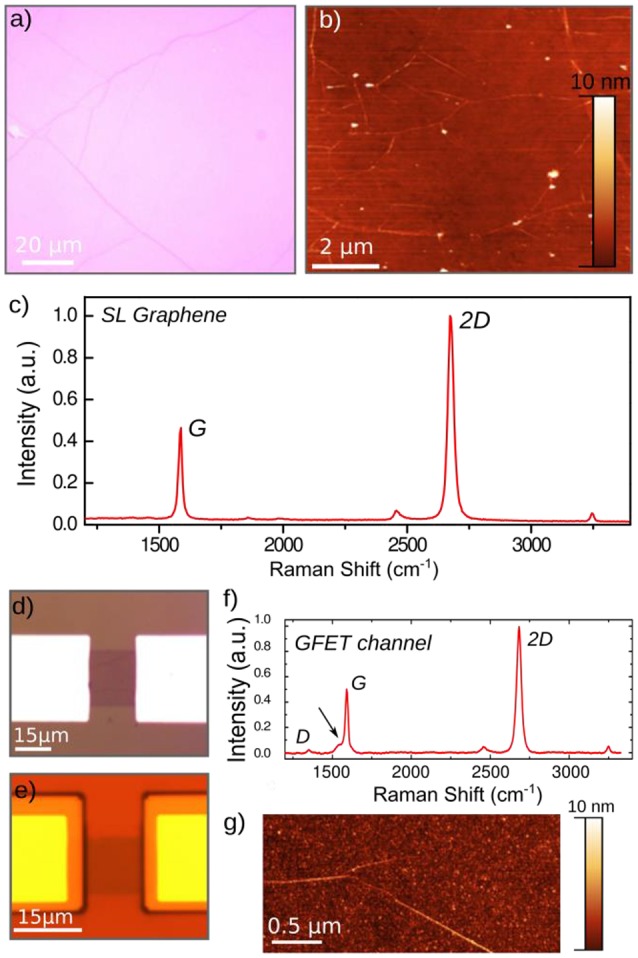
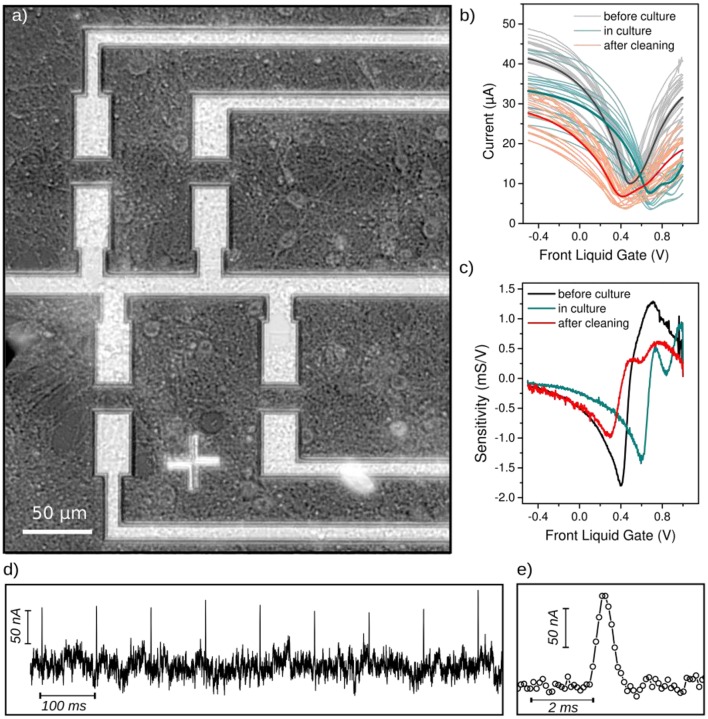
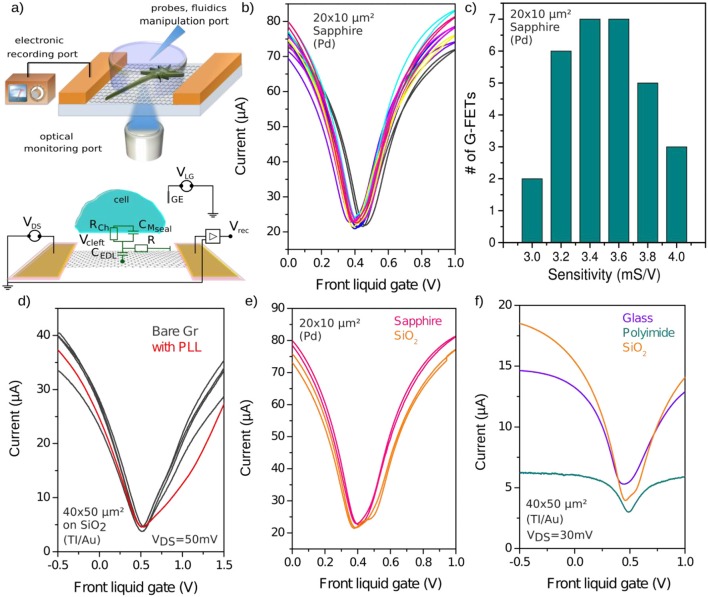
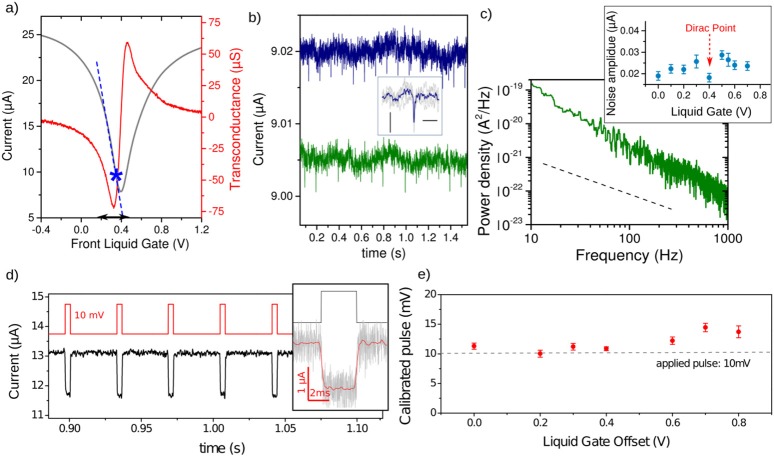
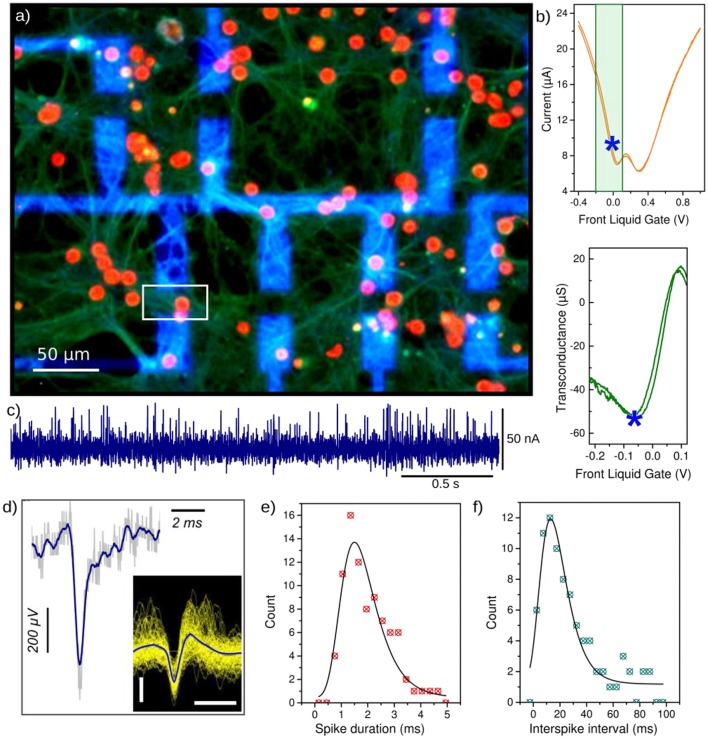
The emergence of nanoelectronics applied to neural interfaces has started few decades ago, and aims to provide new tools for replacing or restoring disabled functions of the nervous systems as well as further understanding the evolution of such complex organization. As the same time, graphene and other 2D materials have offered new possibilities for integrating micro and nano-devices on flexible, transparent, and biocompatible substrates, promising for bio and neuro-electronics. In addition to many bio-suitable features of graphene interface, such as, chemical inertness and anti-corrosive properties, its optical transparency enables multimodal approach of neuronal based systems, the electrical layer being compatible with additional microfluidics and optical manipulation ports. The convergence of these fields will provide a next generation of neural interfaces for the reliable detection of single spike and record with high fidelity activity patterns of neural networks. Here, we report on the fabrication of graphene field effect transistors (G-FETs) on various substrates (silicon, sapphire, glass coverslips, and polyimide deposited onto substrates), exhibiting high sensitivity (4 mS/V, close to the Dirac point at V < V) and low noise level (10 A/Hz, at V = 0 V). We demonstrate the detection of the spontaneous activity of hippocampal neurons -grown on top of the graphene sensors during several weeks in a millimeter size PDMS fluidics chamber (8 mm wide). These results provide an advance toward the realization of biocompatible devices for reliable and high spatio-temporal sensing of neuronal activity for both and applications.
应用于神经接口的纳米电子学的出现始于几十年前,旨在提供新工具来替代或恢复神经系统的残疾功能,并进一步了解这种复杂组织的进化。与此同时,石墨烯和其他二维材料为在柔性、透明和生物相容性基板上集成微纳器件提供了新的可能性,有望用于生物和神经电子学。除了石墨烯界面的许多生物适应性特征,如化学惰性和抗腐蚀性能外,其光学透明性使得基于神经元的系统能够采用多模态方法,电学层与额外的微流体和光学操纵端口兼容。这些领域的融合将为可靠检测单个尖峰并以高保真度记录神经网络的活动模式提供下一代神经接口。在此,我们报告了在各种基板(硅、蓝宝石、玻璃盖玻片以及沉积在基板上的聚酰亚胺)上制造石墨烯场效应晶体管(G-FET)的情况,其表现出高灵敏度(4 mS/V,在V < V时接近狄拉克点)和低噪声水平(在V = 0 V时为10 A/Hz)。我们展示了在毫米尺寸的聚二甲基硅氧烷(PDMS)微流体腔室(8毫米宽)中,在石墨烯传感器顶部生长数周的海马神经元自发活动的检测。这些结果为实现用于可靠且高时空感知神经元活动的生物相容性器件向前迈进了一步,适用于基础研究和应用研究。