Aulitto Martina, Fusco Salvatore, Bartolucci Simonetta, Franzén Carl Johan, Contursi Patrizia
Dipartimento di Biologia, Università degli Studi di Napoli Federico II, Naples, Italy.
Division of Industrial Biotechnology, Department of Biology and Biological Engineering, Chalmers University of Technology, 412 96 Gothenburg, Sweden.
Biotechnol Biofuels. 2017 Sep 7;10:210. doi: 10.1186/s13068-017-0896-8. eCollection 2017.
The transition from a petroleum-based economy towards more sustainable bioprocesses for the production of fuels and chemicals (circular economy) is necessary to alleviate the impact of anthropic activities on the global ecosystem. Lignocellulosic biomass-derived sugars are suitable alternative feedstocks that can be fermented or biochemically converted to value-added products. An example is lactic acid, which is an essential chemical for the production of polylactic acid, a biodegradable bioplastic. However, lactic acid is still mainly produced by species via fermentation of starch-containing materials, the use of which competes with the supply of food and feed.
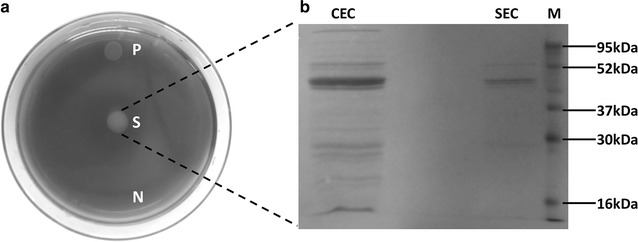
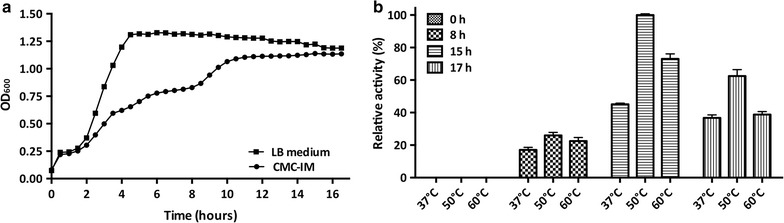
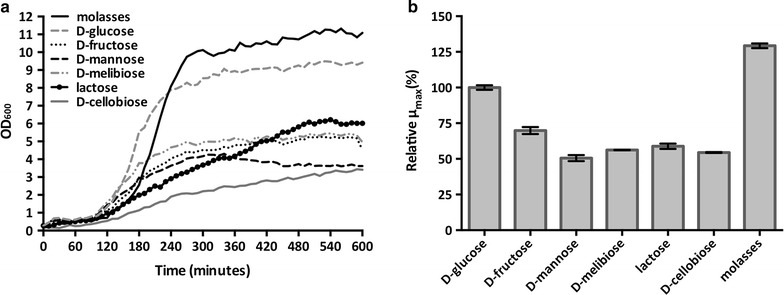
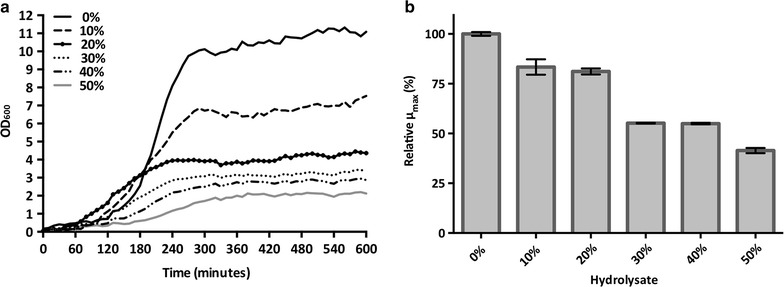
A thermophilic and cellulolytic lactic acid producer was isolated from bean processing waste and was identified as a new strain of , named MA-13. This bacterium fermented lignocellulose-derived sugars to lactic acid at 55 °C and pH 5.5. Moreover, it was found to be a robust strain able to tolerate high concentrations of hydrolysate obtained from wheat straw pre-treated by acid-catalysed (pre-)hydrolysis and steam explosion, especially when cultivated in controlled bioreactor conditions. Indeed, unlike what was observed in microscale cultivations (complete growth inhibition at hydrolysate concentrations above 50%), MA-13 was able to grow and ferment in 95% hydrolysate-containing bioreactor fermentations. This bacterium was also found to secrete soluble thermophilic cellulases, which could be produced at low temperature (37 °C), still retaining an optimal operational activity at 50 °C.
The above-mentioned features make MA-13 an appealing starting point for future development of a consolidated bioprocess for production of lactic acid from lignocellulosic biomass, after further strain development by genetic and evolutionary engineering. Its optimal temperature and pH of growth match with the operational conditions of fungal enzymes hitherto employed for the depolymerisation of lignocellulosic biomasses to fermentable sugars. Moreover, the robustness of MA-13 is a desirable trait, given the presence of microbial growth inhibitors in the pre-treated biomass hydrolysate.
从基于石油的经济向更可持续的用于生产燃料和化学品的生物过程(循环经济)转变对于减轻人类活动对全球生态系统的影响是必要的。木质纤维素生物质衍生的糖是合适的替代原料,可发酵或通过生物化学方法转化为增值产品。一个例子是乳酸,它是生产聚乳酸(一种可生物降解的生物塑料)的重要化学品。然而,乳酸目前仍主要由某些物种通过含淀粉材料的发酵来生产,而淀粉材料的使用与食品和饲料供应存在竞争。
从豆类加工废料中分离出一株嗜热且能分解纤维素的乳酸生产菌,鉴定为嗜热栖热放线菌的一个新菌株,命名为MA - 13。该细菌在55°C和pH 5.5条件下将木质纤维素衍生的糖发酵为乳酸。此外,发现它是一种健壮的菌株,能够耐受通过酸催化(预)水解和蒸汽爆破预处理的小麦秸秆所得的高浓度水解产物,特别是在受控生物反应器条件下培养时。实际上,与在小规模培养中观察到的情况(水解产物浓度高于50%时完全生长抑制)不同,MA - 13能够在含95%水解产物的生物反应器发酵中生长和发酵。还发现该细菌能分泌可溶性嗜热纤维素酶,这种酶可在低温(37°C)下产生,在50°C时仍保持最佳操作活性。
上述特性使MA - 13成为未来通过基因和进化工程进一步菌株开发后,从木质纤维素生物质生产乳酸的整合生物过程未来发展的一个有吸引力的起点。其最佳生长温度和pH与迄今用于将木质纤维素生物质解聚为可发酵糖的真菌酶的操作条件相匹配。此外,鉴于预处理生物质水解产物中存在微生物生长抑制剂,MA - 13的健壮性是一个理想的特性。