Qiu Shanhu, Cai Xue, Sun Zilin, Li Ling, Zügel Martina, Steinacker Jürgen Michael, Schumann Uwe
Department of Endocrinology, Zhongda Hospital, Institute of Diabetes, School of Medicine, Southeast University, Nanjing, China.
Department of Endocrinology, Zhongda Hospital, Institute of Diabetes, School of Medicine, Southeast University, Dingjiaqiao No. 87, Nanjing 210009, China.
Therap Adv Gastroenterol. 2017 Sep;10(9):701-713. doi: 10.1177/1756283X17725977. Epub 2017 Aug 25.
Increased physical activity (PA) is a key element in the management of patients with nonalcoholic fatty liver disease (NAFLD); however, its association with NAFLD risk has not been systematically assessed. This meta-analysis of observational studies was to quantify this association with dose-response analysis.
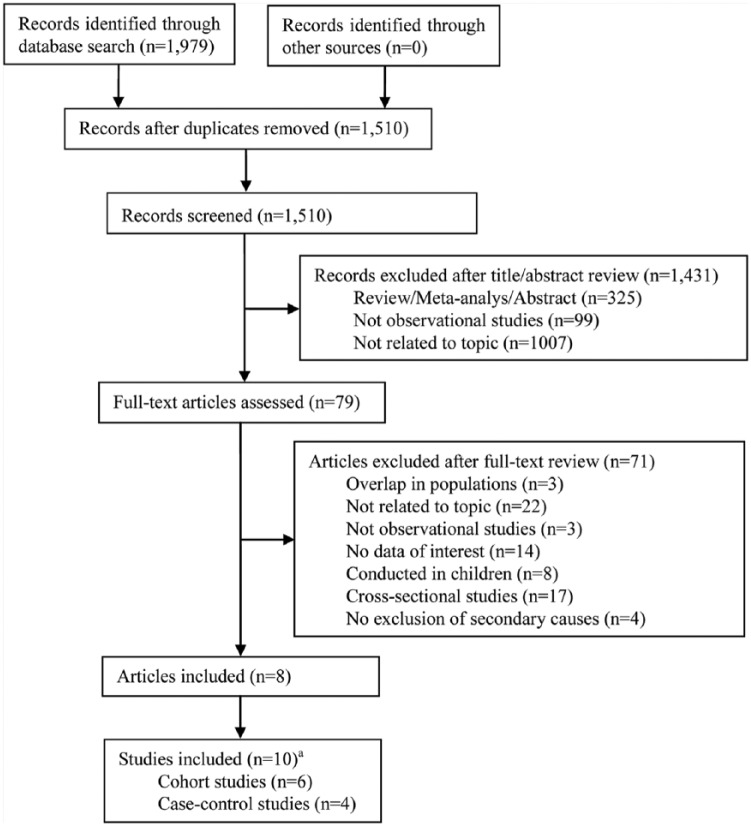
Electronic databases were searched to January 2017 for studies of adults reporting the risk of NAFLD in relation to PA with cohort or case-control designs. Studies that reported sex-specific data were included as separate studies. The overall risk estimates were pooled using a random-effects model, and the dose-response analysis was conducted to shape the quantitative relationship.
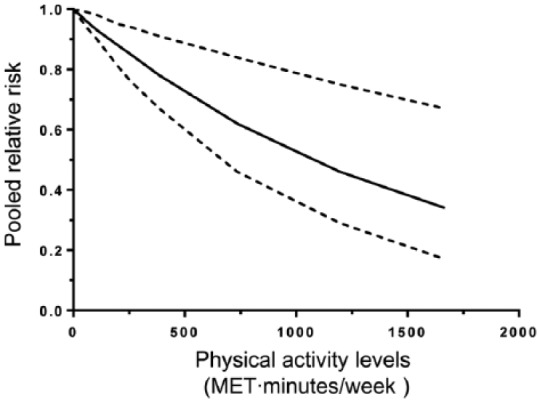
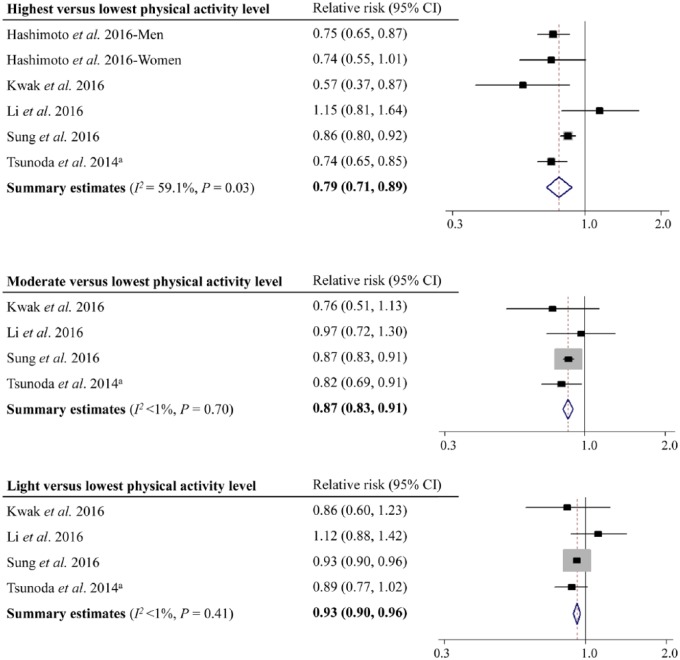
A total of 6 cohort studies from 5 articles with 32,657 incident NAFLD cases from 142,781 participants, and 4 case-control studies from 3 articles with 382 NAFLD cases and 302 controls were included. Compared with the lowest PA level, the highest PA level was associated with a risk reduction of NAFLD in cohort [RR (risk ratio) 0.79, 95% CI (confidence interval) 0.71-0.89] and case-control studies [OR (odds ratio) 0.43, 95% CI 0.27-0.68]. For cohort studies, both highest and moderate PA levels were superior to the light one in lowering NAFLD risk ( = 0.006 and 0.02, respectively), and there was a log-linear dose-response association ( = 0.10) between PA and NAFLD risk [RR 0.82 (95% CI 0.73-0.91) for every 500 metabolic equivalent (MET)-minutes/week increment in PA].
Increased PA may lead to a reduced risk of NAFLD in a dose-dependent manner, and the current guideline-recommended minimum PA level that approximates to 500 MET-minutes/week is able to moderately reduce the NAFLD risk.
增加体力活动(PA)是非酒精性脂肪性肝病(NAFLD)患者管理的关键要素;然而,其与NAFLD风险的关联尚未得到系统评估。这项观察性研究的荟萃分析旨在通过剂量反应分析来量化这种关联。
检索电子数据库至2017年1月,以查找采用队列或病例对照设计报告PA与NAFLD风险关系的成人研究。报告了按性别分类数据的研究作为单独的研究纳入。使用随机效应模型汇总总体风险估计值,并进行剂量反应分析以确定定量关系。
共纳入5篇文章中的6项队列研究,涉及142,781名参与者中的32,657例NAFLD新发病例,以及3篇文章中的4项病例对照研究,涉及382例NAFLD病例和302例对照。与最低PA水平相比,最高PA水平与队列研究[RR(风险比)0.79,95%CI(置信区间)0.71 - 0.89]和病例对照研究[OR(比值比)0.43,95%CI 0.27 - 0.68]中NAFLD风险降低相关。对于队列研究,最高和中等PA水平在降低NAFLD风险方面均优于轻度水平(分别为 = 0.006和0.02),并且PA与NAFLD风险之间存在对数线性剂量反应关联( = 0.10)[PA每增加500代谢当量(MET)-分钟/周,RR为0.82(95%CI 0.73 - 0.91)]。
增加PA可能以剂量依赖的方式降低NAFLD风险,当前指南推荐的每周约500 MET-分钟的最低PA水平能够适度降低NAFLD风险。