Lorenz Camila, Azevedo Thiago S, Virginio Flávia, Aguiar Breno S, Chiaravalloti-Neto Francisco, Suesdek Lincoln
Department of Parasitology, Instituto Butantan, Sao Paulo, Sao Paulo, Brazil.
Department of Geography, Universidade Estadual Paulista, Rio Claro, Sao Paulo, Brazil.
PLoS Negl Trop Dis. 2017 Sep 27;11(9):e0005959. doi: 10.1371/journal.pntd.0005959. eCollection 2017 Sep.
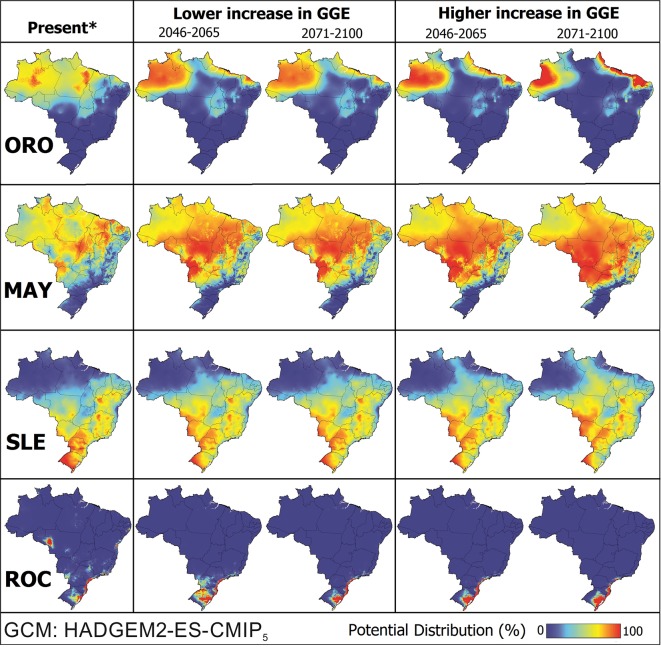
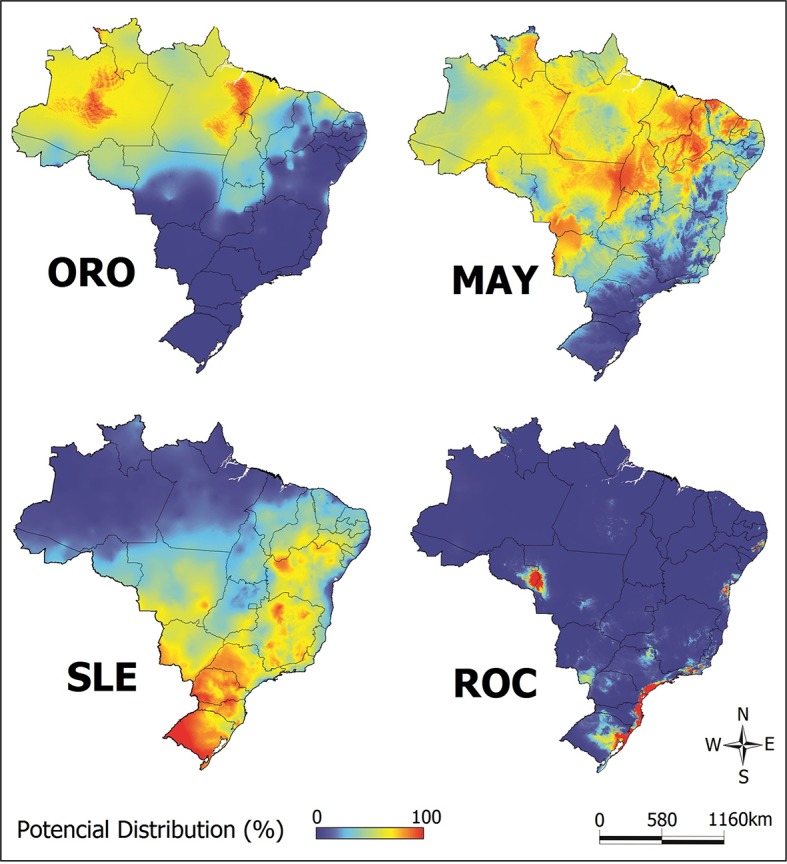
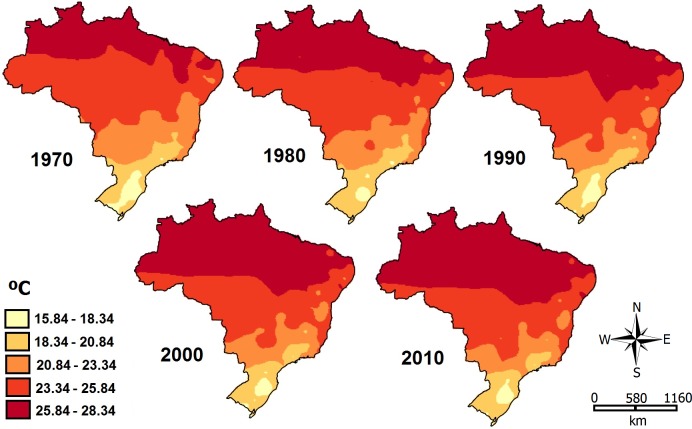
Brazil is a tropical country that is largely covered by rainforests and other natural ecosystems, which provide ideal conditions for the existence of many arboviruses. However, few analyses have examined the associations between environmental factors and arboviral diseases. Thus, based on the hypothesis of correlation between environment and epidemiology, the proposals of this study were (1) to obtain the probability of occurrence of Oropouche, Mayaro, Saint Louis and Rocio fevers in Brazil based on environmental conditions corresponding to the periods of occurrence of the outbreaks; (2) to describe the macroclimatic scenario in Brazil in the last 50 years, evaluating if there was any detectable tendency to increase temperatures and (3) to model future expansion of those arboviruses in Brazil based on future temperature projections.
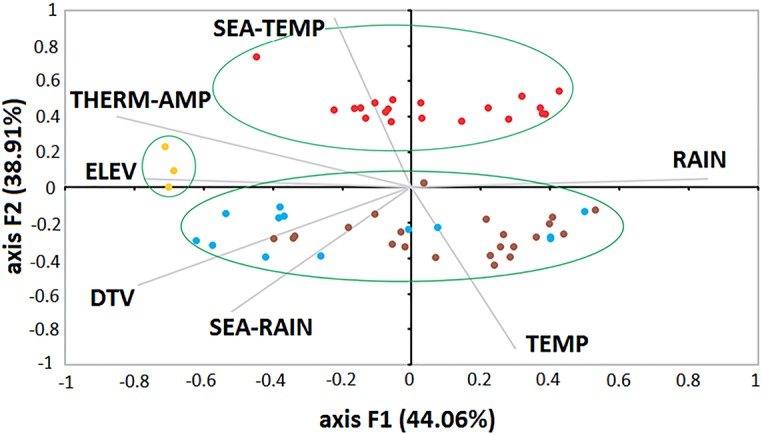
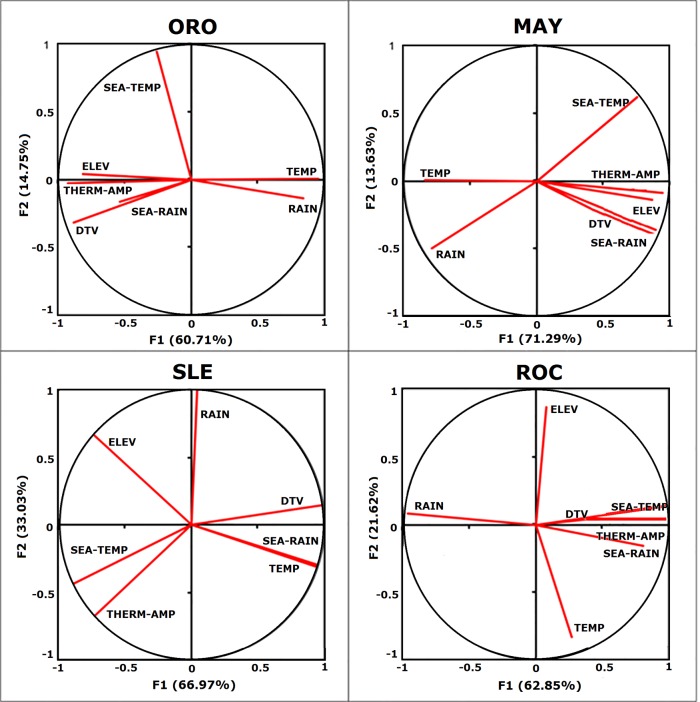
METHODOLOGY/PRINCIPAL FINDINGS: Our model assessed seven environmental factors (annual rainfall, annual temperature, elevation, seasonality of temperature, seasonality of precipitation, thermal amplitude, and daytime temperature variation) for their association with the occurrence of outbreaks in the last 50 years. Our results suggest that various environmental factors distinctly influence the distribution of each arbovirus, with temperature being the central determinant of disease distribution in all high-risk areas. These areas are subject to change, since the average temperature of some areas has increased significantly over the time.
CONCLUSIONS/SIGNIFICANCE: This is the first spatio-temporal study of the Oropouche, Mayaro, Saint Louis, and Rocio arboviruses, and our results indicate that they may become increasingly important public health problems in Brazil. Thus, next studies and control programs should include these diseases and also take into consideration key environmental elements.
巴西是一个热带国家,大部分地区被雨林和其他自然生态系统覆盖,为许多虫媒病毒的生存提供了理想条件。然而,很少有分析研究环境因素与虫媒病毒疾病之间的关联。因此,基于环境与流行病学相关性的假设,本研究的提议包括:(1)根据与疫情发生时期相对应的环境条件,得出巴西奥罗普切热、马亚罗热、圣路易斯脑炎和罗西奥病毒病的发生概率;(2)描述巴西过去50年的宏观气候情景,评估是否有任何可检测到的气温上升趋势;(3)根据未来温度预测,模拟这些虫媒病毒在巴西未来的传播范围。
方法/主要发现:我们的模型评估了七个环境因素(年降雨量、年平均气温、海拔、气温季节性、降水季节性、热振幅和日间温度变化)与过去50年疫情发生的关联。我们的结果表明,各种环境因素对每种虫媒病毒的分布有明显影响,温度是所有高风险地区疾病分布的核心决定因素。由于一些地区的平均温度随时间显著上升,这些地区可能会发生变化。
结论/意义:这是对奥罗普切、马亚罗、圣路易斯和罗西奥虫媒病毒的首次时空研究,我们的结果表明,它们可能成为巴西日益严重的公共卫生问题。因此,未来的研究和控制计划应纳入这些疾病,并考虑关键环境因素。