Pharmacognosy Research Group, Louvain Drug Research Institute, Université Catholique de Louvain, Avenue E. Mounier 72, B1.72.03, 1200, Brussels, Belgium.
Malar J. 2017 Oct 10;16(1):406. doi: 10.1186/s12936-017-2054-y.
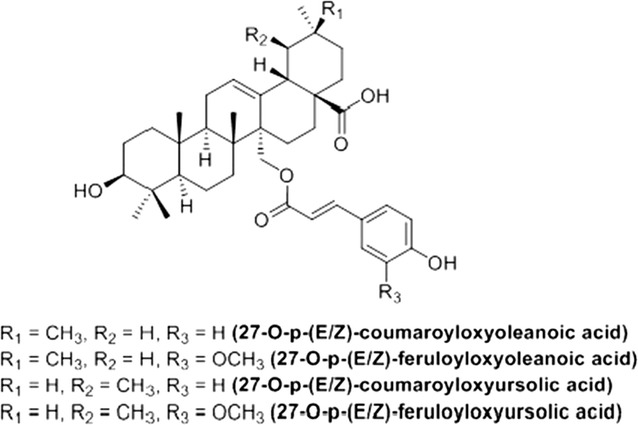
Considering the need for new anti-malarial drugs, further investigations on Keetia leucantha (Rubiaceae), an in vitro antiplasmodial plant traditionally used to treat malaria, were carried out. This paper aimed to assess the in vivo anti-malarial efficacy of K. leucantha triterpenic esters previously identified as the most in vitro active components against Plasmodium falciparum and their potential toxicity as well as those of anti-malarial extracts.
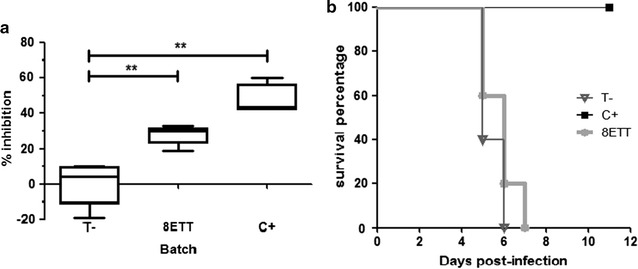
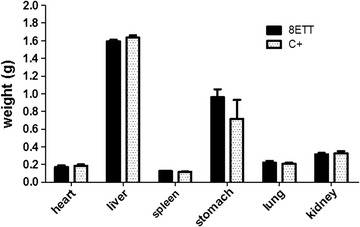
These eight triterpenic esters and the major antiplasmodial triterpenic acids, ursolic and oleanolic acids, were quantified in the twigs dichloromethane extract by validated HPLC-UV methods. They account for about 19% of this extract (16.9% for acids and 1.8% for esters). These compounds were also identified in trace in the twigs decoction by HPLC-HRMS. Results also showed that extracts and esters did not produce any haemolysis, and were devoid of any acute toxicity at a total cumulative dose of 800 and 150 mg/kg respectively. Moreover, esters given intraperitoneally at 50 mg/kg/day to Plasmodium berghei-infected mice showed a very significant (p < 0.01) parasitaemia inhibition (27.8 ± 5.4%) on day 4 post-infection compared to vehicle-treated mice.
These results bring out new information on the safety of K. leucantha use and on the identification of anti-malarial compounds from its dichloromethane extract. Its activity can be explained by the presence of triterpenic acids and esters which in vivo activity and safety were demonstrated for the first time.
考虑到需要新的抗疟药物,对传统上用于治疗疟疾的体外抗疟植物 Keetia leucantha(茜草科)进行了进一步的研究。本文旨在评估先前鉴定为对恶性疟原虫最具体外活性的 K. leucantha 三萜酯类化合物的体内抗疟疗效及其潜在毒性,以及抗疟提取物的毒性。
通过验证的 HPLC-UV 方法,从二氯甲烷提取物中定量测定了这 8 种三萜酯类化合物和主要的抗疟三萜酸,熊果酸和齐墩果酸。它们占该提取物的约 19%(酸占 16.9%,酯占 1.8%)。这些化合物在树枝煎剂中也通过 HPLC-HRMS 以痕量鉴定。结果还表明,提取物和酯类不会引起任何溶血,并且在总累积剂量分别为 800 和 150mg/kg 时没有任何急性毒性。此外,在感染伯氏疟原虫的小鼠中,每天腹膜内给予 50mg/kg 的酯类,与给予载体的小鼠相比,在感染后第 4 天寄生虫血症抑制率非常显著(p<0.01),为 27.8±5.4%。
这些结果提供了有关 K. leucantha 使用安全性的新信息,以及从其二氯甲烷提取物中鉴定出抗疟化合物的信息。其活性可以用体内存在的三萜酸和酯类来解释,这些化合物的活性和安全性是首次得到证实。