Wang Chao, Huang Zixin, Yu Kequan, Ding Ruiling, Ye Keping, Dai Chen, Xu Xinglian, Zhou Guanghong, Li Chunbao
Jiangsu Collaborative Innovation Center of Meat Production and Processing, Quality and Safety ControlNanjing, China.
Key Laboratory of Meat Processing and Quality Control, Ministry of EducationNanjing, China.
Front Microbiol. 2017 Sep 21;8:1838. doi: 10.3389/fmicb.2017.01838. eCollection 2017.
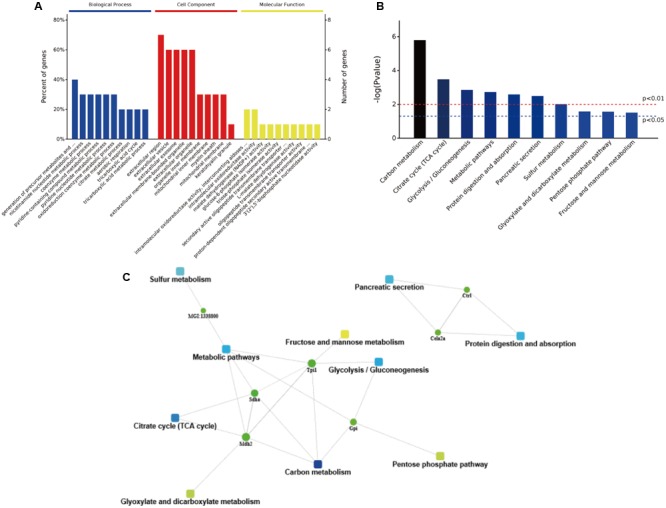
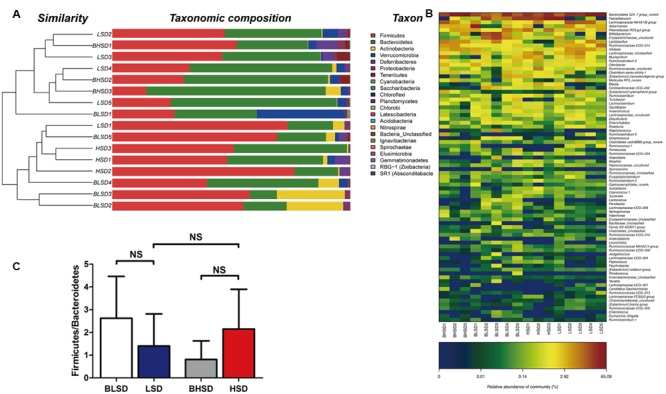
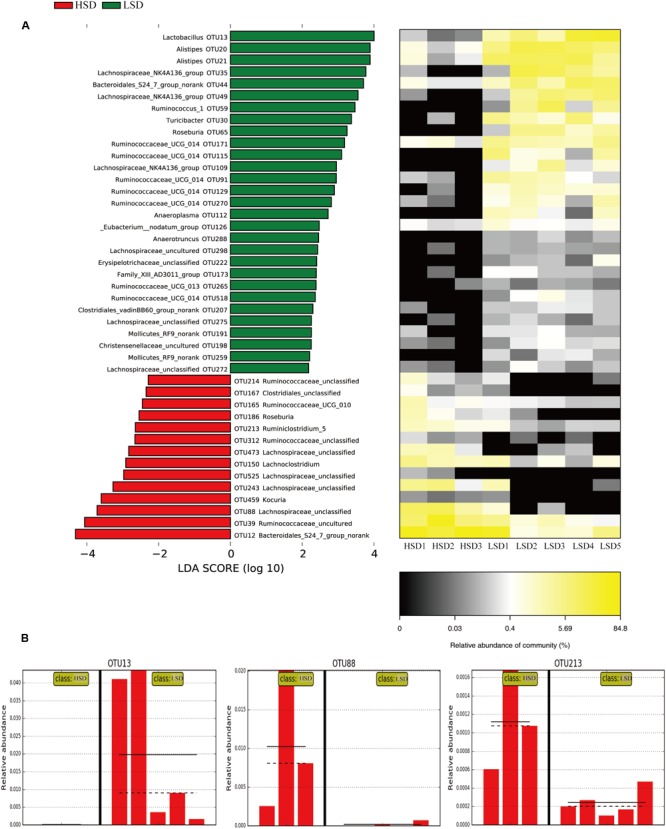
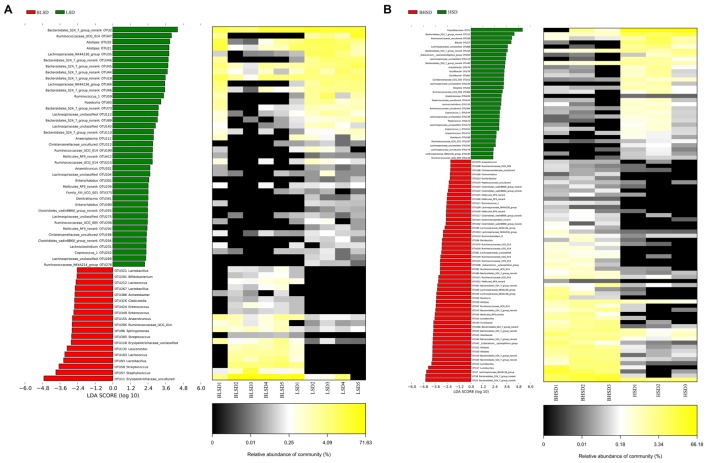
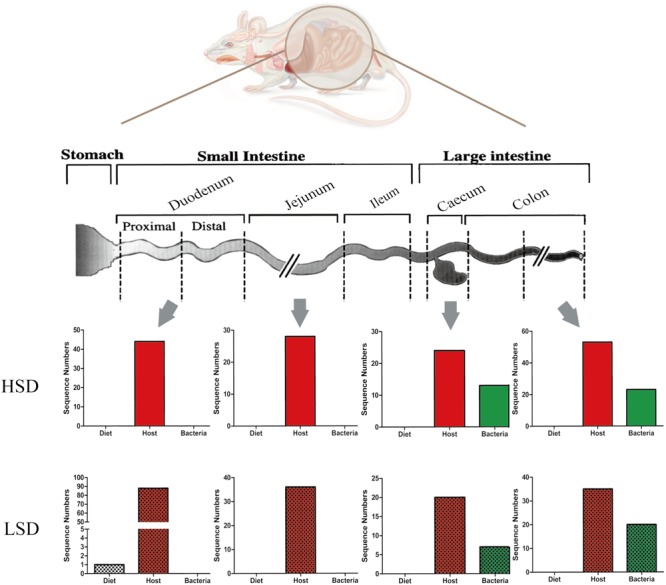
High-salt diet has been considered to cause health problems, but it is still less known how high-salt diet affects gut microbiota, protein digestion, and passage in the digestive tract. In this study, C57BL/6J mice were fed low- or high-salt diets (0.25 vs. 3.15% NaCl) for 8 weeks, and then gut contents and feces were collected. Fecal microbiota was identified by sequencing the V4 region of 16S ribosomal RNA gene. Proteins and digested products of duodenal, jejunal, cecal, and colonic contents were identified by LC-MS-MS. The results indicated that the high-salt diet increased Firmicutes/Bacteroidetes ratio, the abundances of genera Lachnospiraceae and ( < 0.05), but decreased the abundance of ( < 0.05). LC-MS-MS revealed a dynamic change of proteins from the diet, host, and gut microbiota alongside the digestive tract. For dietary proteins, high-salt diet seemed not influence its protein digestion and absorption. For host proteins, 20 proteins of lower abundance were identified in the high-salt diet group in duodenal contents, which were involved in digestive enzymes and pancreatic secretion. However, no significant differentially expressed proteins were detected in jejunal, cecal, and colonic contents. For bacterial proteins, proteins secreted by gut microbiota were involved in energy metabolism, sodium transport, and protein folding. Five proteins (cytidylate kinase, trigger factor, 6-phosphogluconate dehydrogenase, transporter, and undecaprenyl-diphosphatase) had a higher abundance in the high-salt diet group than those in the low-salt group, while two proteins (acetylglutamate kinase and PBSX phage manganese-containing catalase) were over-expressed in the low-salt diet group than in the high-salt group. Consequently, high-salt diet may alter the composition of gut microbiota and has a certain impact on protein digestion.
高盐饮食被认为会引发健康问题,但高盐饮食如何影响肠道微生物群、蛋白质消化以及在消化道中的传递仍鲜为人知。在本研究中,给C57BL/6J小鼠喂食低或高盐饮食(0.25%与3.15%氯化钠)8周,然后收集肠道内容物和粪便。通过对16S核糖体RNA基因的V4区域进行测序来鉴定粪便微生物群。通过液相色谱-串联质谱法(LC-MS-MS)鉴定十二指肠、空肠、盲肠和结肠内容物中的蛋白质及消化产物。结果表明,高盐饮食增加了厚壁菌门/拟杆菌门的比例、毛螺菌科和(此处原文缺失相关属名)属的丰度(<0.05),但降低了(此处原文缺失相关属名)属的丰度(<0.05)。LC-MS-MS揭示了沿消化道来自饮食、宿主和肠道微生物群的蛋白质的动态变化。对于膳食蛋白质,高盐饮食似乎不影响其蛋白质消化和吸收。对于宿主蛋白质,在十二指肠内容物的高盐饮食组中鉴定出20种丰度较低的蛋白质,它们参与消化酶和胰腺分泌。然而,在空肠、盲肠和结肠内容物中未检测到显著差异表达的蛋白质。对于细菌蛋白质,肠道微生物群分泌的蛋白质参与能量代谢、钠转运和蛋白质折叠。五种蛋白质(胞苷酸激酶、触发因子、6-磷酸葡萄糖酸脱氢酶、转运蛋白和十一异戊烯二磷酸酶)在高盐饮食组中的丰度高于低盐组,而两种蛋白质(乙酰谷氨酸激酶和PBSX噬菌体含锰过氧化氢酶)在低盐饮食组中的表达高于高盐组。因此,高盐饮食可能会改变肠道微生物群的组成,并对蛋白质消化有一定影响。