School of Medicine and Pharmacology, Royal Perth Hospital Unit, The University of Western Australia, Perth, Western Australia, Australia
School of Medicine and Pharmacology, Royal Perth Hospital Unit, The University of Western Australia, Perth, Western Australia, Australia.
J Am Heart Assoc. 2017 Oct 24;6(10):e006558. doi: 10.1161/JAHA.117.006558.
Higher vegetable intake is consistently associated with lower atherosclerotic vascular disease (ASVD) events. However, the components responsible and mechanisms involved are uncertain. Nonnutritive phytochemicals may be involved. The objective of this study was to investigate the associations of total vegetable intake and types of vegetables grouped according to phytochemical constituents with ASVD mortality.
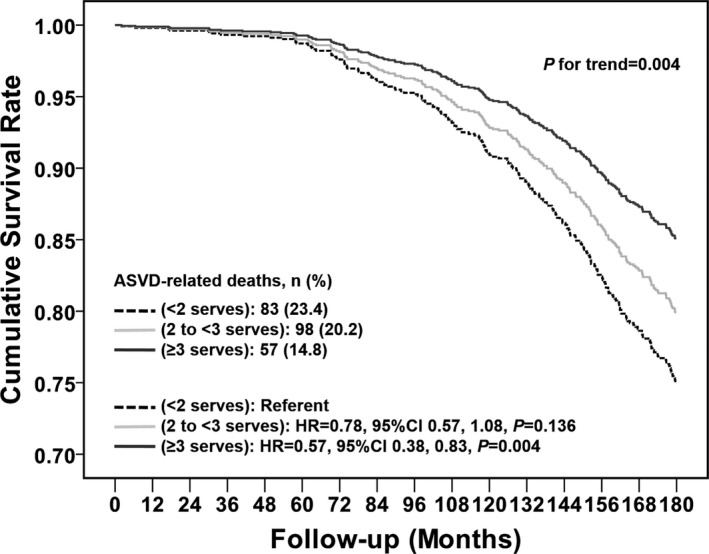
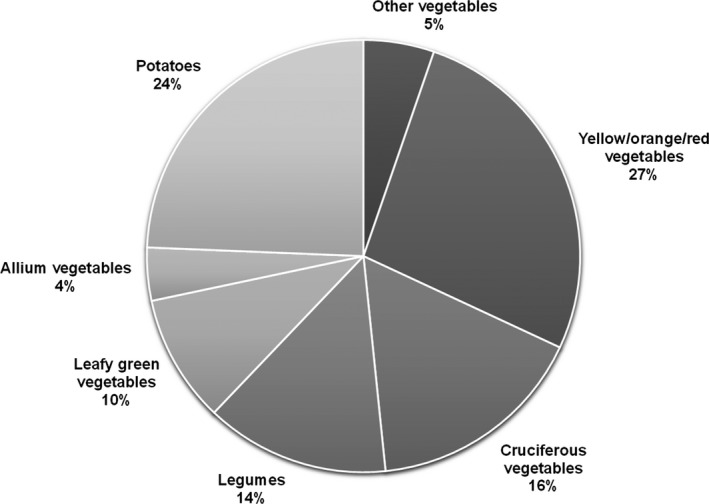
The cohort consisted of 1226 Australian women aged 70 years and older without clinical ASVD or diabetes mellitus at baseline (1998). Vegetable intakes were calculated per serving (75 g/d) and were also classified into prespecified types relating to phytochemical constituents. ASVD-related deaths were ascertained from linked mortality data. During 15 years (15 947 person-years) of follow-up, 238 ASVD-related deaths occurred. A 1-serving increment of vegetable intake was associated with a 20% lower hazard of ASVD-related death (multivariable-adjusted hazard ratio, 0.80; 95% confidence interval, 0.69-0.94 [=0.005]). In multivariable-adjusted models for vegetable types, cruciferous (per 10-g/d increase: hazard ratio, 0.87; 95% confidence interval, 0.81-0.94 [<0.001]) and allium (per 5-g/d increase: hazard ratio, 0.82; 95% confidence interval, 0.73-0.94 [=0.003]) vegetables were inversely associated with ASVD-related deaths. The inclusion of other vegetable types, as well as lifestyle and cardiovascular risk factors, did not alter these associations. Yellow/orange/red (=0.463), leafy green (=0.063), and legume (=0.379) vegetables were not significant.
Consistent with current evidence, higher cruciferous and allium vegetable intakes were associated with a lower risk of ASVD mortality. In addition, cruciferous and allium vegetables are recognized to be a good source of several nonnutritive phytochemicals such as organosulfur compounds.
URL: http://www.anzctr.org.au. Unique identifier: ACTRN12617000640303.
较高的蔬菜摄入量与较低的动脉粥样硬化性血管疾病(ASVD)事件发生率相关。然而,目前尚不清楚具体是哪些成分和机制在起作用。非营养性植物化学物质可能与这一现象有关。本研究旨在调查总蔬菜摄入量和按植物化学成分分组的蔬菜类型与 ASVD 死亡率之间的相关性。
该队列包括 1998 年基线时无临床 ASVD 或糖尿病的 1226 名年龄在 70 岁及以上的澳大利亚女性。蔬菜摄入量按每 75g/d 份计算,并根据与植物化学成分有关的特定类型进行分类。通过链接的死亡率数据确定与 ASVD 相关的死亡。在 15 年(15947 人年)的随访期间,有 238 例 ASVD 相关死亡。蔬菜摄入量增加一份与 ASVD 相关死亡的风险降低 20%相关(多变量调整后的危险比,0.80;95%置信区间,0.69-0.94[=0.005])。在按蔬菜类型进行的多变量调整模型中,十字花科(每增加 10g/d:危险比,0.87;95%置信区间,0.81-0.94[<0.001])和葱属(每增加 5g/d:危险比,0.82;95%置信区间,0.73-0.94[=0.003])蔬菜与 ASVD 相关死亡呈负相关。纳入其他蔬菜类型以及生活方式和心血管危险因素并没有改变这些相关性。黄色/橙色/红色(=0.463)、绿叶蔬菜(=0.063)和豆类(=0.379)蔬菜没有显著相关性。
与当前的证据一致,十字花科和葱属蔬菜摄入量较高与 ASVD 死亡率降低相关。此外,十字花科和葱属蔬菜被认为是几种非营养性植物化学物质(如有机硫化合物)的良好来源。