World Vision International, Maputo, Mozambique.
National Malaria Control Programme, Maputo, Mozambique.
Malar J. 2017 Oct 25;16(1):429. doi: 10.1186/s12936-017-2086-3.
The universal coverage bed nets campaign is a proven health intervention promoting increased access, ownership, and use of bed nets to reduce malaria burden. This article describes the intervention and implementation strategies that Mozambique carried out recently in order to improve access and increase demand for long-lasting insecticidal nets (LLINs).
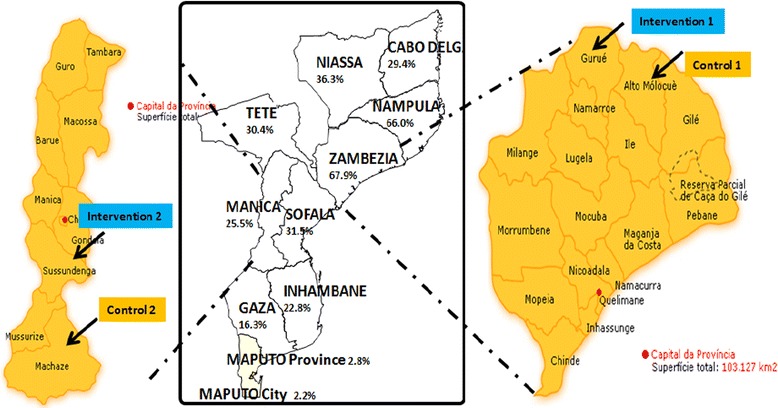
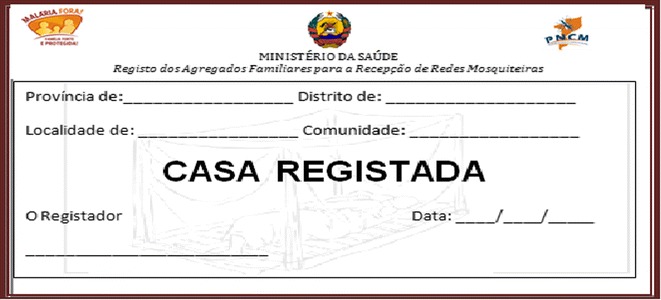
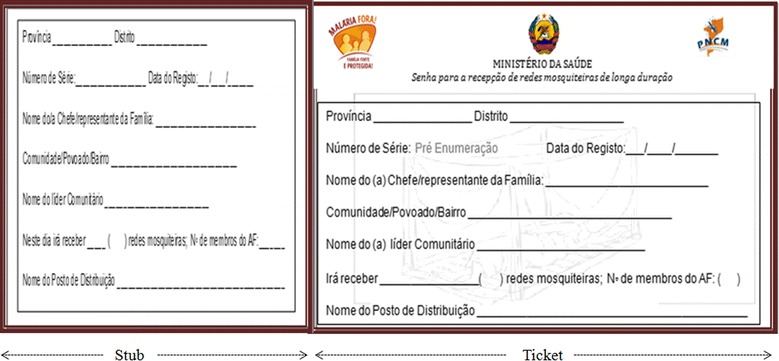
A before-and-after study with a control group was used during Stage I of the implementation process. The following strategies were tested in Stage I: (1) use of coupons during household registration; (2) use of stickers to identify the registered households; (3) new LLIN ascription formula (one LLIN for every two people). In Stage II, the following additional strategies were implemented: (4) mapping and micro-planning; (5) training; and (6) supervision. Odds ratio (OR) and 95% confidence interval (CI) were used to compare and establish differences between intervened and control districts in Stage I. Main outcomes were: percentage of LLINs distributed, percentage of target households benefited.
In Stage I, 87.8% (302,648) of planned LLINs were distributed in the intervention districts compared to 77.1% (219,613) in the control districts [OR: 2.14 (95% CI 2.11-2.16)]. Stage I results also showed that 80.6% (110,453) of households received at least one LLIN in the intervention districts compared to 72.8% (87,636) in the control districts [OR: 1.56 (95% CI 1.53-1.59)]. In Stage II, 98.4% (3,536,839) of the allocated LLINs were delivered, covering 98.6% (1,353,827) of the registered households.
Stage I results achieved better LLINs and household coverage in districts with the newly implemented strategies. The results of stage II were also encouraging. Additional strategies adaptation is required for a wide-country LLIN campaign.
全民覆盖蚊帐运动是一项经过验证的健康干预措施,旨在增加获得、拥有和使用蚊帐的机会,以减轻疟疾负担。本文介绍了莫桑比克最近为改善获取途径和提高对长效驱虫蚊帐(LLIN)的需求而实施的干预措施和实施策略。
在实施过程的第一阶段,采用了前后对照研究,并设立了对照组。在第一阶段,测试了以下策略:(1)在家庭登记时使用优惠券;(2)使用贴纸标识已登记的家庭;(3)新的 LLIN 分配公式(每两人一条 LLIN)。在第二阶段,实施了以下额外策略:(4)绘图和微观规划;(5)培训;(6)监督。使用比值比(OR)和 95%置信区间(CI)比较并确定第一阶段干预和对照地区之间的差异。主要结果是:分配的 LLIN 百分比、受益目标家庭的百分比。
在第一阶段,计划在干预地区分配的 LLIN 中,有 87.8%(302648 条)得到了分配,而在对照地区这一比例为 77.1%(219613 条)[比值比(OR):2.14(95% CI 2.11-2.16)]。第一阶段的结果还表明,在干预地区,有 80.6%(110453 户)的家庭至少收到了一条 LLIN,而在对照地区这一比例为 72.8%(87636 户)[比值比(OR):1.56(95% CI 1.53-1.59)]。在第二阶段,分配的 98.4%(3536839 条)LLIN 全部送达,覆盖了已登记家庭的 98.6%(1353827 户)。
在实施新策略的地区,第一阶段的结果实现了更好的 LLIN 和家庭覆盖。第二阶段的结果也令人鼓舞。需要对全国范围的 LLIN 运动进行额外策略的调整。