Douville Renée N, Nath Avindra
Department of Biology, University of Winnipeg, Winnipeg, MB, Canada.
Department of Immunology, University of Manitoba, Winnipeg, MB, Canada.
Front Microbiol. 2017 Oct 11;8:1986. doi: 10.3389/fmicb.2017.01986. eCollection 2017.
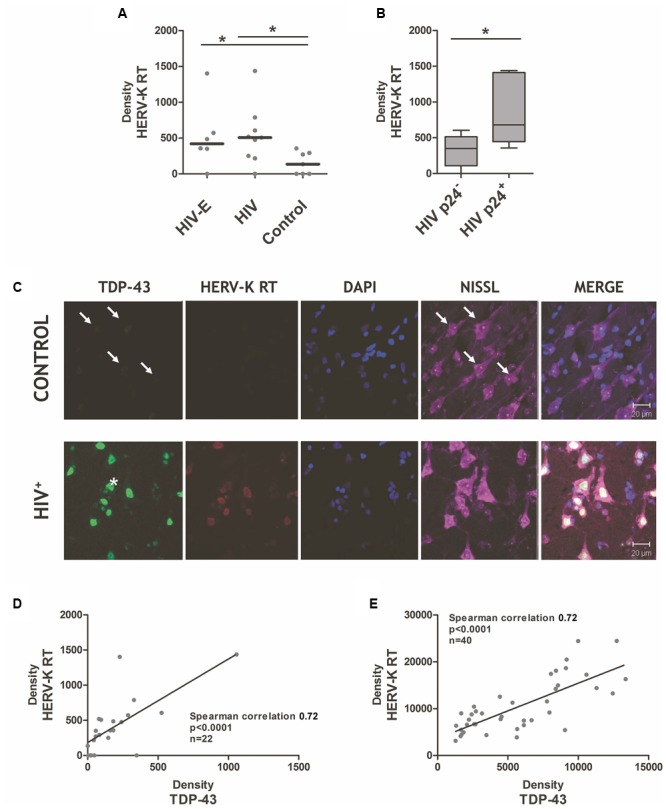
Despite the repetitive association of endogenous retroviruses in human disease, the mechanisms behind their pathological contributions remain to be resolved. Here we discuss how neuronal human endogenous retrovirus-K (HERV-K) expression in human immunodeficiency virus (HIV)-infected individuals is a distinct pathological aspect of HIV-associated neurological conditions, such as HIV encephalitis and HIV-associated neurocognitive disorders. Enhanced neuronal HERV-K levels were observed in the majority of HIV-infected individuals, and to a higher degree in brain tissue marked by HIV replication. Moreover, we highlight an important neuropathological overlap between amyotrophic lateral sclerosis and HIV encephalitis, that being the formation of neurotoxic TDP-43 deposits in neurons. Herein, we argue for enhanced transdisciplinary research in the field of ERV biology, using an example of how HERV-K expression has novel mechanistic and therapeutic implications for HIV neuropathology.
尽管内源性逆转录病毒与人类疾病反复相关,但其致病作用背后的机制仍有待解决。在此,我们讨论人类免疫缺陷病毒(HIV)感染者中神经元人类内源性逆转录病毒-K(HERV-K)的表达如何成为HIV相关神经疾病(如HIV脑炎和HIV相关神经认知障碍)的一个独特病理特征。在大多数HIV感染者中观察到神经元HERV-K水平升高,在以HIV复制为特征的脑组织中升高程度更高。此外,我们强调肌萎缩侧索硬化症和HIV脑炎之间存在重要的神经病理学重叠,即神经元中形成神经毒性TDP-43沉积物。在此,我们以HERV-K表达对HIV神经病理学具有新的机制和治疗意义为例,主张加强ERV生物学领域的跨学科研究。