Gottschlich Anna, Rivera-Andrade Alvaro, Grajeda Edwin, Alvarez Christian, Mendoza Montano Carlos, Meza Rafael
, , and , University of Michigan, Ann Arbor, MI; and , Institute of Nutrition of Central America and Panama; , Universidad Mariano Galvez de Guatemala; , Universidad Rafael Landivar, Guatemala City, Guatemala; and , The Hebrew University, Jerusalem, Israel.
J Glob Oncol. 2017 Jan 18;3(5):444-454. doi: 10.1200/JGO.2016.005629. eCollection 2017 Oct.
Cervical cancer rates in Latin America are higher than those in developed countries, likely because of the lower prevalence of screening. Specifically, less than 40% of women in Guatemala are regularly screened and even fewer women are screened in indigenous communities. Current screening strategies-Pap smears and visual inspection with acetic acid-might not be the most effective methods for controlling cancer in these settings. We thus investigated the potential of self-collection of cervical samples with testing for human papillomavirus (HPV) to help prevent cervical cancer in an indigenous community in Guatemala.
A community representative random sample of 202 indigenous women age 18 to 60 years residing in Santiago Atitlan, Guatemala, were surveyed to assess knowledge of and risk factors for HPV and cervical cancer. Women were then invited to self-collect a cervical sample using HerSwab collection kits to assess the prevalence of HPV and the acceptability of self-sampling.
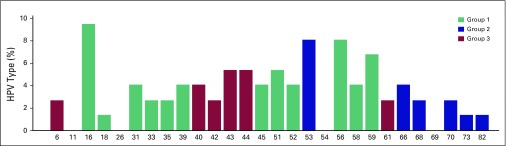
Of 202 women who completed the survey, 178 (89%) provided a self-sample. In all, 79% of these women found the test comfortable, 91% found the test easy to use, and 100% reported they were willing to perform the test periodically as a screening method. Thirty-one samples (17%) were positive for at least one of 13 high-risk HPV types, and eight (4.5%) were positive for HPV 16/18.
HPV testing by using self-collected samples was well accepted, suggesting that it is a plausible modality for cervical cancer screening in indigenous communities. Further studies are needed to assess rates of follow-up after a positive test and to determine whether these findings extend to other indigenous and nonindigenous communities in Guatemala and Latin America.
拉丁美洲的宫颈癌发病率高于发达国家,这可能是由于筛查普及率较低。具体而言,危地马拉不到40%的女性接受定期筛查,而在土著社区接受筛查的女性更少。目前的筛查策略——巴氏涂片检查和醋酸目视检查——在这些情况下可能不是控制癌症的最有效方法。因此,我们调查了自行采集宫颈样本并检测人乳头瘤病毒(HPV)以帮助危地马拉一个土著社区预防宫颈癌的可能性。
对居住在危地马拉圣佩德罗阿蒂特兰的202名年龄在18至60岁之间的土著女性进行社区代表性随机抽样调查,以评估她们对HPV和宫颈癌的知晓情况及风险因素。然后邀请这些女性使用HerSwab采集试剂盒自行采集宫颈样本,以评估HPV的患病率和自行采样的可接受性。
在完成调查的202名女性中,178名(89%)提供了自行采集的样本。总体而言,这些女性中有79%觉得检测过程舒适,91%觉得检测易于操作,100%报告她们愿意定期进行该检测作为一种筛查方法。31个样本(17%)对13种高危HPV类型中的至少一种呈阳性,8个(4.5%)对HPV 16/18呈阳性。
使用自行采集的样本进行HPV检测很容易被接受,这表明它是土著社区宫颈癌筛查的一种可行方式。需要进一步研究以评估检测呈阳性后的后续跟进率,并确定这些发现是否适用于危地马拉和拉丁美洲的其他土著和非土著社区。