Department of Cellular and Molecular Medicine, Laboratory of Ion Channel Research, KU Leuven; VIB Center for Brain & Disease Research, Leuven, Belgium.
Present address: Department of Cardiovascular Sciences, Laboratory of Experimental Cardiology, Leuven, KU, Belgium.
Part Fibre Toxicol. 2017 Nov 3;14(1):43. doi: 10.1186/s12989-017-0224-2.
Silica nanoparticles (SiNPs) have numerous beneficial properties and are extensively used in cosmetics and food industries as anti-caking, densifying and hydrophobic agents. However, the increasing exposure levels experienced by the general population and the ability of SiNPs to penetrate cells and tissues have raised concerns about possible toxic effects of this material. Although SiNPs are known to affect the function of the airway epithelium, the molecular targets of these particles remain largely unknown. Given that SiNPs interact with the plasma membrane of epithelial cells we hypothesized that they may affect the function of Transient Receptor Potential Vanilloid 4 (TRPV4), a cation-permeable channel that regulates epithelial barrier function. The main aims of this study were to evaluate the effects of SiNPs on the activation of TRPV4 and to determine whether these alter the positive modulatory action of this channel on the ciliary beat frequency in airway epithelial cells.
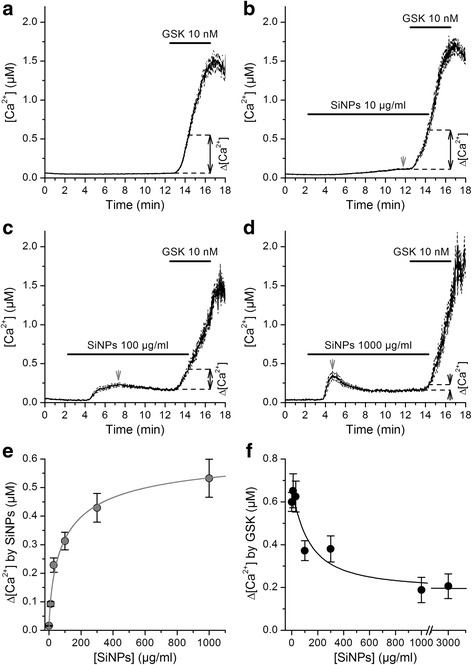
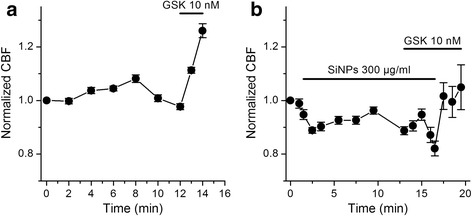
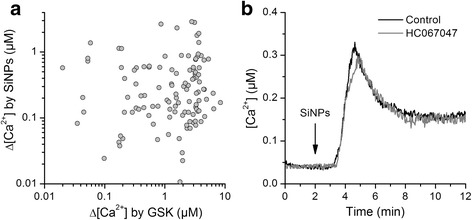
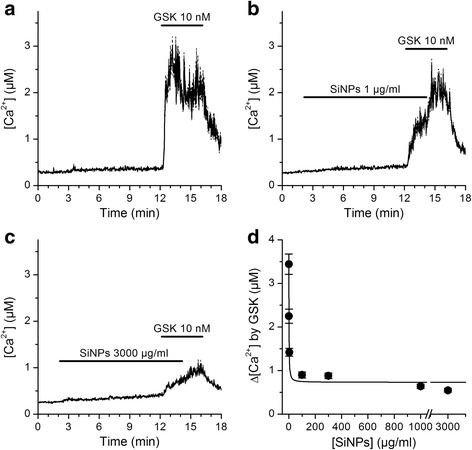
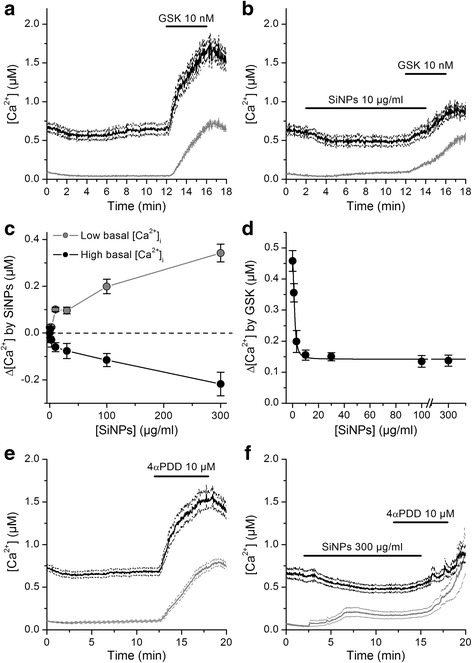
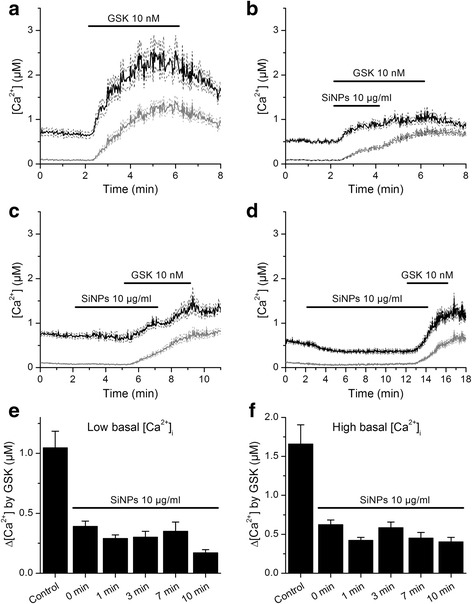
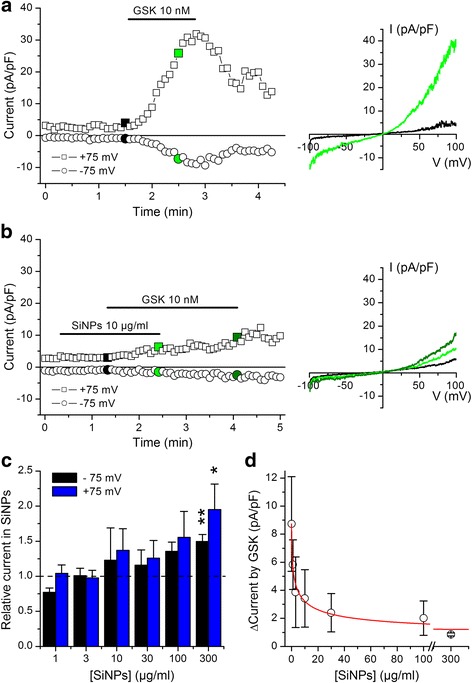
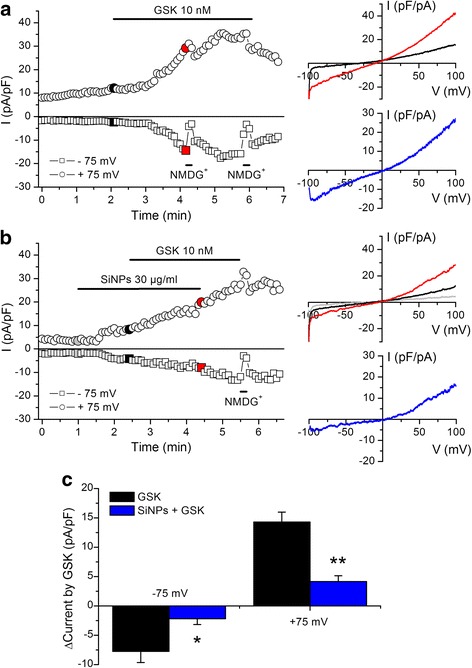
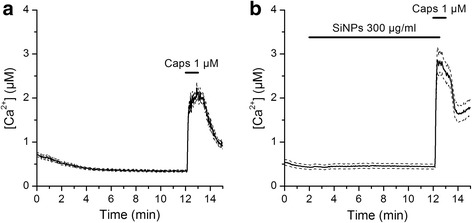
Using fluorometric measurements of intracellular Ca concentration ([Ca]) we found that SiNPs inhibit activation of TRPV4 by the synthetic agonist GSK1016790A in cultured human airway epithelial cells 16HBE and in primary cultured mouse tracheobronchial epithelial cells. Inhibition of TRPV4 by SiNPs was confirmed in intracellular Ca imaging and whole-cell patch-clamp experiments performed in HEK293T cells over-expressing this channel. In addition to these effects, SiNPs were found to induce a significant increase in basal [Ca], but in a TRPV4-independent manner. SiNPs enhanced the activation of the capsaicin receptor TRPV1, demonstrating that these particles have a specific inhibitory action on TRPV4 activation. Finally, we found that SiNPs abrogate the increase in ciliary beat frequency induced by TRPV4 activation in mouse airway epithelial cells.
Our results show that SiNPs inhibit TRPV4 activation, and that this effect may impair the positive modulatory action of the stimulation of this channel on the ciliary function in airway epithelial cells. These findings unveil the cation channel TRPV4 as a primary molecular target of SiNPs.
硅纳米颗粒(SiNPs)具有许多有益的特性,被广泛应用于化妆品和食品工业中,作为抗结块剂、致密剂和疏水剂。然而,由于普通人群的暴露水平不断增加,以及 SiNPs 能够穿透细胞和组织,人们对这种材料可能产生的毒性作用表示担忧。虽然已知 SiNPs 会影响气道上皮细胞的功能,但这些颗粒的分子靶点在很大程度上仍不清楚。鉴于 SiNPs 与上皮细胞的质膜相互作用,我们假设它们可能会影响瞬时受体电位香草酸 4(TRPV4)的功能,TRPV4 是一种阳离子渗透性通道,调节上皮屏障功能。本研究的主要目的是评估 SiNPs 对 TRPV4 激活的影响,并确定这些颗粒是否改变了该通道对气道上皮细胞纤毛摆动频率的正调节作用。
使用细胞内 Ca 浓度([Ca])的荧光测量,我们发现 SiNPs 抑制了合成激动剂 GSK1016790A 对培养的人气道上皮细胞 16HBE 和原代培养的小鼠气管支气管上皮细胞中 TRPV4 的激活。在过表达该通道的 HEK293T 细胞中进行的细胞内 Ca 成像和全细胞膜片钳实验证实了 SiNPs 对 TRPV4 的抑制作用。除了这些作用外,还发现 SiNPs 可显著增加基础[Ca],但这是一种 TRPV4 非依赖性方式。SiNPs 增强了辣椒素受体 TRPV1 的激活,表明这些颗粒对 TRPV4 激活具有特异性抑制作用。最后,我们发现 SiNPs 阻断了 TRPV4 激活引起的小鼠气道上皮细胞纤毛摆动频率的增加。
我们的研究结果表明,SiNPs 抑制 TRPV4 的激活,这可能会损害该通道刺激对气道上皮细胞纤毛功能的正调节作用。这些发现揭示了阳离子通道 TRPV4 是 SiNPs 的主要分子靶点。